
Why Multi Stage Canned Motor Pumps Are Preferred for High-Pressure Chemical Transfer Systems
July 1, 2026
How to Select the Right Canned Motor Pump for Your Process
August 1, 2026
Industrial refrigeration systems are expected to run continuously while maintaining safety, efficiency, and reliability. Whether used in food processing, cold storage, chemical manufacturing, or large-scale industrial facilities, these systems depend on equipment that can handle demanding operating conditions with minimal interruptions.
One area that has seen significant improvement over the years is pump technology. Although traditional pumps remain suitable for many applications, more facilities are transitioning to sealless designs as safety, reliability, and environmental expectations increase. The liquid refrigerant pump is now being widely adopted in a sealless configuration as it can help minimize the risk of leakage, enhance system reliability, and facilitate smoother day-to-day operations.
It’s not just a matter of newer equipment. It represents an increasing emphasis on workplace safety, the protection of the environment and long-term operational performance.
Why Refrigerant Pumps Play Such an Important Role
In an industrial refrigeration system, a refrigerant pump circulates liquid refrigerant around the system. Stable temperatures and efficient cooling in different applications are provided by maintaining a consistent flow.
When a pump performs reliably, operators can expect:
- Stable refrigeration performance
- Better temperature consistency
- Reliable circulation
- Reduced operational interruptions
- Improved overall system efficiency
Since refrigeration systems often operate around the clock, pump reliability becomes a critical factor in maintaining productivity.
Why Traditional Pump Designs Face Challenges
Typically, mechanical seals are used with conventional pumps to prevent leakage of fluid from the pump.
Although useful in numerous applications, these seals tend to wear over time and might need routine maintenance or replacement.
Common challenges include:
| Challenge | Potential Impact |
| Mechanical seal wear | Increased maintenance requirements |
| Leakage risk | Safety and environmental concerns |
| Frequent inspections | Higher maintenance workload |
| Component replacement | Planned shutdowns |
| Seal failures | Unexpected operational interruptions |
These limitations have encouraged industrial facilities to explore alternative pump technologies.
What Makes a Sealless Pump Different?
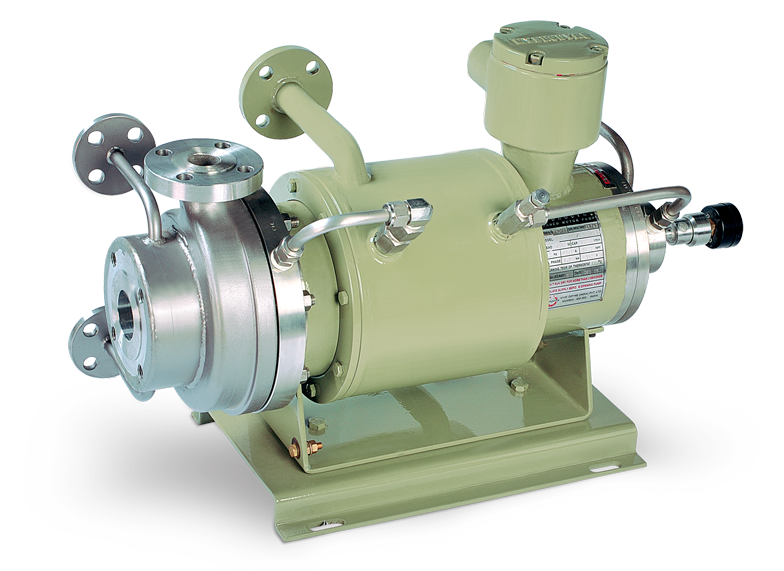
A sealless pump does not have the conventional mechanical seal.
Rather, the motor and pump are housed in a hermetically sealed structure that keeps refrigerant from escaping into the environment.
This design provides a number of operational benefits.
Key Characteristics
- Hermetically sealed construction
- Integrated motor and pump assembly
- No external mechanical seal
- Leak-free operation under normal operating conditions
- Compact design
- Reduced maintenance requirements
These features make sealless pumps particularly suitable for demanding refrigeration environments.
Why Industries Are Moving Toward Sealless Technology
Several industry trends are driving wider adoption of sealless pump systems.
1. Greater Focus on Safety
Industrial plant sites have become more focused on worker safety and development of safe operating environments.
Minimizing refrigerant leakage situations leads to improved plant safety and operation and tighter safety requirements.
2. Improved Equipment Reliability
Reliability is one of the biggest reasons facilities upgrade equipment.
By eliminating one of the most common wear components found in conventional pumps, sealless technology can contribute to more dependable long-term operation.
Benefits include:
- Fewer potential failure points
- Stable operation
- Reduced maintenance interruptions
- Greater operational confidence
3. Reduced Maintenance Requirements
Maintenance teams are responsible for keeping critical equipment running efficiently.
With fewer wear components, maintenance schedules can often become simpler.
Typical maintenance advantages include:
- Fewer seal-related inspections
- Less routine replacement work
- Improved equipment availability
- Better maintenance planning
4. Support for Environmental Goals
Many industrial organizations continue to strengthen environmental management practices.
Leak prevention plays an important role in these efforts.
Sealless designs help support facilities by reducing the possibility of refrigerant escaping during normal operation.
Applications That Benefit from Sealless Liquid Refrigerant Pumps
Sealless pump technology is used across numerous industrial refrigeration environments.
Some common applications include:
| Industry | Typical Application |
| Food processing | Refrigeration systems |
| Cold storage | Temperature-controlled warehouses |
| Beverage manufacturing | Process cooling |
| Chemical processing | Industrial refrigeration |
| Pharmaceutical manufacturing | Controlled cooling environments |
| Industrial manufacturing | Equipment cooling systems |
Reliable refrigerant circulation and dependable pump performance are both advantages of each application.
What Engineers Look for When Selecting a Liquid Refrigerant Pump
Selecting the right pump involves evaluating more than flow requirements.
Engineers typically consider several operational factors.
System Compatibility
The pumping system should be compatible with the refrigeration system.
Reliability
Continuous-duty applications require equipment that can perform consistently.
Safety
Leak prevention remains a major priority for industrial facilities.
Maintenance Expectations
Lower maintenance requirements can help improve equipment availability.
Long-Term Performance
Facilities often prioritize equipment designed for dependable service over many years.
Comparing Traditional and Sealless Pump Designs
| Feature | Traditional Pump | Sealless Pump |
| Mechanical seal | Yes | No |
| Leakage risk | Higher | Significantly reduced |
| Maintenance frequency | Higher | Lower |
| Wear components | More | Fewer |
| Operational reliability | Good | Enhanced |
| Suitable for demanding refrigeration | Yes | Highly suitable |
Why the Industry Standard Is Changing
Industrial refrigeration has evolved significantly over the past decade.
Today’s facilities expect equipment that supports:
- Continuous production
- Greater equipment reliability
- Safer operations
- Lower maintenance demands
- Improved environmental performance
As these priorities continue to shape equipment selection, sealless technology naturally becomes a preferred option.
Rather than addressing seal-related issues after they occur, many facilities now choose equipment designed to eliminate those concerns from the beginning.
Practical Benefits for Plant Operations
Operators often notice improvements beyond the pump itself.
Reliable refrigerant circulation can contribute to:
- Consistent cooling performance
- Fewer maintenance disruptions
- Better production continuity
- Easier maintenance planning
- Improved operational confidence
- Stable refrigeration processes
These advantages become especially valuable in facilities where refrigeration systems operate continuously.
Questions Worth Asking Before Choosing a Pump
Before selecting a pump for an industrial refrigeration application, consider:
- Is leak prevention an important operational objective?
- Will the pump operate continuously?
- How important is maintenance reduction?
- Does the application require high operational reliability?
- Is long-term equipment performance a priority?
- Does the facility have strict safety requirements?
The answers to these questions can help in determining the best pumping method for the application.
Supporting Reliable Refrigeration Systems for the Future
As safety, efficiency, and reliability expectations increase, industrial refrigeration is continually evolving. Maintenance friendly system components and equipment that enable reliable operation are becoming more important as facilities modernize their systems.
A liquid refrigerant pump with a sealless design presents an effective solution for companies looking for a dependable refrigerant circulation solution without the hassles of conventional sealing systems.
At HydrodynePump Teikoku, we understand that every refrigeration application comes with its own operating requirements. Proactively collaborating with industries, we offer engineered sealless canned motor pump solutions that enable safe, reliable and efficient fluid handling. We can support your refrigeration project, whether you are installing a new system or optimizing an existing one.
Frequently Asked Questions
1. What is a sealless liquid refrigerant pump?
A sealless liquid refrigerant pump is a pump designed without a traditional mechanical seal. Instead, it uses a hermetically sealed construction that helps contain the refrigerant while supporting reliable circulation.
2. Why are sealless pumps becoming more popular?
Many industries are adopting sealless pumps because they offer improved reliability, lower maintenance requirements, and enhanced leak prevention compared to conventional pump designs.
3. Where are liquid refrigerant pumps commonly used?
They are widely used in industrial refrigeration systems, food processing facilities, cold storage warehouses, chemical plants, pharmaceutical manufacturing, and other industrial cooling applications.
4. How do sealless pumps help improve reliability?
By eliminating the mechanical seal, sealless pumps reduce one of the common wear components found in traditional pumps, helping support more dependable long-term operation.
5. Are sealless pumps suitable for continuous operation?
Yes. Many industrial refrigeration facilities choose sealless pump technology because it is well suited for continuous-duty applications where reliability is essential.
6. What should be considered when selecting a liquid refrigerant pump?
Important factors include system compatibility, operational reliability, maintenance expectations, safety requirements, and the specific needs of the refrigeration application.
7. Why choose Hydrodyne Teikoku for sealless pumping solutions?
Hydrodyne Teikoku specializes in engineered canned motor pump solutions designed for demanding industrial applications. With a focus on leak-free operation, reliability, and engineering expertise, the company supports industries that require dependable fluid handling solutions.