

Why Sealless Liquid Refrigerant Pumps Are Becoming the Industry Standard
July 10, 2026
Canned Pumps in Pharmaceutical Manufacturing: Leak-Proof Fluid Handling
August 10, 2026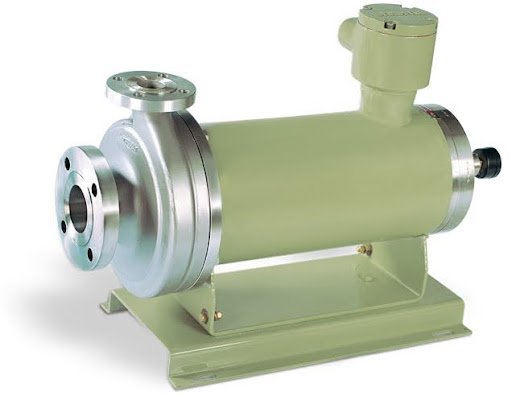
Choosing a pump by looking at a model catalogue first can put the selection process in the wrong order. The more useful starting point is the process itself: What liquid needs to move? At what temperature? Under what pressure and suction conditions? How does that liquid behave during operation?
These questions matter because a pump suitable for routine circulation may not suit a volatile, high-temperature, or solidification-prone liquid. A hermetic canned motor pump can be considered where enclosed fluid handling and the absence of a conventional dynamic shaft seal are important, but even within canned motor pump technology, the right configuration depends on the actual duty.
In other words, understand the process first. Then match the pump to it.
First Understand the Liquid You Need to Handle
Two applications requiring similar flow may still need different pump arrangements because the liquids behave differently.
Before looking at a particular configuration, engineers should build a clear picture of the process medium. Important considerations include:
- Volatility: Does the liquid have characteristics that make vapor formation an important consideration?
- Temperature: What are the normal and expected maximum operating temperatures?
- Viscosity: How easily does the liquid flow under actual operating conditions?
- Crystallization or solidification: Could the medium crystallize, solidify, or become difficult to handle as conditions change?
- Suspended material: Does the liquid contain material that could influence pump selection?
- Vapor pressure: How might the liquid behave at the expected suction and operating conditions?
- Containment requirements: How important is keeping the process liquid enclosed within the pumping system?
Material selection is another important consideration, but it should be assessed against the actual process medium and operating environment rather than treated as a generic choice.
Why a Hermetically Sealed Canned Motor Pump May Be Considered
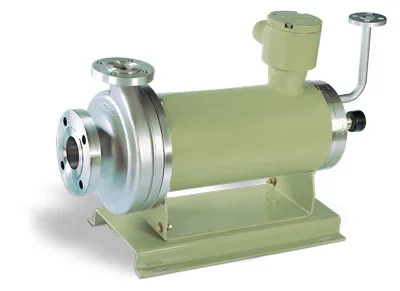
A canned motor pump integrates the pump and motor into a compact arrangement. Unlike conventional pump arrangements that rely on a dynamic shaft seal between the pump and motor, canned motor technology uses an enclosed design.
This can be particularly relevant where fluid containment matters. Hydrodyne Teikoku’s canned motor pump features and benefits provide further context on how the sealless design supports demanding fluid-handling applications.
We highlight canned motor pumps for applications involving hazardous, toxic, explosive, volatile, high-temperature, and other demanding fluids. The design can also help address concerns around fugitive emissions and product leakage associated with conventional sealing arrangements.
That does not mean every application automatically needs the same canned motor pump.
The real engineering question is: Which configuration suits the particular process duty?
Six Process Conditions That Influence Pump Selection
Rather than focusing on a pump model immediately, examine these six conditions together.
1. Required Flow Rate
Flow tells you how much liquid the process needs the pump to move within a given period.
It is fundamental selection information, but it should never be considered alone. Two applications with the same flow requirement can have very different head, temperature, pressure, and fluid characteristics.
That is why selecting solely on flow can lead to an incomplete assessment.
2. Required Head
The pump must provide the head required by the system.
System layout, elevation differences and resistance within the fluid path can influence the duty. Some applications may also require a comparatively high head at lower flow, which can affect the type of canned motor pump configuration considered.
The required flow and head therefore need to be evaluated together.
3. Operating Temperature
Temperature can change much more than the thermal conditions around the pump. It may also affect how the process liquid behaves.
Engineers should distinguish between the normal operating temperature and other expected conditions, including the maximum temperature the system may experience.
For particularly demanding temperature duties, a configuration specifically intended for high-temperature operation may need to be evaluated.
4. System Pressure
Operating pressure is another basic part of the process picture.
It should be communicated clearly during pump selection because the pumping arrangement needs to be assessed in relation to the conditions of the overall system.
Rather than assuming a standard design is suitable, pressure should be reviewed together with temperature, fluid properties, required head, and other application conditions.
5. Vapor Characteristics and Suction Conditions
Volatile liquids require particular attention to what happens at the suction side of the pump.
Vapor pressure and available suction conditions can influence pump operation and the suitability of a particular configuration. NPSH considerations are therefore part of understanding the application rather than something that should be examined only after a pump has already been chosen.
Accurate process information becomes especially important here.
6. Nature of the Fluid
Finally, consider the liquid as a whole.
Is it volatile? Does it have a high melting point? Could it crystallize? Is it being handled at elevated temperature? Does it contain suspended material?
These characteristics can point engineers toward different design requirements. This is also why selecting a pump purely because it performed well elsewhere can be misleading—the new process may present a completely different duty.
Different Duties May Need Different CMP Configurations
Canned motor pumps are not a single-design solution. Hydrodyne Teikoku’s canned motor pump range includes configurations developed around different operating requirements.
| Application Need | Possible Pump Configuration |
| General process circulation | Basic internal circulation design |
| Volatile liquid handling | Reverse circulation design |
| High-head applications | Multistage configuration |
| High-temperature service | High-temperature configuration |
| Refrigeration systems | Refrigeration canned motor pump |
| High-melting fluids | Specialized high-melting configuration |
This table should be treated as a general orientation, not as a final pump-selection chart. The appropriate design depends on the complete operating conditions and process requirements.
For instance, specifying a hermetic canned motor pump for a demanding application still requires engineers to consider the fluid, temperature, pressure, flow, head, suction conditions, and other relevant application details.
Information to Gather Before Speaking With a Pump Manufacturer
A well-prepared enquiry makes it easier for an application engineering team to understand the duty.
Before approaching a pump manufacturer, gather as much reliable process information as possible, including:
- Liquid or process medium being handled
- Required flow
- Required head
- Normal operating temperature
- Maximum expected temperature
- Operating pressure
- Available suction conditions
- Relevant fluid characteristics
- Installation orientation
- Process and installation environment
- Any important containment requirements
- Details of the existing installation, where applicable
Avoid guessing values simply to complete an enquiry. Accurate operating information provides a stronger basis for evaluating an appropriate pump configuration.
Common Selection Mistakes to Watch For
Even experienced teams can run into problems when selection is based on incomplete information.
- Selecting only by flow: Flow alone does not describe the complete pump duty.
- Ignoring vapor characteristics: This can leave an important part of suction-side behavior unexamined.
- Assuming every CMP is interchangeable: Different configurations exist because operating requirements differ.
- Overlooking temperature variation: Normal and expected maximum conditions may not be identical.
- Treating materials as an afterthought: Material suitability needs to form part of application assessment.
- Copying an existing specification automatically: Process conditions may have changed since the original pump was selected.
- Focusing on the pump before the liquid: This reverses the more useful engineering sequence.
A replacement project deserves particular attention. “Same as before” is not always enough information if capacity, process medium, operating temperature, system layout, or other conditions have changed.
When Application Engineering Matters Most
Straightforward duties may be easier to define. More demanding applications can involve several interacting factors at once.
A liquid might be volatile and handled at an elevated temperature. Another process may combine high head requirements with unusual fluid behavior. Refrigeration, high-melting liquids, high-temperature duties, and other specialized applications can introduce additional considerations.
This is where application engineering becomes valuable.
Instead of starting with the question, Which model should we buy?, the discussion can start with, What does this process require the pump to do?
For a hermetic canned motor pump, that approach helps connect the benefits of the enclosed pump design with a configuration suited to the real operating duty.
Matching the Pump to the Process
Good pump selection is less about finding a universally “best” pump and more about finding the appropriate match between the process medium, operating conditions, system requirements, and pump configuration.
The more complete the application information, the better the foundation for that decision.
At Hydrodyne Teikoku, we work with customers to understand the application before recommending a canned motor pump configuration. Our focus is on matching the pump design to the actual process requirements rather than treating every duty the same.
Frequently Asked Questions
1. What is a hermetic canned motor pump?
A hermetic canned motor pump uses an integrated pump-and-motor arrangement with an enclosed fluid path and without a conventional dynamic shaft seal. This design can be relevant where containment of the pumped liquid is an important application requirement.
2. When should a canned motor pump be considered?
It may be considered for applications where fluid containment, leakage concerns, process conditions, or the characteristics of the liquid make a sealless pumping arrangement desirable. Final suitability should be evaluated against the specific duty.
3. Can one canned motor pump handle different process fluids?
Different fluids can present very different operating requirements. Temperature, viscosity, vapor characteristics, tendency to crystallize or solidify, and other properties should be considered before deciding on the pump configuration.
4. What information is needed before selecting a canned motor pump?
Useful information includes the process liquid, required flow and head, operating and maximum expected temperatures, pressure, suction conditions, fluid characteristics, installation details, and relevant process requirements.
5. Why does vapor pressure matter during pump selection?
Vapor pressure helps engineers understand how a liquid may behave under particular temperature and suction conditions. It therefore forms an important part of assessing suction conditions and selecting a suitable pump arrangement.
6. Are canned motor pumps only used for hazardous liquids?
No. While their enclosed design can make them relevant for hazardous or leakage-sensitive fluids, canned motor pumps are also used for other industrial duties, including high-temperature, refrigeration, circulation, and specialized process applications. Suitability depends on the requirements of the individual process.