
How to Select the Right Canned Motor Pump for Your Process
August 1, 2026
Refrigerating Pump Parts Replacement: When to Repair or Replace Each Component
August 20, 2026
Moving a process liquid from one point to another may look like a routine plant operation. In practice, every transfer point creates another engineering consideration.
A liquid may need to travel from storage into a processing area, between enclosed stages, or through another section of a production system. Depending on the fluid, engineers may need to think carefully about how that movement takes place and where potential leakage paths exist.
This is where a canned pump may become relevant.
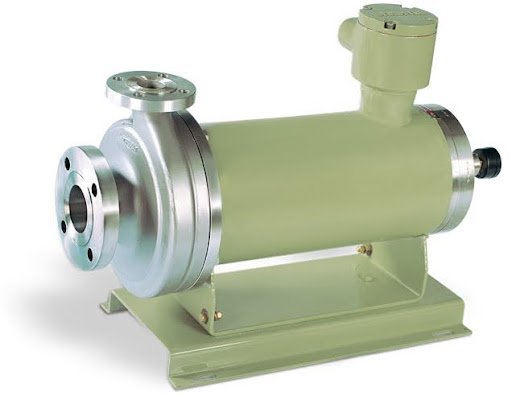
Rather than depending on a conventional dynamic shaft seal between the pump and motor, canned motor pump technology uses an integrated, hermetically enclosed arrangement. For pharmaceutical and other process industries handling sensitive, volatile, or demanding liquids, this type of sealless fluid handling can provide a useful option when containment is an important part of pump selection.
Why Fluid Containment Matters in Process Plants
Fluid transfer is not only about getting a liquid from point A to point B. The way that liquid remains contained during movement can be equally important.
Some industrial processes involve liquids that are volatile, sensitive, or simply undesirable to release into the surrounding operating environment. In these situations, reducing unnecessary external leakage paths becomes an important engineering objective.
Containment-focused pumping can help support several practical priorities:
- Keeping process liquids within an enclosed transfer system
- Reducing reliance on external sealing points
- Limiting opportunities for unwanted fluid escape
- Supporting cleaner process surroundings
- Handling certain volatile or demanding liquids more appropriately
The exact importance of each factor depends on the application. A transfer duty involving a stable liquid at straightforward operating conditions may have very different requirements from one involving a volatile fluid or challenging temperature conditions.
That is why pump design needs to be considered alongside the actual process.
Where Conventional Shaft Seals Enter the Discussion
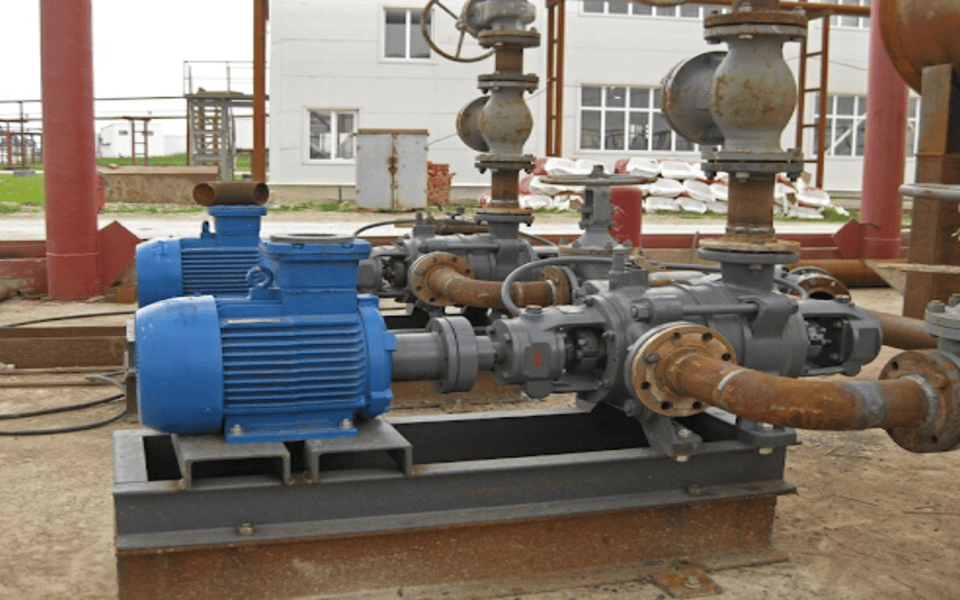
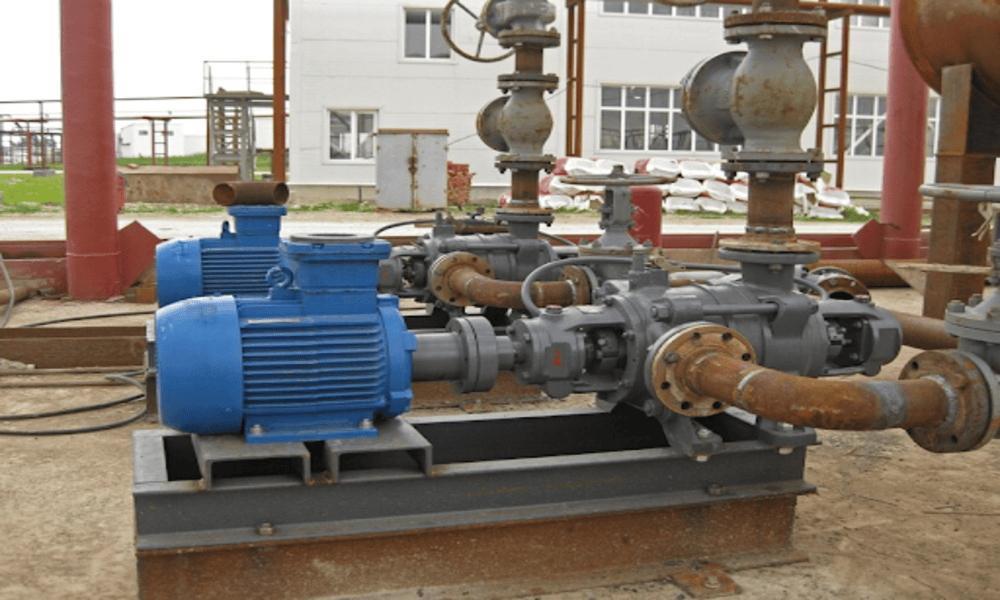
Many conventional centrifugal pump arrangements use a shaft that connects the motor to the pump impeller.
Because the shaft passes through the pump casing, a sealing arrangement is normally required around this rotating component. Depending on the pump design and application, this may involve mechanical sealing systems.
These systems are widely used across industry, but the shaft penetration creates a point that has to be managed carefully when fluid containment is particularly important.
A sealless design approaches the issue differently.
Instead of improving the sealing arrangement around a rotating shaft passing through the casing, it removes the need for that conventional shaft penetration altogether.
That fundamental difference is one reason canned motor pumps are considered for demanding process-fluid applications.
What Changes With a Canned Pump?
The basic idea can be understood quite simply:
- Pump + motor in an integrated arrangement
- No conventional dynamic shaft seal
- Fluid remains within an enclosed pumping system
In a canned motor design, the pump and motor are incorporated into one compact unit. The construction removes the conventional external shaft-sealing arrangement between them.
The motor components are separated from the process fluid through a protective can while the overall system remains enclosed.
For an engineer evaluating containment-focused fluid transfer, that difference can be significant because one of the traditional potential leakage paths associated with rotating equipment is removed from the design.
It is important, however, not to interpret this as meaning every canned motor configuration is automatically suitable for every fluid or every plant.
Pump construction is only one part of the selection process.
Why This Design Can Matter in Pharmaceutical Processing
Pharmaceutical manufacturing can involve many different fluid-transfer duties, so it would be misleading to treat them as one universal application.
Where the operating conditions make containment an important consideration, however, a canned pump can offer several design characteristics worth evaluating.
These may include:
- Fewer conventional leakage paths: Removing the traditional dynamic shaft seal reduces dependence on a common external sealing location.
- Enclosed fluid handling: The integrated design keeps fluid movement within a contained pumping arrangement.
- Compact construction: Combining the motor and pump can reduce the overall footprint compared with some conventional arrangements.
- Reduced dependence on external shaft sealing: Engineers do not have to manage a conventional mechanical seal between the pump and motor.
- Suitability for certain volatile liquids: Sealless pumping may be considered where vapor behavior or fluid containment creates additional engineering concerns.
- Potential maintenance advantages: Eliminating conventional shaft sealing may simplify certain maintenance considerations, although actual maintenance requirements depend on the service and pump configuration.
These are application-related advantages rather than automatic guarantees.
The right question is therefore not simply, “Is a canned motor pump better?”
A more useful question is, “Does this pump architecture suit the liquid and operating conditions involved?”
Containment Alone Does Not Select the Pump
Containment may be a strong reason to investigate sealless technology, but it cannot be the only selection criterion.
The pump must still perform the required hydraulic duty and remain suitable for the liquid being handled.
Engineers should typically consider factors such as:
| Selection Factor | Why It Matters |
| Fluid properties | Influence pump configuration and material selection |
| Temperature | Can affect fluid behavior and pump suitability |
| Vapor behavior | Important for liquids that may vaporize under operating conditions |
| Viscosity | Influences hydraulic performance |
| Required flow | Determines the volume the pump must move |
| Required head | Determines the pressure-related duty the pump must overcome |
| System pressure | Affects overall operating requirements |
| Material suitability | Pump materials must suit the fluid and service conditions |
Hydrodyne’s technical information on fluids, operating ranges and limitations can also provide useful context when evaluating these parameters.
This is particularly important with canned motor pumps because different configurations exist for different operating situations.
A pump intended for high-temperature service, for instance, cannot simply be assumed to perform identically in another process duty.
Imagine a Typical Transfer Requirement
Consider a plant where a volatile process liquid needs to move between two enclosed sections of the production system.
The engineering team wants to minimize unnecessary external leakage points while still achieving a defined flow and head.
One option may be to examine whether a sealless pumping arrangement can reduce dependence on a conventional shaft seal.
But that is only the first step.
The team would still need to examine the liquid properties, expected operating temperature, system pressure, vapor characteristics, required hydraulic performance, and suitable pump materials.
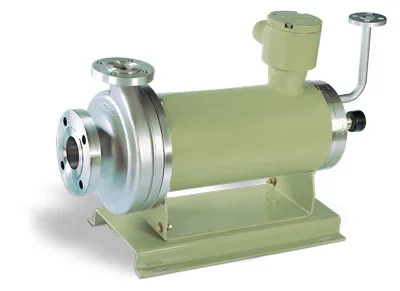
For duties involving relatively high vapour pressure or volatile liquids, a reverse circulation pump may be one configuration evaluated according to the complete operating conditions.
The final decision would therefore come from the complete application rather than the containment requirement alone.
This is a useful way to think about canned motor pumps generally: the design addresses an engineering concern, but the service conditions determine whether the design is appropriate.
Questions Engineers Should Ask Before Specifying a Canned Pump
Before moving toward a particular configuration, it helps to establish the operating conditions clearly.
Some practical questions include:
- What liquid will the pump handle?
- Is the liquid stable under the expected operating conditions?
- Can it vaporize easily?
- What temperature range will the pump experience?
- What system pressure is expected?
- How much flow is required?
- What head must the pump generate?
- Is containment a significant design consideration?
- Are particular material properties required for compatibility with the fluid?
- Do operating conditions change during different stages of the process?
- Is the liquid prone to crystallization, polymerization, or other challenging behavior?
The answers can significantly change the type of pump configuration required.
Why Application Matching Still Comes First
“Canned motor pump” describes a broad design concept rather than one interchangeable piece of equipment.
Different industrial duties can require very different configurations.
Our canned motor pump range, for example, includes designs for general circulation, high-temperature operation, high-pressure duties, refrigeration applications, high-melting liquids, multistage requirements, and other demanding services.
For applications requiring high head at comparatively low flow, a multistage canned motor pump may need to be considered.
That variety highlights an important selection principle.
The canned pump should be chosen around the process, not the other way around.
Starting with the actual fluid and operating conditions makes it possible to assess which pump construction, circulation arrangement, materials, and performance characteristics are appropriate.
Designing Fluid Transfer Around Containment
For pharmaceutical manufacturing and other process industries, fluid containment is ultimately part of a broader engineering decision. Removing a conventional shaft seal can reduce a potential leakage path, but successful pump selection still depends on understanding what the liquid is doing, where it is going, and under what conditions it must be moved.
At Hydrodyne Teikoku, we look at canned motor pump selection from the application outward. We consider the fluid, operating environment, hydraulic requirements, and process demands before recommending a suitable configuration, helping customers evaluate sealless pumping options for demanding industrial duties.
Frequently Asked Questions
1. What is a canned pump?
A canned pump is a sealless pump design in which the pump and motor are integrated into an enclosed arrangement. It does not require the conventional dynamic shaft seal commonly found between a pump and an external motor.
2. Why are canned pumps considered for pharmaceutical plants?
They may be evaluated where enclosed fluid transfer and reducing conventional leakage paths are important engineering considerations. Their suitability still depends on the particular liquid, operating conditions, and hydraulic requirements.
3. Are canned pumps completely leak-proof?
Canned motor pumps are designed around hermetically enclosed, sealless fluid handling and eliminate the conventional dynamic shaft seal. However, engineers should avoid treating any pump as universally suitable or making absolute performance assumptions without evaluating the complete application.
4. How is a canned pump different from a conventional centrifugal pump?
One of the main differences is the motor-pump arrangement. Many conventional centrifugal pumps use an external motor, connecting shaft, and shaft seal. A canned motor pump integrates the motor and pump and removes the need for a conventional dynamic shaft seal.
5. What process information is needed before selecting a canned pump?
Important information can include the fluid being handled, temperature, viscosity, vapor characteristics, required flow, required head, system pressure, material requirements, and other service-specific operating conditions.
6. Can canned pumps handle volatile liquids?
Certain canned motor pump configurations can be suitable for volatile or higher-vapor-pressure liquids. The correct design should be selected according to the fluid characteristics and actual operating conditions rather than based on the pump category alone.