
Top Maintenance Tips for Centrifugal Canned Motor Pumps
May 3, 2026
Why API 685 Pumps Are Critical in Chlor-Alkali Plants
May 5, 2026
Talk to people in the industry and you’ll hear the same wrong ideas about canned motor pumps over and over. Especially from engineers who know conventional pumps inside and out but haven’t actually worked with canned designs. These false beliefs end up costing companies real money and headaches.
Let’s clear up the biggest ones.
Misconception 1: They’re Just Regular Pumps With a Can Around Them
People say this constantly. The mental image is a normal pump design with a protective cover welded on.
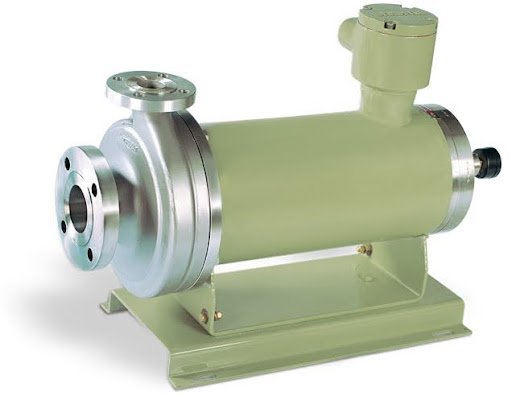
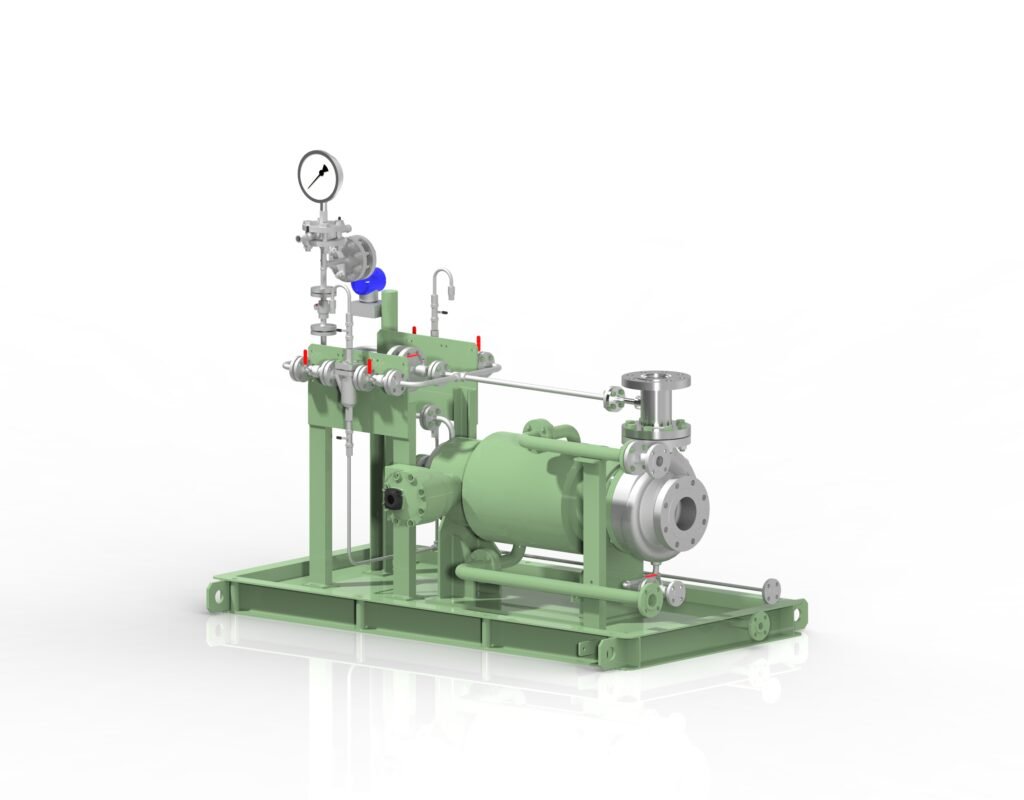
That’s not how it works at all. A canned motor pump integrates the motor and pump as one sealed unit. The motor doesn’t sit in air somewhere cooling itself. It sits inside the can and gets cooled by the exact fluid you’re pumping. They’re not two separate things bolted together—they’re one thing.
This changes everything about how you design it, operate it, and maintain it. You can’t optimize the motor independently. System pressure matters to the motor. Fluid temperature matters to the motor. If one fails, both fail. It’s a package deal.
Understanding that this is fundamentally different from conventional equipment matters because you’ll make different maintenance choices and operational decisions.
Misconception 2: They Only Work for Hazardous Liquids
Sure, that’s where they started. Hazard containment was the original problem they solved.
But that’s history. These days, heat transfer systems at 300-400 degrees Celsius use canned motor pumps because integrated cooling handles extreme temperature naturally. External coolers can’t compete with that. Precision hydraulic systems want sealed motors because contamination stays out. Applications that need absolute cleanliness pick these designs.
Space-limited facilities like them because they’re compact. Vibration-sensitive equipment benefits from the integrated design. The technology’s got advantages way beyond just hazard containment.
Assuming they’re only for hazardous liquids means you might miss the right solution for your problem.
Misconception 3: Canned Motors Can’t Be Fixed
The sealed design makes people think failed motors are disposable. You’re supposed to just swap it out.
Actually wrong. Authorized service facilities rebuild these motors successfully. Yeah, you need specialized tools and real expertise. But that expertise exists. Facilities do this work all the time.
What’s true: your local machine shop can’t rebuild a canned motor. They’re precision engineered. Tolerances matter. Balance matters. Bad repairs fail immediately.
Also true: a lot of apparent motor failures aren’t actually motor failures. Overload shutdowns don’t mean the motor’s damaged. Temperature alarms might point to cooler problems. Sometimes troubleshooting the system solves the whole thing without opening the motor at all.
If you’ve actually got a dead canned motor, authorized service centers fix it. The misconception comes from not knowing those facilities exist.
Misconception 4: They Cost Too Much to Own
Higher upfront cost makes people think they’re not economical. You can buy a conventional pump cheaper initially.
But that ignores what you actually spend over the years. Mechanical seals on conventional pumps need replacement every 12-18 months. At $500-2,000 per seal kit, that adds up fast. Canned motor pumps have no seals to replace.
Conventional systems need external cooling, seal oil circulation, motor cooling fans. That’s capital cost built into the system cost. Canned motors integrate all that internally.
Maintenance labor for seal work, alignment, cooler servicing—that’s ongoing expense with conventional equipment. Canned motors cut a lot of that work.
Run the math on 10-15 years of ownership, not just the sticker price. The initial cost difference often looks like a smart investment.
Misconception 5: You Need Special Exotic Fluid
The motor runs inside the pump fluid, so people assume you need something special and expensive.
Nope. Standard mineral oils work. Synthetic heat transfer fluids work. Most industrial liquids work fine. Motor insulation is compatible with normal industrial fluids.
What matters is keeping it clean and keeping temperature reasonable. Contamination damages canned motor pumps the same way it damages any pump. Temperature extremes stress insulation on any motor.
Specific situations create specific fluid needs. Running at 350°C means you need synthetic fluid that doesn’t break down. Certain corrosive chemicals mean you pick materials that won’t get eaten. But that’s application-specific, not a general rule.
Check compatibility with the motor materials. But you don’t need exotic fluids for normal operation.
Misconception 6: You Can’t Tell When the Motor’s Failing
The sealed design supposedly means the motor could fail without warning.
Modern canned motors usually have temperature sensors (RTDs) that signal problems. Most setups monitor motor current. Vibration monitoring catches developing issues. You can track outlet temperature.
And equipment gives signals before it dies. Unusual noise. Current increasing. Temperature rising. Pump performance dropping. With proper monitoring, these warnings come during maintenance windows, not emergency shutdowns.
Older designs without sensors might have justified this concern. Current equipment gives you visibility into motor condition.
Misconception 7: They Can’t Handle Fluctuating Operating Conditions
Precision equipment supposedly needs stable, constant operation.
Canned motor pumps handle varying pressures, flows, temperatures. They run through load swings, power surges, environmental changes. They’re reliable through all that variation.
The catch is staying within the equipment’s rated envelope. Any pump fails if you exceed pressure limits. Any pump fails if you run it dry. These pumps aren’t fragile—they’re built for critical service.
Misconception 8: You Can’t Get Parts
Searching for canned motor pump parts at regular distributors turns up nothing, so the assumption is nothing’s available.
You need to deal with authorized manufacturers or service centers. They stock components. Lead times for standard parts are reasonable. Critical stuff can be expedited. Many critical facilities keep spare pump units on hand.
The misconception evaporates once you’ve got supplier relationships established. Suddenly parts are accessible.
Misconception 9: They Wear Out Fast
Some assume wear and degradation happen quicker than conventional pumps.
Well-maintained units run reliably 15-20 years. Many go longer. Degradation happens gradually if it happens at all. Bearing wear is slow. Impeller surfaces lose precision gradually. Changes happen in years, not months.
Premature failure comes from poor maintenance, operating outside design specs, or incompatible fluids. That’s operator error, not equipment weakness.
Misconception 10: Integration Locks You Into One Design
The integrated design supposedly means zero flexibility for different applications.
Manufacturers actually offer pretty decent design flexibility. Different impeller designs. Cooling options. Material choices. These handle diverse applications.
Not every possible variant exists off the shelf. But integration doesn’t eliminate flexibility—it just provides it differently than modular conventional designs.
Why These Misconceptions Matter
These beliefs waste money. Organizations skip canned motor pump solutions when they’re actually the best choice. Equipment gets run outside its design specs. Maintenance discipline fails because people misunderstand how these things actually break.
Clear up the confusion and you get better decisions, smarter operation, and fewer surprises.
Wrap-Up
Canned motor pumps are proven technology with real advantages when you actually understand them. These misconceptions usually die once you’re actually running this equipment or talking to someone who does.
Hydrodyne Pump Teikoku runs into these misconceptions regularly—often from solid engineers who just haven’t worked with canned motor pumps before. The technical team addresses questions directly with straight answers, not assumptions. If you’ve got questions about whether this technology makes sense for your situation, reach out. Getting clarity usually improves decision-making significantly.
FAQ
1. Can you rewind a canned motor if it fails inside?
Yes. Authorized service centers rewind canned motor stators with specialized equipment that keeps precision and electrical performance intact.
2. What happens if you put in the wrong fluid?
It attacks motor insulation, messes with viscosity, damages cooling, or causes chemical reactions. Always verify compatibility before running it.
3. Do these pumps need complicated control systems?
Nope. Standard motor starters work fine. The integration is mechanical. Electrical remains straightforward.
4. Can you swap out a conventional pump for a canned motor pump?
Usually yes, with the right flanges and adapters. The compact size often means minimal piping changes.
5. What’s the typical warranty?
Usually 12-24 months depending on the manufacturer and application. Extended warranties often available.
6. Do canned motors lose efficiency compared to regular motors?
No. Modern ones run 85-92% efficiency, matching external motors, with integrated cooling managing losses.
7. Do variable frequency drives work with canned motors?
Yeah, they do. Speed changes proportionally adjust flow while keeping efficiency solid.