
What Are Multistage Pumps? Working Principle, Types and Applications
March 10, 2026
Canned Motor Pumps: Working Principle, Benefits & Uses
March 20, 2026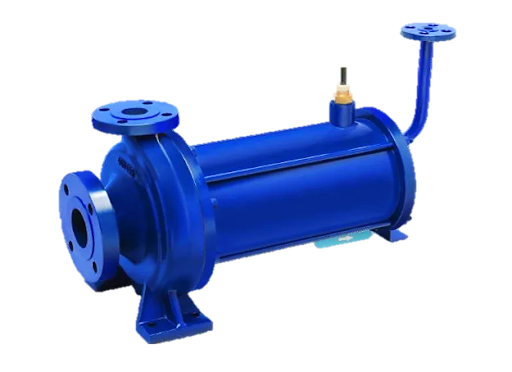
There is a particular kind of problem that keeps coming up in industrial fluid systems.
The fluid is dangerous. Or volatile. Or both. And somewhere in the system, there is a seal. A mechanical seal doing its best to keep that fluid contained. And the question that sits in the back of every engineer’s mind is: for how long?
That is not a theoretical concern. Seal failure is one of the most documented causes of unplanned downtime and fluid leakage in industrial plants worldwide. It happens gradually. It happens suddenly. Either way, the consequences range from costly to genuinely hazardous.
The hermetic canned motor pump was built around a different answer to that problem.
Not a better seal. No seal at all.
So What Exactly Is a Hermetic Canned Motor Pump?
Let us get the definition clear before anything else.
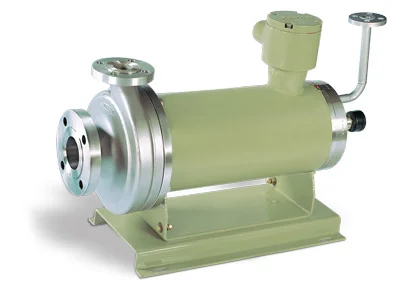
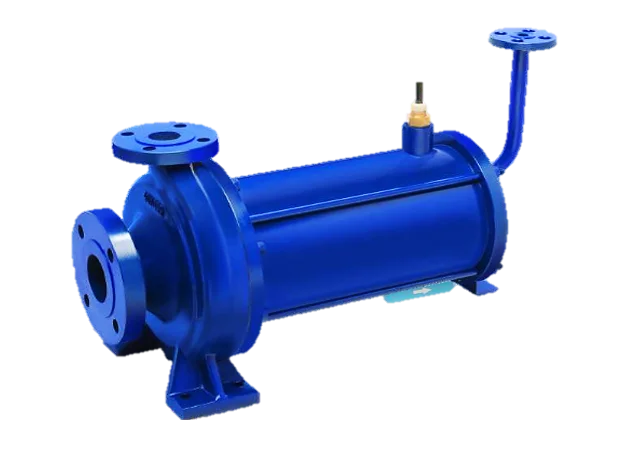
A hermetic canned motor pump is a pump where the motor and the hydraulic unit are enclosed together in a completely sealed assembly. The word hermetic is not marketing language here. It means fully sealed. No shaft penetration through the casing. No dynamic seal between the motor and the fluid.
The rotor and the impeller sit on the same shaft. The stator is separated from the rotor by a thin-walled cylindrical sleeve, called the can. That can is what gives this pump its name. And it is what makes the entire design fundamentally different from conventional pumping systems.
The process fluid circulates inside the motor section. It lubricates the bearings. It cools the rotor. The fluid does the work that separate systems would otherwise need to handle.
Zero external leakage paths. By design.
How Does a Hermetic Canned Motor Pump Actually Work?
The working principle is cleaner than most people expect.
Step one. The stator windings are energised. A rotating magnetic field is created. That field passes through the can and acts on the rotor.
Step two. The rotor responds and begins rotating. Because the impeller is on the same shaft, it rotates immediately with it. No coupling. No intermediate connection. Direct.
Step three. Fluid enters through the suction inlet. The rotating impeller accelerates it, increasing both velocity and pressure.
Step four. A portion of that fluid is drawn off into the motor section. It flows around the rotor, through the bearing area, and back into the main flow path. This circulation loop is what handles both bearing lubrication and motor cooling simultaneously.
Step five. The pressurised fluid exits through the discharge outlet and continues into the process system.
The whole thing runs as one integrated unit. There is no point in that sequence where the fluid is exposed to the external environment. Not during normal operation. Not during startup. Not during shutdown.
That is what hermetic containment actually means in practice.
The Can: Small Component, Large Consequence
Most people who encounter the hermetic canned motor pump for the first time focus on the sealed casing. Understandably so.
But the can itself deserves attention.
It is a thin cylindrical sleeve, typically made from non-magnetic stainless steel or other corrosion-resistant alloys. It sits between the stator and the rotor. It is what physically separates the electrical components from the process fluid while still allowing the magnetic field to pass through and drive the rotor.
The can has to be thin enough not to significantly impede the magnetic field. It also has to be strong enough to handle the pressure differential across it. And it has to be chemically compatible with whatever fluid is running through the system.
Getting the can specification right matters. A poorly specified can is one of the few genuine vulnerabilities in an otherwise robust design. We pay close attention to this in every application we configure.
Where Conventional Pumps Fall Short
It is worth being direct about this.
Conventional centrifugal pumps with mechanical seals are not poorly designed. They work. They have worked for decades across thousands of installations. Nobody is suggesting otherwise.
But they carry certain structural limitations that cannot be fully engineered away.
The mechanical seal is a wearing component. It degrades. The rate of degradation depends on fluid properties, temperature, pressure cycling, and run conditions. At some point it needs replacing. In the time between installation and replacement, there is typically some level of leakage. Accepted, managed, but present.
For many fluids, that is fine. Water, mild process fluids, non-hazardous applications. Manageable.
For others, it is not acceptable at any level. Carcinogenic chemicals. Highly toxic compounds. Radioactive fluids. Flammable substances where a vapour release is a fire risk. Fluids where even trace environmental release triggers regulatory consequences.
In those contexts, a design that relies on a mechanical seal is always carrying a background level of risk. The hermetic canned motor pump removes that background risk from the equation entirely.
Key Advantages Worth Understanding
Complete Fluid Containment
This is the primary reason hermetic canned motor pumps exist. No mechanical seal means no conventional leakage path. The system is enclosed. What goes in does not come out through anything other than the discharge outlet.
For hazardous fluid handling, this is not a feature. It is the fundamental requirement.
No Mechanical Seal Maintenance
Mechanical seal replacement is a scheduled reality in conventional pump systems. It requires downtime. It requires trained personnel. It generates waste. It introduces the risk of incorrect reassembly.
Remove the seal, and you remove that entire maintenance category. The maintenance picture for a hermetic canned motor pump is simpler, more predictable, and less labour-intensive overall.
Quieter Operation
The integrated, enclosed design produces noticeably lower noise levels compared to coupled pump and motor assemblies. In facilities where noise exposure is a concern, or where equipment sits near occupied workspaces, this is a practical benefit that shows up immediately.
Compact Footprint
No coupling, no separate motor mount in the conventional sense. The integrated design is physically smaller. That translates to simpler installation, less pipework stress, and more flexibility in how the unit is positioned within a system layout.
Vibration Reduction
The direct shaft connection eliminates the misalignment issues that coupling-based systems can develop over time. Lower vibration means less mechanical fatigue across connected components and a more stable operating baseline.
Where Hermetic Canned Motor Pumps Are Used
The application profile for hermetic canned motor pumps reflects exactly where their design strengths matter most.
Chemical Industry
Corrosive acids, solvents, reaction intermediates, chlorinated compounds. The chemical sector handles fluids that would make conventional seal maintenance both dangerous and expensive. Hermetic canned motor pumps are a natural fit here, and their use across chemical processing facilities is extensive.
Pharmaceutical Manufacturing
Contamination is not just a safety issue in pharma. It is a product integrity issue. Clean, enclosed fluid handling is not optional. Hermetic canned motor pumps support the contamination control requirements that pharmaceutical processes demand, while also handling the aggressive cleaning cycles that pharmaceutical plants run routinely.
Nuclear Applications
Radioactive fluid handling requires containment that goes beyond standard industrial practice. Zero leakage is the only acceptable standard. Hermetic canned motor pumps are used in nuclear plant cooling circuits and radioactive waste handling systems specifically because their design meets that standard without compromise.
Petrochemical and Refinery Operations
Volatile hydrocarbons, liquefied gases, flammable process fluids. Any leakage here is a fire and explosion risk. The hermetic canned motor pump removes that risk at the source rather than managing it through protective measures around a conventional seal.
Refrigeration and HVAC Systems
Closed-loop refrigerant circulation systems benefit directly from hermetic containment. Refrigerant leakage is both an environmental issue and a system efficiency issue. Sealed pump designs fit these systems well and reduce both refrigerant loss and maintenance intervention.
Heat Transfer Systems
High-temperature thermal fluid circuits, particularly those running heat transfer oils at elevated temperatures, need pumps that can operate reliably without seal degradation at temperature extremes. Hermetic canned motor pumps handle this without the seal-related complications that arise in conventional designs at high operating temperatures.
Water Treatment and Desalination
Dosing systems for treatment chemicals, high-pressure feed pumps for membrane systems, fluid transfer in desalination plants. These are applications where consistency and containment both matter. Hermetic canned motor pumps deliver on both counts.
Limitations to Acknowledge Honestly
No pump design is without trade-offs. The hermetic canned motor pump is not an exception.
Efficiency loss through the can. The thin sleeve between stator and rotor introduces a small efficiency penalty compared to a direct-air-gap motor. In most industrial applications this is acceptable. In energy-intensive, high-volume applications it is worth calculating carefully.
Fluid quality sensitivity. Because the process fluid circulates through the motor section, abrasive or particle-laden fluids can cause bearing wear over time. Applications involving dirty or contaminated fluids need filtration upstream or a different pump selection.
Limited viscosity range. Very high viscosity fluids do not circulate well through the internal flow paths. This limits the applicability of hermetic canned motor pumps in certain process environments.
Repair complexity. The integrated design, which is a strength in operation, becomes a consideration during overhaul. Disassembly requires more careful handling than a conventional pump. This is manageable, but it needs trained personnel and the right approach.
Understanding these limitations properly is part of making a good selection decision. We discuss them directly with every client during the specification stage.
What to Evaluate Before Specifying One
Getting the selection right requires working through a few things carefully.
Fluid characteristics
- Chemical composition and compatibility with casing, can, and bearing materials
- Temperature range across all operating conditions
- Cleanliness, whether particle filtration is needed upstream
- Vapour pressure at operating temperature
System parameters
- Required flow rate and total head
- Operating pressure range
- Duty cycle, continuous or intermittent
- NPSH available at the pump suction
Regulatory and safety requirements
- Hazardous area classification at the installation site
- Environmental containment standards applicable to the fluid
- Any process-specific compliance requirements
Rushing through this list tends to create problems that take longer to fix than the time saved in specification. A well-specified hermetic canned motor pump runs well for a long time. A poorly specified one creates questions that are difficult to answer once it is installed.
Conclusion
The hermetic canned motor pump is a direct engineering response to a specific and serious problem. Where leakage cannot be tolerated, where fluid containment is a safety and regulatory requirement, and where maintenance interruptions need to be minimised, this pump design delivers in ways that conventional alternatives cannot match.
It is not the right pump for every application. It is very much the right pump for the applications it was designed to serve.
At Hydrodynepumps Teikoku, our work with hermetic canned motor pumps is built around understanding the fluid, the process, and the environment before making a recommendation. The pump needs to fit the application. That is where the reliability comes from.
FAQs
1. What makes a canned motor pump hermetic?
The fully enclosed design with no shaft seal or external leakage path. The stator and rotor are separated by a sealed can, and the process fluid never contacts the outside environment.
2. Is a hermetic canned motor pump the same as a sealless pump?
Yes, broadly. The term sealless refers to the absence of a mechanical seal. The hermetic canned motor design achieves this through its integrated, enclosed construction.
3. What fluids are best suited to hermetic canned motor pumps?
Clean, low-viscosity fluids. Hazardous, toxic, flammable, or radioactive fluids where zero leakage is required. Refrigerants and heat transfer fluids also work well.
4. How is the motor cooled without external ventilation?
The process fluid circulating through the motor section handles both cooling and bearing lubrication. No external cooling system is required.
5. Are hermetic canned motor pumps more expensive than conventional pumps?
Initial cost is generally higher. Over a full service life, reduced maintenance, fewer seal replacements, and lower downtime often bring the total cost of ownership closer than the upfront figures suggest.
6. Can they handle high temperatures?
Yes, within specified limits. Material selection for the can and internal components is matched to the operating temperature range of the application.
7. What happens if the can is damaged?
A damaged can is a serious condition. It can allow fluid into the stator section. This is why can inspection is part of scheduled maintenance and why can material specification matters during selection.