
We are Sealless Canned Motor Pumps Manufacturer in Mumbai
October 27, 2025
Applications of Canned Motor Pumps in the Chemical and Petrochemical Industry
December 2, 2025
Refrigerating Pump Parts: Functions, Types & Importance in Cooling Systems
Refrigeration Cooling Systems are an essential part of modern industry. While it can be as simple as air-conditioning, it can also be as large and complex as chemical processes, cold storage facilities, and large-scale cold storage facilities. Almost all components of such cooling and refrigeration systems hinge on the system’s efficiency and reliability, factoring in the performance and refrigeration pump parts.
On the other hand, the most intricate components of the refrigeration pump are what make it the ‘heart’ of the refrigeration system. Comprehending the refrigeration component parts and the parts systems, for performance, efficiency, and longevity on the refrigeration pump, is crucial. For industrial refrigeration plants and commercial chillers, knowing the functioning parts is the difference between consistent and trouble-free cooling and expensive and unpredictable failure.
This guide focuses on identifying components of refrigerating pumps and their various types, because understanding these parts is integral for the functioning rof efrigeration and cooling systems.
What Is a Refrigerating Pump?
Refrigerating pumps are designed to circulate refrigerants, thermal working fluids, through a cooling cycle and a refrigeration cycle. The main goal is to achieve the appropriate movement of refrigerant through the evaporator, condenser, and expansion device for optimum functioning of the entire pump system.
Refrigerating pumps are commonly employed in:
- Industrial chillers and process cooling systems
- Food and beverage production
- Petrochemical and pharmaceutical manufacturing
- Ice plants and cold storage facilities
- Air-conditioning systems for large commercial spaces
The design, handled fluidly, and especially the quality and condition of internal components dictate the performance of a refrigerating pump.
Key Functions of Refrigerating Pump Parts
Every individual part of a refrigerating pump performs a specific and important function. Everything working together makes sure the refrigerant moves without obstruction and within the required range of pressures and temperatures.
The main functions of the parts of a refrigerating pump are the following:
1. Fluid Circulation
The pump casing and impellers generate enough pressure to pump refrigerant and facilitate the flow of refrigerant and the establishment of the required temperature equilibrium in the system.
2. Pressure Control
The diffusers and volutes encompass the main parts that ensure the compression and the heat exchange in the system are done effectively by sustaining the desired pressure differential across the system.
3. Sealing and Containment
The shaft seals, gaskets, and mechanical seals are critical in the safe environmental management of the system, particularly ammoniac and hydrocarbon refrigerants, by stopping refrigerant leakage.
4. Lubrication and Cooling
To ensure long service life and friction wear of the pump are avoided, the bearings and the internal passageways of the pump are designed to lubricate and cool the pump during operation seamlessly.
5. Energy Efficiency
Operational costs are lowered along with the overall coefficient of performance (COP) of the refrigeration system as energy losses are minimised with the precision-engineered hydraulic designs and impellers.
Major Parts of a Refrigerating Pump and Their Functions
Moving forward, we will explore the key components that a high-performance refrigerating pump consists of.
1. Impeller
Kinetic energy is imparted to the refrigerant by the rotating part, the impeller. The efficiency and head of the pump are determined by the type of impeller design (open, semi-open, or closed). In refrigeration, the designed impellers are usually precision-balanced to reduce the vibrations and noise produced.
2. Casing (Volute or Diffuser)
The impeller is enclosed by the casing, and the refrigerant that the impeller processes is directed to the discharge port. Smooth and turbulence-free flow is guaranteed by the transformation of the kinetic energy from the impeller into pressure energy.
3. Shaft
The motor is connected to the impeller via the shaft, and it transmits the torque required for the fluid movement. The shaft must be strong and corrosion-resistant, and it also needs to be aligned precisely to prevent imbalance and ensure robust torque transmission.
4. Bearings
Bearings ease friction between moving parts and support the rotating shaft. In refrigerating pumps, hydrodynamic or ball bearings are used and handle radial and axial loads.
5. Shaft Seal or Sealless Arrangement
Mechanical seals or sealless designs, like canned motor systems, are used to eliminate refrigerant leakage. For hazardous or low-temperature refrigerants, sealless pumps are preferred because they offer absolute containment.
6. Motor Assembly
The electric motor provides the driving force to the pump. For increased energy efficiency, modern refrigerating pumps use variable frequency drives (VFDs), which adjust speed as per system requirements.
7. Suction and Discharge Nozzles
The components that control refrigerant entry and exit are the suction and discharge nozzles. Their design guarantees optimal flow distribution and minimal losses, as well as proper piping system connections.
8. Cooling Jacket or Canned Housing (in Sealless Pumps)
In sealless or canned motor pumps, the motor is hermetically sealed within a metal can, and no refrigerant can escape. The system also cools and lubricates the motor’s internal components with the refrigerant.
9. Baseplate and Coupling
These components provide structural stability and ensure proper alignment, vibration isolation, and smooth, reliable operation between the pump and the motor.
Types of Refrigerating Pumps
Refrigerating pumps are classified based on their design, functionality, and the type of refrigerant handled. Below are the most common types used in modern cooling systems.
1. Centrifugal Refrigerating Pumps
These pumps use centrifugal force to move refrigerant through the system. They are ideal for large-capacity applications and provide continuous, smooth flow. Their main advantages include high efficiency, low vibration, and ease of maintenance.
2. Positive Displacement Pumps
These pumps deliver a fixed volume of refrigerant per cycle, making them suitable for high-pressure or variable-load applications. Common types include screw, gear, and piston pumps.
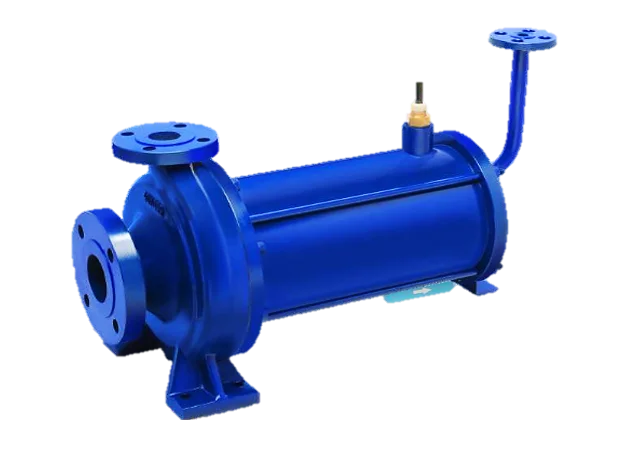
3. Sealless Canned Motor Pumps
These pumps eliminate shaft seals entirely, enclosing the motor and pump within a single pressure-tight housing. They are perfect for handling low-temperature refrigerants such as ammonia, CO₂, and fluorocarbons, where leakage control is essential.
4. Hermetically Sealed Refrigerant Pumps
Used primarily in HVAC systems, these pumps have an integrated motor and compressor within a sealed casing to prevent refrigerant loss and contamination.
5. Magnetic Drive Pumps
These pumps use magnetic coupling to transmit torque from the motor to the impeller, ensuring complete isolation between the motor and the pumped refrigerant. They offer high reliability and minimal maintenance.
Importance of Refrigerating Pump Parts in Cooling Systems
The quality and construction of parts for refrigerating pumps influence an entire cooling system’s trustworthiness and functionality. This importance can be traced to the following:
- Eliminating Leaky Systems
The permits for preventing leaks of seals are one of the critical parts for stopping a refrigerant leak.
- Preventing Refrigerant Leakage.
The energy and hydraulic loss of systems can be achieved with the proper design of the pump’s impeller.
- Equipment Life
The equipment life can be extended due to high-quality maintenance and the engineered pumps and parts.
- Damaging Sensitive Equipment
Seals and bearings work to eliminate and reduce connection stress within and around specially designed free and moving systems to promote and protect the sensitivity of the systems.
- Counterbalancing System Support
Counterbalancing systems will support and keep the five systems operating components of pumps: unseen moving parts, flow, pressure, and operating temperatures. This is critical for equipment refrigerant stability and quality of the final product.
Material Selection for Refrigerating Pump Parts
Refrigerant pumps can become burdened with very low operation temperatures and very aggressive refrigerants. Thus, choosing the right materials for parts construction is a must.
Some of the materials used for construction are:
- Stainless Steel: It is one of the most reactive materials. It is destructively durable and will not react with most refrigerants
- Bronze: Fitting for low-pressure and non-corrosive liquids.
- Titanium: Select for highly aggressive and cryogenic practices.
- Carbon and Ceramic: Commonly, they are utilised in seals and bearings for wear resistance.
Material compatibility allows for safe operation, efficient performance, and reliability even in rigorous industrial applications.
Maintenance and Troubleshooting
Proper maintenance of refrigerating pumps and their components is vital for reliability and performance. Neglecting even minor issues can lead to system inefficiencies or catastrophic failure.
Routine Maintenance Includes:
- Checking alignment and vibration levels.
- Monitoring bearing temperature and lubrication.
- Inspecting seals or integrity for leaks.
- Cleaning suction strainers and filters.
- Verifying motor insulation and electrical performance.
Common Issues:
- Cavitation: Due to low pressure at the inlet.
- Seal Leakage: Due to old seals.
- Bearing Failure: Due to low lubrication or contamination.
- Overheating: Usually, the reason is poor cooling flow or motor problems.
Once the faulty parts are in place, unrecoverable problems pile up and, as a result, poor-performing cooling systems.
Modern Innovations in Refrigerating Pumps
The refrigeration industry has witnessed remarkable technological advancements in recent years. Some notable innovations include:
- Sealless canned motor designs for zero-leak performance.
- Variable frequency drives (VFDs) for precise control and energy savings.
- Condition monitoring sensors for predictive maintenance.
- Advanced hydraulic designs for improved efficiency and noise reduction.
- Smart control integration with building and industrial automation systems.
These developments enhance reliability, efficiency, and environmental compliance — making modern refrigerating pumps a cornerstone of sustainable industrial cooling.
Why Choose Hydrodynepumps for Refrigerating Pump Solutions
At Hydrodyne Teikoku, we take pride in being a trusted name in engineered fluid handling solutions. Our Hydrodynepumps are designed to deliver exceptional performance, safety, and reliability in refrigeration and cooling applications.
We understand the importance of high-quality refrigerating pump parts and use only the finest materials and precision manufacturing techniques to ensure that every component meets the highest standards.
What Sets Us Apart:
- Sealless pump technology, hermetic sealing and high efficiency pump tech.
- Custom industrial and commercial cooling systems.
- Proven global installation reliability.
- Sustained after-sales support and maintenance.
- Sustained pump designed for energy efficiency.
Our pumps are engineered not just to perform, but to protect your process, conserve energy, and ensure long-term dependability.
Conclusion
Refrigerating pumps are the unsung heroes of modern cooling systems, ensuring smooth, efficient, and reliable refrigerant circulation. Each component, from the impeller to the bearings, plays a vital role in maintaining performance, safety, and efficiency.
Understanding and maintaining your refrigerating pump parts not only prevents downtime but also extends equipment life and saves energy over time.
At Hydrodyne Teikoku, we combine engineering expertise with innovative design to deliver Hydrodynepumps that meet the most demanding refrigeration challenges. From industrial chillers to large-scale process cooling systems, our pumps are built to perform — efficiently, safely, and sustainably.
Frequently Asked Questions (FAQs)
- What are refrigerating pump parts made of?
They are typically made from stainless steel, bronze, carbon, or titanium, depending on the refrigerant type and operating temperature. - Why are refrigerating pump parts important?
They ensure efficient, leak-free operation and contribute to the overall performance, safety, and energy efficiency of the cooling system. - How often should refrigerating pump parts be serviced or replaced?
Regular maintenance is essential. Components like seals and bearings may require inspection every 6–12 months, depending on operating conditions. - Can refrigerating pumps handle different refrigerants?
Yes. Modern pumps can handle a wide range of refrigerants, including ammonia, CO₂, R134a, and HFC blends, with appropriate material selection. - What causes refrigerating pump failure?
Common causes include cavitation, overheating, seal failure, or improper lubrication. Preventive maintenance helps avoid these issues. - What is the advantage of using sealless refrigerating pumps?
They completely eliminate the risk of refrigerant leakage, ensuring maximum safety and compliance with environmental standards. - Why choose Hydrodynepumps for refrigerating applications?
At Hydrodyne Teikoku, our Hydrodynepumps are engineered for precision, reliability, and energy efficiency. We design pumps and parts that ensure long-lasting, trouble-free performance in refrigeration and cooling systems worldwide.