
What Are Sealless Canned Pumps? A Complete Industrial Guide
March 27, 2026
Advantages of Using Thermic Fluid Pumps in Heat Transfer Systems
May 1, 2026
Industrial fluid handling has a problem that has existed for as long as centrifugal pumps have been used at scale.
The pump works. The impeller spins. The fluid moves. And somewhere in that assembly, usually at the point where the rotating shaft exits the casing, there is a seal doing its best to hold everything together. For a while, it does. Then it wears. Then it weeps. Then it fails.
For ordinary fluids in non-critical applications, that cycle is manageable. Planned replacement, brief downtime, acceptable cost.
Change the fluid to something toxic, something carcinogenic, something flammable or environmentally regulated, and that seal is no longer a maintenance item. It is a risk sitting in the middle of your process.
Sealless leak-free pumps exist because that risk has no acceptable workaround in certain industries. Only an acceptable solution.
What Are Sealless Leak-Free Pumps?
A sealless leak-free pump is exactly what the name says, though the engineering behind it is worth understanding properly.
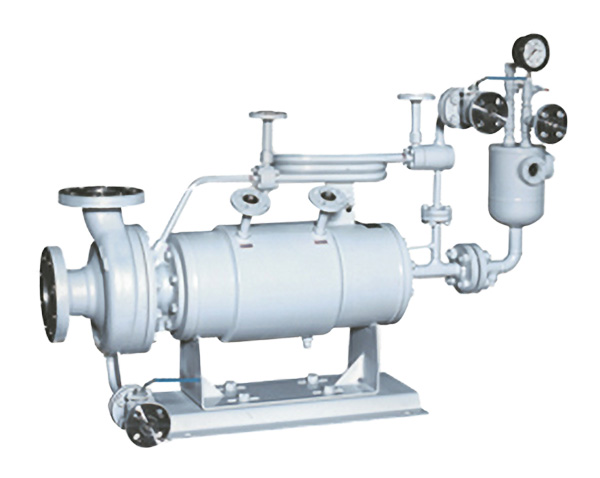
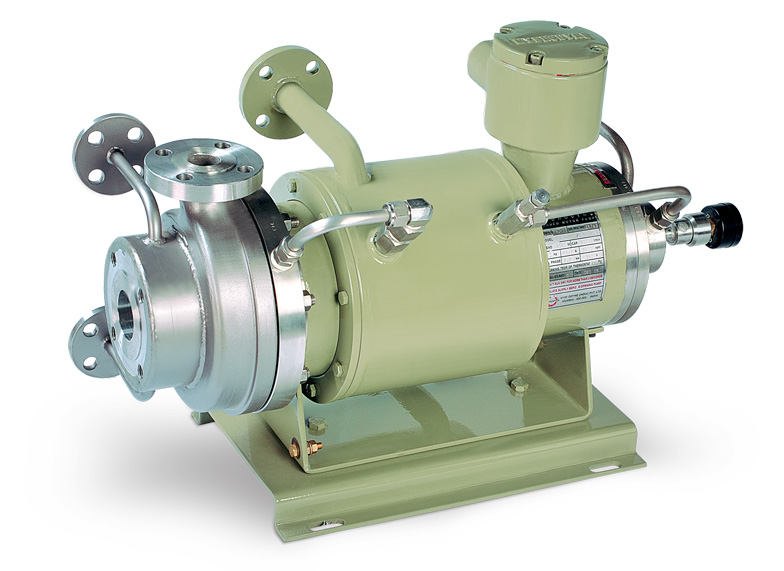
These are pumps designed and constructed with no mechanical seal at the shaft. No dynamic sealing interface between the rotating components and the process environment. The motor and the pump are enclosed together in a hermetically sealed assembly. The fluid stays inside. Always. Not because the seal is holding well this week, but because there is no conventional leakage path built into the design.
The two main technologies that deliver genuine sealless operation are canned motor pumps and magnetic drive pumps. Both eliminate the mechanical seal. They do it through different approaches, but the result in terms of containment is comparable.
In canned motor designs, the rotor sits on the fluid side of a thin containment sleeve. The magnetic field drives it through that sleeve without any physical contact between the electrical components and the fluid.
In magnetic drive designs, an outer magnet assembly driven by the motor transmits torque through a containment shell to an inner magnet assembly connected to the impeller shaft.
Both designs. Zero external leakage. No seal to replace.
How Sealless Leak-Free Pumps Work
The operating principle depends on which technology is in use, but the containment logic is the same across both.
Canned Motor Design
The stator is energised and generates a rotating magnetic field. That field passes through a thin cylindrical can and drives the rotor on the other side. The rotor and impeller are on the same shaft. When the rotor turns, the impeller turns with it directly.
Process fluid enters through the suction inlet. The impeller accelerates it outward through centrifugal action. Pressure builds at the volute and the fluid exits through the discharge.
A portion of that fluid circulates continuously through the motor section. It lubricates the product-wetted bearings. It manages motor temperature. It returns to the main flow. All of this happens inside the sealed assembly without any external input.
Magnetic Drive Design
The motor drives an external rotating magnet assembly. That assembly transmits torque through a static containment shell to an inner magnet assembly connected directly to the impeller shaft. The impeller operates entirely within the sealed wetted casing.
The containment shell separates the drive side from the fluid side. No rotating shaft penetrates the casing. No seal is needed because the drive mechanism never contacts the process environment.
Both designs achieve the same outcome. The fluid is enclosed. It has no route out other than the discharge.
What Makes These Pumps Different From Conventional Designs
The comparison is worth making directly.
A conventional centrifugal pump has a shaft that enters the pump casing from the motor side. At that entry point, a mechanical seal prevents the process fluid from escaping along the shaft. That seal works under pressure, handles temperature, resists chemical attack from the fluid, and manages the continuous friction of a rotating interface. It degrades over time. It is replaced on schedule when it degrades predictably. It fails between schedules when conditions are harder than expected.
Sealless leak-free pumps remove that shaft penetration point entirely.
No rotating interface at the casing wall. No seal material in contact with the fluid. No degradation timeline to manage. The containment is structural, not sacrificial. It does not wear in the same way a seal wears because it is not performing the same function under the same mechanical demands.
That structural distinction is what makes these pumps the specified choice in environments where leakage consequences are serious.
The Benefits, Stated Honestly
Zero Process Leakage
This is the primary benefit and the reason these pumps exist. No mechanical seal means no conventional external leakage path. The fluid that enters through the suction exits through the discharge. Nothing escapes through a seal face, through a weeping gland, through a failed O-ring.
For toxic, hazardous, flammable, or environmentally regulated fluids, this is not a feature to highlight in a brochure. It is the minimum acceptable standard.
Reduced Maintenance Demand
Mechanical seal replacement is a recurring maintenance cost in conventional pump systems. It requires downtime, trained personnel, correct seal inventory, and careful reassembly. Get any part of that wrong and the new seal fails faster than it should.
Remove the seal and you remove that entire maintenance category. Sealless leak-free pumps still require maintenance. Bearings, internal components, and periodic inspection. But the unplanned reactive maintenance that seal failures generate is not part of the picture.
Lower Total Operating Cost
Higher initial purchase cost is a real feature of sealless designs. Worth acknowledging rather than glossing over.
What changes the calculation is the operational period. Seal replacements, unplanned downtime, fluid loss from leakage, and the environmental and regulatory costs that come with hazardous fluid leaks add up over a service life. When those are factored in honestly, the total cost of ownership for sealless leak-free pumps compares favourably in most hazardous fluid applications.
Improved Safety Profile
Eliminating the leakage source eliminates the associated risks. No fluid exposure for maintenance personnel. No fire risk from a flammable fluid leak. No contamination event from a toxic process chemical reaching the environment. No regulatory incident from a reportable release.
The safety improvement is not marginal. It is structural, built into the design rather than managed through procedure and protective equipment.
Compact and Integrated Construction
The integrated motor and pump assembly reduces the physical footprint compared to a conventionally coupled pump and motor combination. Less pipework stress. Simpler installation. Smaller space requirement. In facilities where available footprint is constrained, that matters practically.
Quieter Operation
The enclosed, integrated design produces lower noise levels than coupled pump and motor assemblies. In facilities with noise exposure limits or occupied workspaces nearby, this is a functional benefit that shows up in day-to-day operation.
Where Sealless Leak-Free Pumps Are Used
The application range reflects where the design characteristics actually matter.
Chemical Industry
The largest application sector by volume. Corrosive acids, chlorinated solvents, reactive intermediates, toxic compounds. Fluids where even a small seal leak creates immediate safety and environmental consequences. Sealless leak-free pumps are standard specification in chemical plants handling anything that cannot be allowed to reach the external environment.
Pharmaceutical Manufacturing
Product integrity in pharmaceutical processes depends on contamination control. A deteriorating mechanical seal introduces contamination risk that is simply not acceptable in sterile or high-purity manufacturing environments. Sealless designs support clean fluid handling, clean-in-place compatibility, and consistent process integrity.
Petrochemical and Refinery
Volatile hydrocarbons. Flammable process streams. Liquefied gases under pressure. Seal failure in these environments is not a maintenance event. It is a potential incident. In hazardous area classified installations, sealless leak-free pumps are often the only specification that meets safety requirements.
Nuclear Facilities
Radioactive fluid handling operates under zero-leakage requirements that are absolute, not aspirational. Nuclear cooling circuits, waste transfer systems, and process loops in nuclear plants have relied on sealless canned pump technology for decades precisely because it delivers containment by design rather than by maintenance discipline.
Refrigeration and HVAC
Refrigerant loss is an environmental and operational problem. Closed-loop refrigerant systems benefit directly from sealless operation. No leakage path means refrigerant stays in the system, efficiency is maintained, and regulatory compliance around refrigerant emissions is easier to sustain.
Heat Transfer Systems
Thermal oil circuits running at elevated temperatures accelerate seal degradation significantly. At high operating temperatures, seal replacement intervals shorten and unexpected failures become more frequent. Sealless leak-free pumps remove that temperature-driven degradation from the system.
Water Treatment and Chemical Dosing
Aggressive dosing chemicals in precise controlled quantities. Leakage here is a safety issue, a dosing accuracy issue, and potentially a process compliance issue. Sealless designs address all three simultaneously.
What to Consider Before Selecting One
- Fluid compatibility is the starting point. Chemical composition, temperature range, viscosity, vapour pressure, and cleanliness all determine which design and which internal materials are appropriate. Particle-laden or abrasive fluids present a specific challenge in canned motor designs where bearings are product-lubricated.
- Hydraulic requirements need to be matched to the pump curve at the actual operating point, not just the design point. Running continuously away from the best efficiency point generates internal heat that the system may not adequately dissipate.
- NPSH margin must be evaluated properly. Cavitation in sealless designs causes internal bearing damage that is less immediately visible than in conventional pumps. Address it at specification. Correcting it after installation is significantly more difficult.
- Duty cycle affects thermal management of the motor windings. Frequent starts in canned motor designs have thermal implications. Start frequency limits exist and need to be respected.
- Site and regulatory requirements including hazardous area classification, environmental discharge limits, and applicable safety standards should inform the selection process before hydraulic matching begins.
Conclusion
Sealless leak-free pumps are not a premium upgrade on conventional pump technology. They are a different engineering approach to a specific problem that conventional technology cannot fully resolve.
Where the fluid is hazardous. Where leakage is a safety, environmental, or regulatory issue. Where maintenance access is limited or maintenance frequency needs to be minimised. In all of those contexts, the sealless design is not the more expensive option. It is the appropriate one.
At Hydrodynepumps Teikoku, our work with sealless leak-free pumps starts with the process conditions, the fluid, and what the consequences of leakage would actually be in the specific application. The right pump is the one that fits that reality properly, not the one that fits a general category.
FAQs
1. What is a sealless leak-free pump?
A pump with no mechanical seal, where the motor and pump are enclosed in a hermetically sealed assembly with no external leakage path.
2. How does a sealless pump prevent leakage?
By eliminating the shaft penetration point where conventional seals sit. The drive mechanism operates through magnetic coupling or a canned motor arrangement, both within a sealed casing.
3. What fluids are these pumps designed for?
Hazardous, toxic, flammable, radioactive, and environmentally sensitive fluids where zero leakage is a requirement. Also refrigerants, solvents, and aggressive process chemicals.
4. Do sealless pumps require maintenance?
Yes, but less reactive maintenance than sealed pumps. No seal replacement cycles. Scheduled inspection of bearings, internal components, and containment integrity.
5. Can they handle high temperatures?
Yes, with appropriate material specification for the operating temperature range throughout the internal wetted components.
6. Are sealless leak-free pumps more expensive?
Initial cost is higher. Total cost of ownership over a realistic service life, accounting for reduced maintenance and eliminated leakage-related costs, is often comparable or lower.
7. What is the most important factor in selecting one?
Fluid compatibility. Chemical composition, temperature, viscosity, and cleanliness all determine which design is appropriate and which materials need to be specified internally.