
Case Study: Eliminating Chlorine Leak Risk Using Canned Motor Pumps
June 25, 2026
Why Sealless Liquid Refrigerant Pumps Are Becoming the Industry Standard
July 10, 2026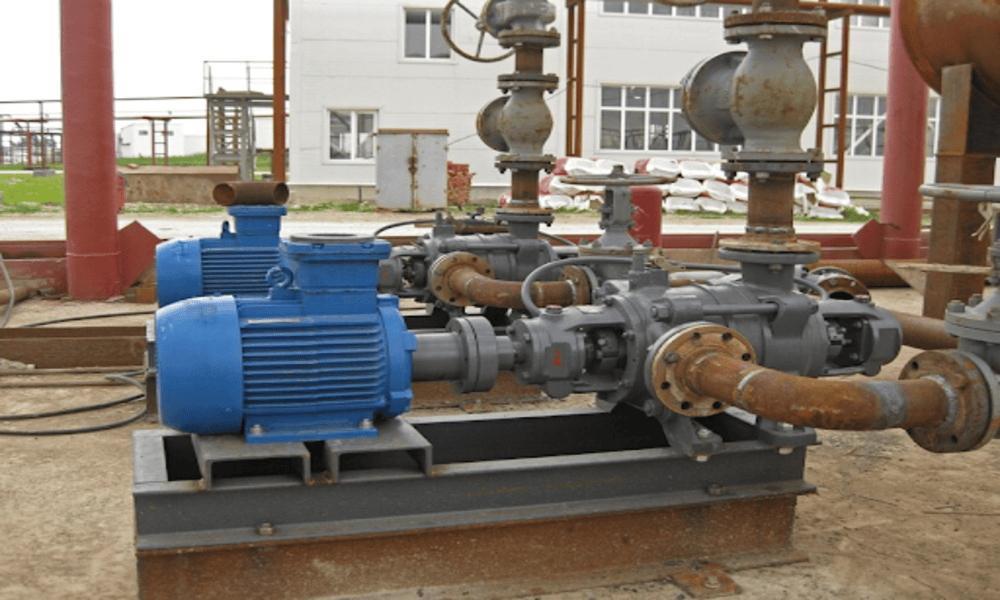
When an industrial process demands high-pressure chemical transfer, the pump selection becomes more than a matter of achieving the required flow. It directly influences process stability, equipment reliability, workplace safety, and environmental performance. A pump that performs well in standard applications may struggle under higher pressure, particularly when handling hazardous or sensitive chemicals.
For this reason, many facilities choose multi stage canned motor pumps instead of conventional pumping systems. Their ability to generate higher discharge pressure while maintaining a completely sealed pumping environment makes them well suited for applications where dependable performance and leak-free operation are essential.
Rather than looking at specifications alone, it helps to understand the operational challenges these pumps are designed to solve.
A Quick Decision Guide
Before selecting a pumping system, engineers often evaluate the application itself.
| If Your Application Requires… | A Multi-Stage Canned Motor Pump May Be the Right Choice |
| High discharge pressure | Yes |
| Leak-free chemical handling | Yes |
| Continuous industrial operation | Yes |
| Hazardous or corrosive fluids | Yes |
| Reduced maintenance interruptions | Yes |
| Stable pressure across long pipelines | Yes |
When several of these conditions exist together, a multi-stage sealed pumping solution often becomes a practical option.
What Makes High-Pressure Chemical Transfer Challenging?
Moving chemicals under pressure introduces several operational demands that are not present in low-pressure systems.
Facilities frequently encounter challenges such as:
- Long transfer distances
- Multiple processing units
- Pressure losses throughout piping
- Elevated operating temperatures
- Hazardous process fluids
- Strict environmental and safety requirements
Each of these factors places additional demands on the pumping system. Simply increasing motor size or pump speed does not always provide the most reliable solution.
Instead, pressure must be generated efficiently while maintaining smooth and stable operation.
Why Single-Stage Pumps May Reach Their Limits
Single-stage pumps perform well in many industrial applications, but they are not always the ideal solution for systems requiring significantly higher discharge pressure.
Some common limitations include:
| Operational Challenge | Potential Impact |
| Limited pressure capability | Reduced system performance |
| Higher loading on one impeller | Increased mechanical stress |
| Pressure instability | Inconsistent process conditions |
| Greater wear under demanding service | Increased maintenance attention |
This does not mean single-stage pumps are unsuitable. It simply means certain applications benefit from a different hydraulic design.
Why the Canned Motor Design Changes Everything
Pressure is only one part of the equation.
Chemical processing plants should also take into account the consequences of a loss of fluid from the pumping system.
The separation of the pumped liquid from the environment is usually done with mechanical seals in traditional pumps. These seals are well proven technologies but still wear components that must be monitored and maintained.
Canned motor pumps take a different approach.
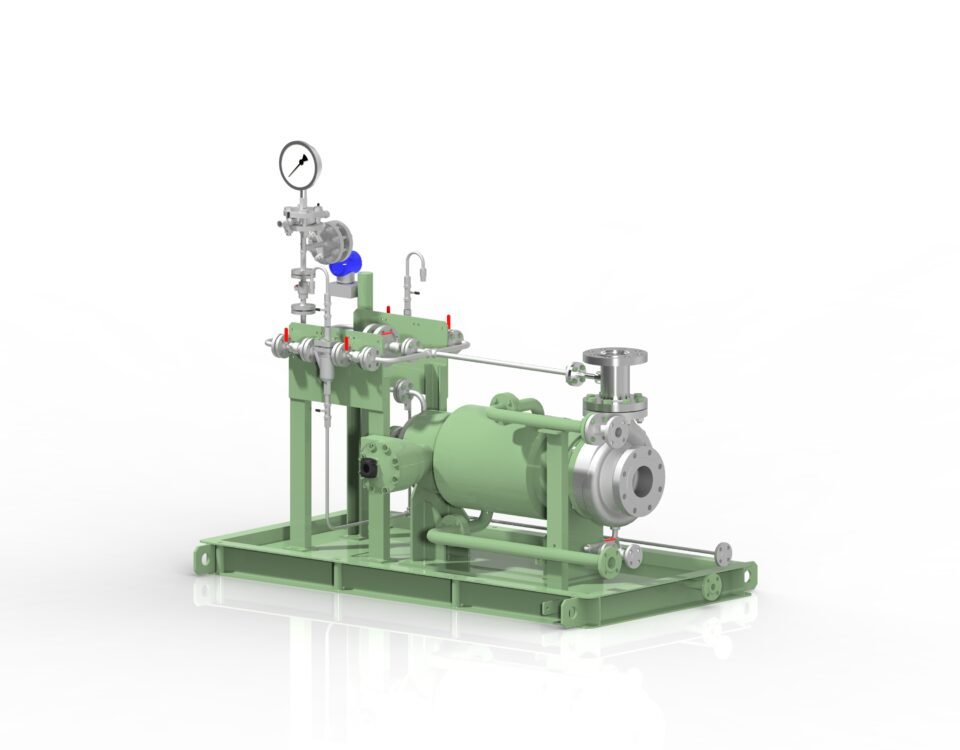
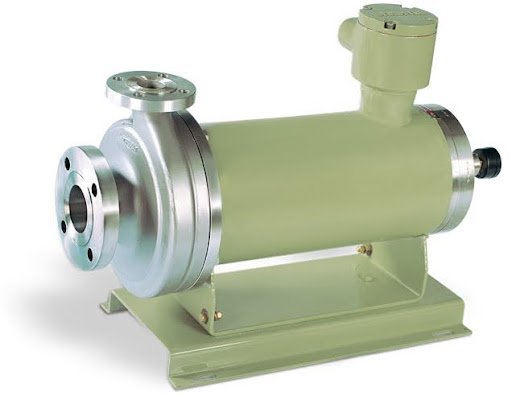
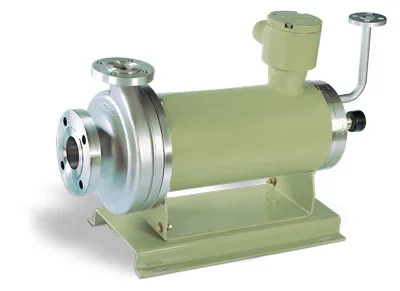
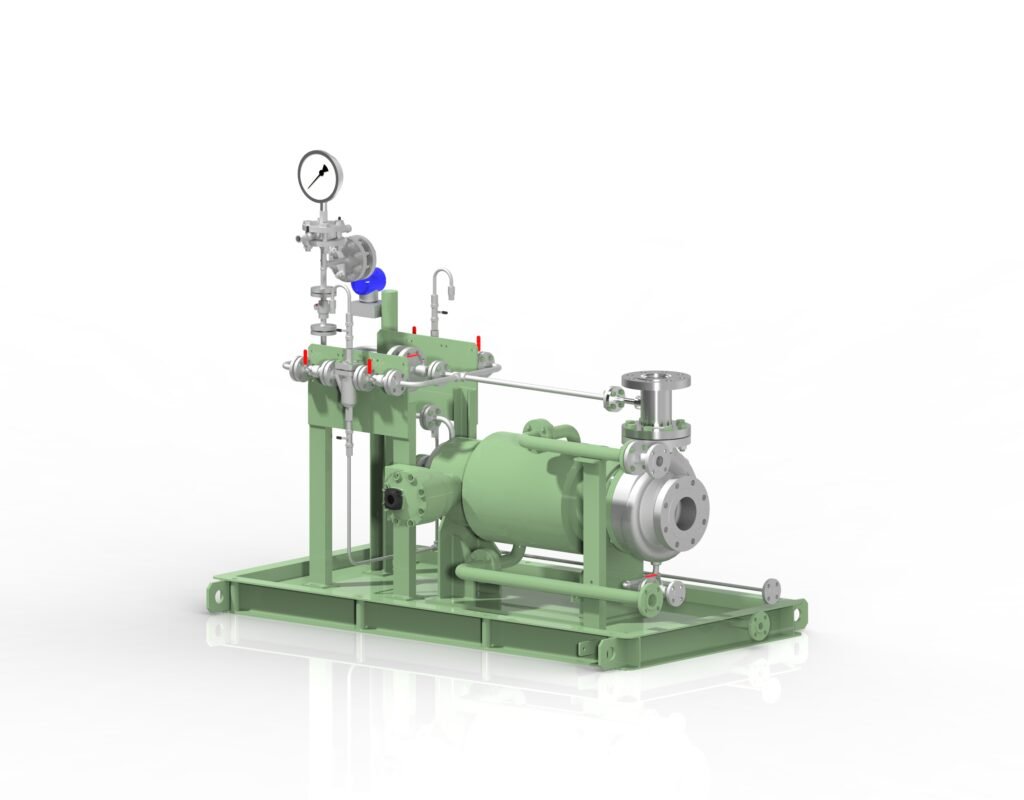
There is no mechanical seal outside the motor and pump assembly and it is housed in a hermetically-sealed shell.
This design helps support:
- Leak-free operation
- Reduced environmental exposure
- Improved workplace safety
- Better handling of hazardous liquids
- Greater confidence during continuous operation
For facilities transferring aggressive chemicals, this can be one of the most valuable advantages.
How Multi-Stage Designs Build Pressure More Efficiently
A multi-stage configuration is used to create the required pressure from a number of impellers rather than relying on one impeller to deliver all of the pressure necessary.
The fluid pressure of each stage is slowly raised before passing to the next stage.
This approach provides several operational advantages:
- More efficient pressure generation
- Smoother hydraulic performance
- Reduced stress on individual components
- Better suitability for demanding industrial systems
- Consistent pressure throughout the transfer process
Rather than forcing one stage to perform all the work, the system distributes the load more effectively.
Where These Pumps Deliver the Greatest Value
Although every application is different, several industries regularly benefit from this combination of high-pressure capability and seal-less construction.
Chemical Manufacturing
Sometimes corrosive or reactive liquids are transferred across several stages of a chemical production process.
Reliable pressure helps maintain consistent production while leak-free operation supports safer handling.
Petrochemical Facilities
Petrochemical operations frequently involve demanding process conditions where equipment reliability directly affects production continuity.
Stable pumping performance helps maintain process efficiency across interconnected systems.
Pharmaceutical Processing
In specialized manufacturing processes, it is often necessary to deal with process liquids that should not be contaminated and must be handled with care.
A sealed pumping system supports these controlled operations.
Oil and Gas Applications
High-pressure transfer is common throughout refining and related industrial processes.
Reliable pumping machines ensure sustained output and reduce unforeseen downtimes.
Industrial Refrigeration
In certain applications utilizing process refrigeration, it is necessary to have reliable circulation of specialty fluids under varying conditions.
A fully sealed pump design helps improve operational reliability while supporting safer fluid containment.
What Plant Engineers Usually Prioritize
When evaluating pumping equipment, experienced engineers often look beyond flow and pressure ratings.
Their checklist commonly includes:
- Can the pump operate continuously?
- Does the design reduce potential leakage?
- Is maintenance simplified?
- Will it support long-term operational reliability?
- Is it suitable for the process fluid?
- Can it perform consistently under demanding conditions?
The equipment selected to meet these practical requirements may result in more reliable system performance over time.
Key Benefits at a Glance
Comparing specifications individually doesn’t always provide the complete picture.
| Operational Need | How Multi-Stage Canned Motor Pumps Help |
| High-pressure transfer | Multiple stages gradually build pressure |
| Process reliability | Stable hydraulic performance |
| Leak prevention | Hermetically sealed construction |
| Hazardous fluid handling | Reduced leakage risk |
| Continuous operation | Designed for demanding industrial service |
| Maintenance planning | Fewer external sealing components |
Looking at the complete picture often makes the technology’s value much clearer.
Questions Worth Asking Before Selecting a Pump
There is no one-size-fits-all for an industrial application, so the first step to picking the right pump is to understand the process, not just the highest pressure.
Consider asking:
- What pressure must the system maintain?
- How demanding is the operating environment?
- What type of chemical is being transferred?
- Will the pump operate continuously?
- Are leak prevention and environmental protection major priorities?
- What level of long-term reliability is expected?
Before deciding on a pumping solution, it is important to consider these questions to help eliminate options that might not be required to achieve minimal performance objectives.
Supporting Reliable Operations Every Day
Chemical transfer systems with high operating pressure require equipment that holds up to the stress of operation. Although pressure capability is an important consideration, often long-term reliability, process safety and reliable containment will be a bigger factor in deciding which pump to use.
Multi stage canned motor pumps integrate a number of hydraulic stages and a leakproof motor design to deliver high pressure performance and leak-free performance for facilities with this need. They are a reliable choice in various industries such as chemical processing, petrochemical, pharmaceutical, oil and gas, and other industrial sectors. because they can be used for continuous processes.
Building Confidence in High-Pressure Operations
Selecting a pumping solution for high-pressure chemical transfer is about more than achieving the required pressure. This also includes the protection of personnel, process stability, minimization of maintenance needs, and environmental responsibility. Facilities can be more efficient in the long run by using a pumping system that delivers long-lasting operational efficiency and leak-free operation.
At HydrodynePump Teikoku, we believe that each industrial application should have its own pumping solution that is tailored to meet the specific conditions of the application. With years of expertise in seal-less canned motor pump technology, we are well-positioned to serve industries that are seeking reliable performance, improved safety and chemical handling capabilities. If you’re looking for the best solution to suit your facility, our team can help you identify the right pumping solution for your specific application.
Frequently Asked Questions
1. What are multi stage canned motor pumps?
Multi-stage canned motor pumps are seal-less pumps that use multiple impellers to generate higher discharge pressure while maintaining a hermetically sealed design for leak-free operation.
2. Why are these pumps suitable for chemical transfer?
Their sealed construction helps reduce leakage risks, making them well suited for transferring hazardous, corrosive, or sensitive process fluids.
3. Which industries commonly use multi-stage canned motor pumps?
They are widely used in chemical processing, petrochemical facilities, pharmaceutical manufacturing, oil and gas operations, industrial refrigeration, and other demanding industrial applications.
4. How do multi-stage pumps generate higher pressure?
Each impeller stage increases the fluid pressure before passing it to the next stage, allowing the pump to achieve higher discharge pressure efficiently.
5. What is the advantage of a seal-less pump design?
A seal-less design eliminates the external mechanical seal, helping minimize leakage and supporting safer operation in demanding environments.
6. Are multi-stage canned motor pumps suitable for continuous operation?
Yes. They are designed for industrial applications where reliable, continuous performance is essential.
7. What should be considered when selecting a canned motor pump?
Key factors include operating pressure, flow requirements, chemical compatibility, process conditions, and the overall reliability needed for the application.