
Canned Pumps in Pharmaceutical Manufacturing: Leak-Proof Fluid Handling
August 10, 2026
Chemical Pumps for Air Pollution Control Systems
August 31, 2026
A refrigeration pump that suddenly becomes noisy, delivers inconsistent circulation, or needs repeated maintenance does not automatically need a new component. In many industrial refrigeration systems, the more important question is why the pump has started behaving differently.
Before replacing refrigerating pump parts, maintenance teams should determine whether the suspected component is actually responsible for the problem. Changes in operating duty, fluid conditions, system resistance, or suction conditions can sometimes create symptoms that resemble mechanical wear or component damage.
That distinction matters. Replacing a part without identifying the underlying cause may temporarily restore operation, only for the same issue to return later.
First Ask: What Has Actually Changed?
The most useful maintenance decisions usually begin with observation rather than immediate replacement.
A refrigeration pump may need closer assessment when teams notice:
- Reduced circulation performance
- Unusual noise or vibration
- Repeated operating interruptions
- Changes in expected temperature or pressure conditions
- More frequent maintenance requirements
- Visible deterioration of accessible components
- Performance that gradually becomes inconsistent
None of these signs automatically identifies one failed part.
For example, unusual vibration could relate to a component, but it could also indicate that the pump is operating under conditions different from those for which it was originally selected. Reduced circulation may similarly point toward the pump, the system, or a combination of both.
The goal should therefore be to confirm the source of the change before deciding what needs attention.
Think About the Pump System, Not Just One Component
A refrigeration pump is only one part of a wider refrigeration circuit.
Its performance is influenced by the fluid being handled, system layout, operating conditions, required flow, pressure conditions, and the duty expected from the pump.
That means maintenance teams should avoid viewing every pump issue as an isolated component failure.
Consider a simple example. A pump may have operated reliably for a long period, but the refrigeration system may later be modified. If the expected duty changes, the existing pump may begin operating differently even though its individual components have not suddenly become defective.
The same principle applies when process conditions gradually change.
A component can certainly wear or become damaged. However, understanding why it happened is often just as important as identifying the affected component.
Repair, Replace, or Investigate Further?
There is rarely one universal answer. The appropriate direction depends on the condition of the component and the circumstances surrounding the problem.
| Situation | Best Next Direction |
| Minor serviceable wear | Assess whether repair is appropriate |
| Confirmed component damage | Evaluate replacement |
| Repeated failure of the same part | Investigate the underlying cause |
| Uncertain performance change | Check pump and system conditions |
| Changed operating duty | Reassess pump suitability |
| Multiple recurring problems | Consider broader pump evaluation |
This approach keeps maintenance focused on reliability rather than simply replacing parts whenever symptoms appear.
When selecting or evaluating refrigerating pump parts, compatibility with the pump design and operating application should also be considered. A component should not be viewed independently from the equipment in which it operates.
Why Replacing a Part May Not Fix the Problem
Repeated replacement of the same component is often a reason to look beyond the component itself.
Several broader factors can contribute to recurring pump problems.
Pump Operation Outside Its Intended Duty
Pumps are selected around particular operating requirements. If actual conditions move significantly away from the intended duty, additional stress may be placed on the pump.
A replacement component may therefore experience the same operating environment that affected the previous one.
Changed System Resistance
Changes elsewhere in a refrigeration circuit can affect how a pump operates.
Even when the pump itself has not been modified, changes in the system may alter the conditions under which it must perform.
Altered Fluid Conditions
Industrial refrigeration applications depend heavily on the characteristics and condition of the fluid being handled.
If those conditions change, pump behavior can change as well.
Suction Conditions
Pump performance is closely connected to conditions at the suction side of the system. If those conditions are no longer appropriate, performance problems may appear even when individual components remain serviceable.
Repeated Thermal Stress
Frequent changes in operating temperature or demanding thermal conditions can influence equipment over time.
Rather than assuming one damaged component is the complete explanation, teams should consider whether repeated operating stresses are contributing to the problem.
Incorrect Application
Sometimes the problem is not maintenance at all.
If a pump is being used in an application significantly different from the one for which it was originally selected, repeated failures may indicate that the equipment configuration needs to be reconsidered.
What About Refrigerating Pump Parts in Canned Motor Systems?
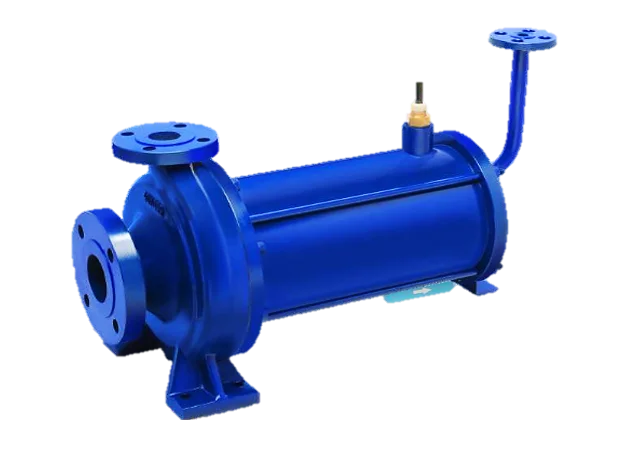
Canned motor refrigeration pumps require a different maintenance perspective from conventional pump arrangements.
In a canned motor pump, the pump and motor are integrated within the overall design. One of the important characteristics of this configuration is the absence of a conventional dynamic shaft seal.
This construction philosophy is particularly relevant in refrigeration applications where containment and reliable fluid handling are important considerations.
Because of that integrated arrangement, maintenance decisions should not assume that every component is treated in exactly the same way as a part in a conventional mechanically sealed pump.
The condition of individual refrigerating pump parts should instead be assessed in the context of the complete canned motor pump assembly and its operating duty.
This becomes especially important in demanding industrial refrigeration applications, including systems handling ammonia.
Specialist assessment can help determine whether the concern is limited to a serviceable component or reflects a broader operating or application issue.
When Should Complete Pump Replacement Be Evaluated?
Replacing an entire pump should not be the automatic response to a single maintenance concern.
However, certain situations justify a broader equipment assessment.
These may include:
- Repeated major failures despite appropriate maintenance
- Operating conditions that have changed substantially
- A pump configuration that no longer matches the required system duty
- Reliability that continues to decline after identified maintenance issues have been addressed
- Major redesign or modification of the refrigeration system
- Multiple recurring problems affecting overall pump performance
The important word here is evaluate.
A pump that experiences one component issue does not necessarily need complete replacement. Likewise, continuing to replace individual components may not make sense if the original equipment no longer matches the application’s requirements.
The decision should follow an assessment of the pump, its operating history, and the refrigeration system around it.
A Practical Maintenance Decision Checklist
Before deciding between repair and replacement, maintenance teams can work through a few basic questions:
- Has the actual source of the problem been confirmed?
- Have operating conditions changed recently?
- Is the suspected component genuinely damaged?
- Is the same issue happening repeatedly?
- Does the pump still match the required operating duty?
- Have changes elsewhere in the refrigeration circuit been considered?
- Are several components showing signs of deterioration?
- Has the complete pump system been reviewed?
- Would specialist assessment provide a clearer diagnosis?
This kind of checklist helps prevent maintenance from becoming a cycle of replacing components without solving the real reliability issue.
Refrigeration Pump Reliability Starts With Application Fit
Maintenance begins long before a component needs attention.
The suitability of the original pump configuration for the fluid, operating conditions, required circulation, and overall refrigeration duty has a major influence on long-term performance.
When the pump remains properly matched to its application, maintenance decisions are easier to interpret. When operating requirements change, however, problems that look like ordinary component wear may indicate something broader.
That is why plant teams should consider maintenance history together with current system conditions.
A recurring issue tells a different story from an isolated component concern.
Likewise, a pump that starts experiencing difficulties immediately after system changes deserves a different type of investigation from equipment that has simply experienced normal service-related wear.
Look Beyond the Individual Part
A refrigeration pump problem should not automatically become a spare-parts problem.
The better maintenance question is whether the affected component is the cause of the problem, the result of another condition, or simply one sign that the pump’s operating environment has changed.
At Hydrodyne Teikoku, we view refrigeration pump reliability as an application issue as much as a component issue. Our canned motor pump solutions are selected around the fluid and operating conditions, and we work with customers to evaluate suitable configurations for demanding refrigeration duties.
Frequently Asked Questions
1. What are refrigerating pump parts?
Refrigerating pump parts are components used within pumps that support industrial refrigeration systems. The exact parts and their functions depend on the pump design, application, and operating conditions.
2. When should a refrigeration pump component be replaced?
Replacement may be considered when inspection confirms significant damage or deterioration. Before replacing it, teams should also check whether changing operating conditions contributed to the problem.
3. Can system conditions cause a refrigeration pump problem?
Yes. Changes in pump duty, fluid conditions, system resistance, or suction conditions can affect pump performance. This is why the complete system should be assessed before assuming a component has failed.
4. Why should repeated component failures be investigated?
Repeated failures can indicate an underlying system or application issue. Replacing the same component again may not provide a lasting solution if the actual cause remains unresolved.
5. Are canned motor refrigeration pumps maintained differently?
Canned motor pumps integrate the pump and motor and do not use a conventional dynamic shaft seal. Their maintenance requirements should therefore be assessed according to the complete pump design and operating application.
6. When should the complete refrigeration pump be evaluated for replacement?
A complete pump evaluation may be appropriate when major problems keep returning, system requirements have changed, or the existing pump configuration no longer suits the required refrigeration duty.