
Refrigerating Pump Parts Replacement: When to Repair or Replace Each Component
August 20, 2026
Handling Hazardous Fluids Safely with Sealless Canned Pump Technology
October 9, 2026
Industrial air-pollution-control systems are made up of more than the equipment that captures, absorbs, or treats unwanted contaminants. Behind the main treatment unit, there may also be liquids that need to move continuously between tanks, vessels, circulation loops, and other parts of the process.
That fluid movement can look straightforward on paper. In practice, the liquid may be corrosive, volatile, hot, chemically aggressive, or sensitive to leakage. This is why choosing the right emission control pump becomes an important part of supporting reliable fluid handling within the overall pollution-control process.
The pump does not control the performance of the entire air-pollution-control system. Its role is more focused: moving the required process liquid under the operating conditions for which it has been selected.
Where Pumps Fit Into Pollution-Control Systems
Many industrial pollution-control processes depend on liquids at one or more stages. Scrubbers are one familiar example. Depending on the process design, liquid may need to circulate repeatedly, move from one piece of equipment to another, or return through a treatment loop.
A chemical pump may therefore be used for duties such as:
- Circulating process liquid through a treatment loop
- Transferring chemical solutions between equipment
- Recirculating liquid back into the process
- Moving liquid from storage or collection areas
- Supporting fluid movement during individual treatment stages
- Handling liquids that require controlled containment
The exact pump duty depends on how the overall system has been engineered.
This distinction matters. A pump is a supporting component within the broader process rather than the pollution-control equipment itself.
The Fluid Can Be More Challenging Than the Pump Duty Looks
A circulation requirement may simply state a required flow and head, but those two numbers do not tell the whole story.
The characteristics of the liquid can have a major influence on pump selection.
Chemical Composition
Process liquids can differ significantly in their chemical behavior. The composition of the fluid needs to be understood before deciding whether a particular pump configuration is suitable.
Material selection also needs application-specific evaluation rather than assumptions based only on the general pump type.
Temperature
Some circulation duties involve elevated liquid temperatures.
Temperature can affect the suitability of the pump design, its internal components, and the configuration required for dependable operation.
Suspended Solids
Certain process liquids may contain suspended matter or other difficult characteristics.
Where solids are present, their concentration and behavior need to be considered as part of the application review.
Volatility
Volatile liquids require closer attention because their vapor characteristics may affect pump operation.
Understanding the liquid’s behavior under actual operating temperature and pressure conditions can therefore be just as important as knowing the nominal flow rate.
Corrosive Behavior
Industrial chemical liquids can also create challenging operating environments.
Rather than assuming that one pump or material will suit every chemical duty, compatibility should be evaluated against the actual process liquid.
Leakage Sensitivity
Some fluids present a greater concern if they escape from the pumping system.
When containment is particularly important, the way the pump is constructed becomes another selection factor.
What an Emission Control Pump Must Be Evaluated Against
Selecting an emission control pump should begin with the process conditions rather than with a preferred pump model.
| Process Factor | Why It Matters |
| Fluid characteristics | Influence pump configuration and material suitability |
| Flow requirement | Defines the circulation or transfer duty |
| Head requirement | Relates to the resistance the pump needs to overcome |
| Temperature | Helps determine whether the pump design suits the service |
| Vapor behavior | May influence suction and operating conditions |
| Leakage sensitivity | Can affect whether a sealless configuration is considered |
| Operating pressure | Helps define the conditions the pump must handle |
| Process behavior | May indicate whether a specialized configuration is required |
Looking at these factors together gives engineers a more realistic picture of the application.
A pump selected only from flow and head figures may overlook characteristics that become important once the equipment begins operating with the actual process liquid.
Why Leakage Control Matters in Chemical Circulation
Every point where process liquid passes through equipment deserves attention when hazardous, volatile, or sensitive fluids are involved.
In conventional pumping arrangements, the shaft-sealing area is one location that may require consideration from a containment standpoint. Depending on the application, engineers may therefore evaluate sealless pumping technology.
A sealless design removes the conventional dynamic shaft seal from the arrangement.
This does not mean that every pollution-control process needs a sealless pump. It means that when fluid containment is a significant requirement, pump construction becomes part of the engineering discussion.
This is particularly relevant where the process liquid itself creates concerns around leakage, product loss, environmental exposure, or working conditions.
Where Canned Motor Pump Technology Fits
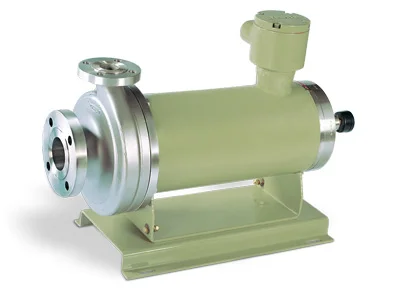
Canned motor pumps provide one approach to sealless fluid handling.
In this design, the pump and motor are integrated into a compact arrangement. The construction eliminates the need for a conventional dynamic shaft seal between the pump and motor.
For suitable applications, this type of configuration can be considered where engineers are dealing with:
- Hazardous liquids
- Volatile process fluids
- Fluids where containment is particularly important
- High-temperature duties requiring an appropriate configuration
- Specialized chemical circulation requirements
- Applications where a compact sealless arrangement is useful
Canned motor technology should still be selected according to the actual operating conditions.
The presence of chemicals in a pollution-control process, by itself, is not enough to determine that a canned motor pump is the correct solution.
Not Every Chemical Service Is the Same
One of the biggest mistakes in industrial pump selection is treating every chemical circulation duty as though it creates the same operating challenge.
It does not.
Two systems may have similar flow requirements but require very different pumping arrangements because the fluids behave differently.
Volatile Fluids
Vapor behavior needs particular attention when a liquid is volatile.
Operating temperature, suction conditions, pressure, and the properties of the liquid may all influence how the pumping application should be evaluated.
A pump configuration should therefore be selected using actual process information rather than general assumptions about the chemical.
High-Temperature Liquids
High-temperature circulation introduces another layer of engineering consideration.
The pump must be suitable for the temperatures it will experience during real operation, not simply normal ambient conditions.
Specialized pump arrangements may be required depending on the liquid and temperature range involved.
Crystallizing or Difficult Fluids
Certain liquids can crystallize, solidify, polymerize, or otherwise behave differently as operating conditions change.
These services generally require closer evaluation because fluid behavior can influence both the pump configuration and the way circulation is maintained.
A standard circulation pump should not automatically be assumed suitable.
High-Head Duties
Some systems require more pressure or head than a conventional circulation duty.
A high-head application may call for a different configuration, such as a multistage arrangement, depending on the operating requirement.
Again, the right choice comes from understanding the system rather than choosing equipment only by product category.
Three Questions Before Selecting the Pump
A useful first screening of the pumping requirement can start with three questions.
- What liquid is actually being circulated?
Identify its chemical characteristics, temperature, vapor behavior, solids content where applicable, and any other properties relevant to pumping. - What operating conditions will the pump really experience?
Look beyond nominal figures. Flow, head, pressure, suction conditions, temperature, and variations during operation all matter. - How important is fluid containment in this part of the system?
If leakage carries significant process, environmental, or operational concerns, the suitability of a sealless design deserves closer evaluation.
These questions will not replace proper pump engineering, but they help establish the information needed for a more meaningful selection process.
Think About the Pump as Part of the Entire System
A pump cannot be evaluated properly in isolation.
Pipework, vessels, process equipment, liquid properties, operating pressures, system resistance, suction conditions, and the way the overall process runs can all affect the pumping requirement.
The same principle applies to an emission control pump used within an air-pollution-control process.
Its responsibility is to provide suitable fluid movement for its assigned duty. The overall effectiveness of the pollution-control system still depends on the design, sizing, operation, maintenance, and interaction of all the components involved.
Keeping that boundary clear prevents the pump from being credited with functions that belong to the wider system.
Reliable Fluid Movement Behind the System
The main pollution-control equipment may receive most of the attention, but dependable liquid circulation often depends on smaller supporting components doing their jobs consistently.
Where chemical liquids, demanding operating conditions, or leakage-sensitive services are involved, pump selection deserves the same engineering discipline as the rest of the process.
At Hydrodyne Teikoku, our role is focused on the pumping side of demanding industrial processes. We work with customers to understand the liquid, operating conditions, and application requirements before recommending a canned motor pump configuration suited to the duty.
Frequently Asked Questions
1. What is an emission control pump?
An emission control pump is a pump used to move, circulate, transfer, or recirculate process liquid within certain industrial pollution-control systems. The exact role depends on the system design and the liquid being handled.
2. Where are pumps used in air-pollution-control systems?
Pumps may support scrubber circulation, chemical solution transfer, liquid recirculation, movement between process equipment, or other fluid-handling stages within the broader pollution-control system.
3. Why are chemical properties important when selecting the pump?
Chemical properties affect how the liquid behaves and whether a particular pump configuration and construction are suitable. Temperature, volatility, corrosive behavior, solids content, and other fluid characteristics may all need consideration.
4. Can canned motor pumps be used in pollution-control processes?
Yes, canned motor pumps may be considered for suitable fluid-handling duties within pollution-control processes, particularly where sealless operation or fluid containment is important. Suitability depends on the specific liquid and operating conditions.
5. Why might a sealless pump be considered for chemical circulation?
A sealless pump removes the conventional dynamic shaft seal from the pumping arrangement. This can make the technology relevant where leakage control and fluid containment are important considerations.
6. Does the pump determine the performance of the entire pollution-control system?
No. The pump supports a specific fluid-handling duty within the process. Overall pollution-control performance depends on the complete system design, equipment selection, operation, and maintenance.