
Hermetic Canned Motor Pumps: Working and Applications
March 15, 2026
Complete Guide to Centrifugal Canned Motor Pumps
March 25, 2026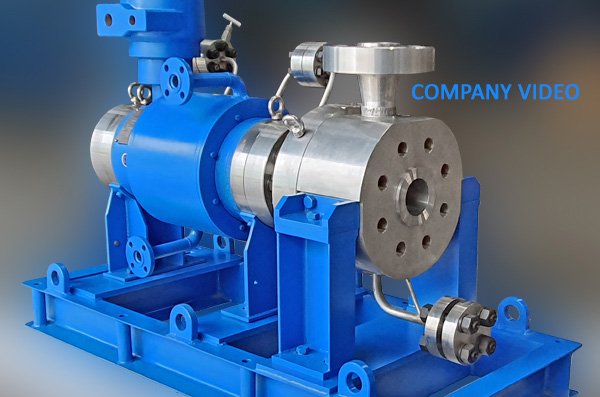
Walk into any serious chemical plant, pharmaceutical facility, or nuclear installation, and somewhere in that maze of pipes and valves, a canned motor pump is quietly doing one of the most critical jobs on the floor. Moving dangerous, volatile, or highly sensitive liquids without a single drop of leakage.
Despite being one of the most important innovations in industrial fluid handling, the canned motor pump remains underappreciated outside engineering circles. This blog changes that. Whether you are an engineer evaluating pump technology, a plant manager trying to reduce downtime, or a procurement head looking for the right solution, this is your complete guide.
What Exactly is a Canned Motor Pump?
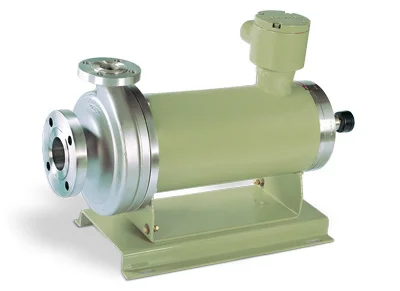
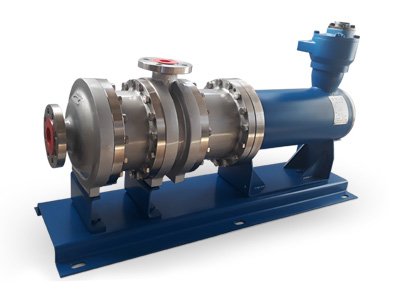
A canned motor pump is a fully sealed pumping system where the motor and the pump are built into a single, unified unit. There is no external coupling connecting the two. There is no mechanical seal trying to hold everything together.
That might not sound dramatic at first. But when you think about what those two things are responsible for in a traditional pump, their absence changes the entire picture.
Key characteristics:
- Motor and pump share the same shaft
- The entire system is hermetically sealed
- The pumped liquid circulates within the motor itself
- There are no conventional leakage points anywhere in the system
Think of it this way. In a standard pump, the motor and the pump are two separate things working together. The seal is what keeps the fluid from escaping where the shaft exits. That seal is also one of the most common failure points in the whole setup.
In a canned motor pump, that problem simply does not exist by design.
How Does a Canned Motor Pump Actually Work?
The working principle sounds technical at first. It really is not.
Here is what happens, step by step.
- Motor activation
The stator is energised. It creates a rotating magnetic field, which drives the rotor inside.
- Direct impeller rotation
Because the impeller sits on the same shaft as the rotor, it starts rotating the moment the motor does. No coupling required. No energy lost in translation.
- Fluid entry
Liquid enters through the suction inlet. Nothing unusual here.
- Energy transfer
The rotating impeller increases the velocity and pressure of the fluid. Standard centrifugal pump behaviour.
- Fluid discharge
The pressurised liquid exits through the discharge outlet and heads where it needs to go.
Now here is the part that most people find interesting when they first come across this technology.
The pumped fluid does not just pass through the pump section. It also flows through the motor section.
That sounds unusual. But there is a very practical reason for it.
That same fluid cools the motor during operation. It also lubricates the internal bearings. So instead of building in separate cooling systems and lubrication systems, the pump uses the process fluid itself to handle both jobs.
It is the kind of elegant engineering that looks simple on the surface but has real consequences for long-term reliability and operating costs.
Where Traditional Pumps Start to Struggle
Conventional pumps have been around for a long time. They are familiar. They are widely installed across industries worldwide. Nobody is dismissing them entirely.
But they come with limitations that are genuinely hard to work around.
The problems that keep showing up:
- Mechanical seal failures that nobody can fully predict
- Gradual leakage that starts small and gets worse over time
- Maintenance cycles that interrupt production more often than anyone would like
- Downtime caused by component wear that was always going to happen eventually
These are not unusual problems. Every plant dealing with conventional pumps knows this list well. The issues are manageable, sure. But they are never completely avoidable.
That is where the comparison with a canned motor pump becomes interesting.
Key Benefits of Canned Motor Pumps
The growing demand for canned motor pump manufacturers is not happening by accident. There are clear, operational reasons behind it.
1. Zero Leakage Operation
This is the headline benefit. Everything else builds on it.
Because there is no mechanical seal, there is no conventional leakage path. The system is completely enclosed. Whatever goes in, stays in, until it is supposed to come out.
This matters enormously when you are dealing with:
- Hazardous chemicals that cannot be allowed to escape
- Toxic fluids where even trace exposure is a concern
- Flammable substances where a leak is also a fire risk
2. Improved Safety Levels
Better containment leads directly to better safety. That is not a complicated equation.
- Workers are not exposed to harmful fluids
- The risk of fire or contamination drops significantly
- Compliance with safety regulations becomes easier to maintain
In industries where safety standards are strict and consequences of failure are serious, this is not a minor benefit. It is often the deciding factor.
3. Reduced Maintenance Needs
Fewer components mean fewer things that can wear out, break down, or need replacing.
- No seal to replace on a regular schedule
- Lower wear and tear across the system overall
- Longer operating cycles between interventions
Maintenance does not disappear entirely. But it becomes less frequent. And when it does come around, it tends to be more predictable, which makes planning much easier.
4. Compact Construction
The integrated design eliminates the need for several additional components that a conventional setup would require.
- Less physical space needed during installation
- Simpler overall layout
- Easier to integrate into existing systems without major modifications
For facilities where space is at a premium, this is a practical advantage that shows up immediately.
5. Better Energy Efficiency
Because the motor drives the impeller directly, with no coupling in between, there are no energy losses at that connection point.
- No coupling losses eating into performance
- Stable, consistent output
- Efficiency that holds up over time rather than degrading with wear
Over a long operating life, those efficiency gains add up to something meaningful.
6. Environmentally Responsible Design
Industries everywhere are under increasing pressure to reduce emissions, minimise leaks, and operate more cleanly.
A canned motor pump supports those goals by design:
- Fluid leakage is eliminated, not just reduced
- Environmental contamination risk is practically removed
- The overall operation simply becomes cleaner
This is not just about meeting regulatory requirements. It is about operating in a way that holds up to scrutiny.
Types of Canned Motor Pumps
Not every application involves the same conditions. That is why canned motor pump manufacturers in India design several different variations to match specific requirements.
Common types include:
Standard models — Used for general industrial applications where conditions are moderate and well understood.
High temperature pumps — Designed specifically to handle elevated thermal environments without compromising performance or containment.
Cryogenic pumps — Built for the other extreme. These handle extremely low temperature fluids that would destroy a standard pump quickly.
High pressure pumps — Engineered for demanding pressure requirements where standard designs simply would not hold up.
Each variation exists because the underlying need is the same but the conditions are different. Good engineering accounts for that.
Where Are Canned Motor Pumps Actually Used?
The application range is wider than many people initially expect. Anywhere fluid containment and safety are genuine priorities, these pumps become relevant.
Chemical processing — Handling corrosive and hazardous fluids where zero leakage is not optional.
Petrochemical operations — Managing volatile liquids safely in environments where a leak can have severe consequences.
Pharmaceutical manufacturing — Maintaining clean, contamination-free processes where product integrity cannot be compromised.
Energy and power systems — Supporting continuous and reliable fluid movement in systems that cannot afford unexpected downtime.
Refrigeration systems — Operating efficiently in closed loop environments where containment is part of the fundamental design.
The common thread across all of these is the same. The fluid matters. What happens if it escapes matters even more.
What Needs to Be Considered Before Selection
Choosing the right canned motor pump is not purely about design preference. It requires a clear and honest understanding of what the pump will actually face in operation.
Important factors to work through:
Fluid characteristics
- Viscosity — how the fluid moves and how that affects pump behaviour
- Temperature — both the operating range and any extremes
- Chemical behaviour — how the fluid interacts with materials it contacts
Operating parameters
- Pressure requirements — what the system actually needs
- Flow rate — not just the average, but the peaks
- Duty cycle — how continuously and how hard the pump will run
Material compatibility
- Resistance to corrosion from the specific fluid being handled
- Long term durability in the actual operating environment
These are not formalities. Ignoring them can affect performance significantly, even with a well-designed pump in hand.
Common Misunderstandings Worth Clearing Up
A few misconceptions still circulate around canned motor systems. They are worth addressing directly.
“They are complicated to operate” — The integrated design actually simplifies operation. Fewer separate systems means fewer things to manage.
“They require high maintenance” — Fewer components generally means less maintenance, not more.
“They are only for niche industries” — Their use has expanded steadily across multiple sectors, and that expansion is continuing.
Where the Technology is Headed
The push toward safer and more efficient industrial systems is not losing momentum.
Development among canned motor pump manufacturers is focused on:
- Improved materials that extend operational life further
- Enhanced thermal performance for more demanding environments
- Integration with monitoring and diagnostic systems
- Greater operational efficiency across a wider range of conditions
These are incremental improvements, but they compound over time. The technology was already strong. It is getting stronger.
Conclusion
A canned motor pump is not simply another variation of industrial pump technology. It represents a fundamentally different way of thinking about fluid handling, particularly in situations where leakage cannot be accepted as a normal cost of doing business.
Its sealed design, reduced maintenance demands, and consistent performance across demanding conditions make it a genuinely strong choice for modern industrial applications.
As industries continue raising their standards for safety and operational reliability, the solutions developed by experienced canned motor pump manufacturers in India are becoming more relevant, not less.
In that context, Hydrodynepumps Teikoku approaches this with a clear focus on engineered solutions that support safe and dependable fluid handling. Nothing overcomplicated. Just systems that work, reliably, over time.
FAQs
What is a canned motor pump?
It is a sealed pump where the motor and pump are combined into a single unit specifically to prevent leakage.
Why is a canned motor pump used?
It is used to handle hazardous or sensitive fluids safely, without the leakage risks associated with conventional pump designs.
How does a canned motor pump prevent leakage?
Through a hermetically sealed design that eliminates mechanical seals entirely.
Are canned motor pumps efficient?
Yes. The direct connection between motor and impeller minimises energy losses and supports consistent, stable performance.
Do canned motor pumps require maintenance?
They do, but significantly less than traditional pumps. Fewer components mean fewer failure points.
Where are canned motor pumps commonly used?
Chemical, pharmaceutical, petrochemical, energy, and refrigeration industries, among others.
What makes canned motor pumps reliable?
The sealed construction and reduced component wear work together to improve long-term reliability in a meaningful way.