
Canned Motor Pumps vs Mechanical Seal Pumps in Chlorine Service: A Practical Comparison
May 10, 2026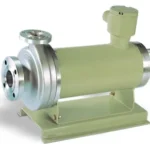
Design Challenges in Pumping Liquid Chlorine (Cl₂) and How Canned Motor Pumps Solve Them
May 14, 2026
In chlor-alkali plants, pump failure is rarely just a maintenance issue. A leaking pump handling chlorine, caustic soda, hydrochloric acid, or brine can quickly turn into a safety incident, environmental concern, or unplanned shutdown. That is one reason many process industries are shifting toward sealless leak free pumps for critical chemical handling applications.
Traditional pump systems depend heavily on mechanical seals to prevent leakage. Over time, those seals wear out. In chlor-alkali operations where hazardous chemicals move continuously through the system, even minor seal degradation creates operational risk. Sealless pumping technology changes that equation by removing the external seal entirely and improving fluid containment at the source.
Why chlor-alkali plants demand stricter pump safety
Chlor-alkali processing involves highly reactive and corrosive chemicals under demanding operating conditions.
Typical process fluids include:
- Chlorine
- Caustic soda
- Hydrochloric acid
- Sodium hypochlorite
- Brine solutions
- Sulphuric acid
Several of these chemicals present serious risks if leakage occurs.
Chlorine exposure, for example, can affect both personnel safety and nearby equipment. Caustic soda may cause severe corrosion and handling hazards. In many plants, pumping systems operate continuously for long durations, which means small mechanical weaknesses eventually become larger operational problems.
That is why chlor-alkali facilities tend to focus heavily on:
- Leak prevention
- Equipment reliability
- Environmental compliance
- Reduced operator exposure
- Stable long-term operation
Pump selection directly affects all of these areas.
The weakness of conventional mechanical seal systems
Mechanical seal pumps remain widely used across chemical processing industries. They are familiar systems and can perform effectively in many applications.
But chlor-alkali conditions are particularly demanding.
Mechanical seals operate around a rotating shaft where the pump connects to the motor. Under aggressive chemical service, these seals gradually experience:
- Friction wear
- Thermal stress
- Pressure fluctuations
- Corrosion exposure
- Dry-running damage
- Process contamination
Eventually, seal performance begins deteriorating.
Sometimes the leakage is small at first. A slight vapour release. Minor chemical seepage around the seal area. Then maintenance frequency increases, support systems require more attention, and shutdown planning becomes more complicated.
Plants often attempt to manage this through:
- Dual seal arrangements
- Seal flushing systems
- Cooling loops
- Buffer fluid systems
- Leakage monitoring equipment
These measures improve performance, but they also increase system complexity.
And in chemical plants, complex support systems tend to create additional maintenance burdens over time.
How sealless leak free pumps work
Sealless leak free pumps remove the external mechanical seal completely.
In most chlor-alkali applications, this refers to technologies such as canned motor pumps or magnetic drive pumps. Both designs aim to eliminate the primary leakage path found in conventional pumps.
Canned motor pump construction
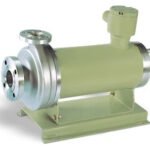
In a canned motor pump, the motor and pump form a single hermetically sealed unit.
The process fluid remains enclosed inside the system while the motor operates within a sealed stator enclosure. Since there is no external rotating shaft seal, external leakage risk reduces significantly.
That design may sound simple. Operationally, though, it changes several important things.
Improved containment of hazardous chemicals
The biggest safety advantage comes from improved fluid containment.
In chlor-alkali plants, even small chlorine leaks can trigger:
- Safety alarms
- Area evacuations
- Production interruptions
- Environmental reporting requirements
With conventional seal systems, leakage risk exists throughout the life of the seal assembly.
With sealless leak free pumps, the external seal is no longer present. That substantially reduces the probability of fugitive chemical emissions during normal operation.
For facilities operating under strict environmental regulations, this is often one of the strongest reasons for adopting seal-less technology.
Reduced operator exposure to hazardous fluids
Maintenance personnel typically face the highest exposure risk around pumps.
Mechanical seal replacements, alignment checks, and seal flushing maintenance all involve direct interaction with process equipment.
In chlorine service, maintenance activities must be handled with extreme caution.
Sealless pump systems reduce many of these routine intervention points.
There is:
- No seal replacement cycle
- No external seal leakage adjustment
- No coupling alignment requirement
- Fewer auxiliary systems requiring manual inspection
Reducing maintenance interaction around hazardous chemicals naturally improves workplace safety.
Lower probability of sudden leakage events
Seal failures are not always gradual.
In some cases, mechanical seals fail unexpectedly due to thermal shock, dry running, process upsets, or pressure instability.
In chlor-alkali operations, sudden seal failure can create serious operational consequences very quickly.
Seal-less systems reduce this particular vulnerability because the primary dynamic sealing interface no longer exists externally.
That does not make the pump indestructible. Bearings, operating conditions, and system design still matter. But the risk profile changes considerably.
Better environmental compliance
Chemical industries today operate under tighter emission control regulations than they did years ago.
Plants are expected to minimise fugitive emissions and maintain stricter process containment standards.
This has increased interest in sealless leak free pumps, particularly in applications involving:
- Toxic chemicals
- Volatile fluids
- Corrosive liquids
- Environmentally hazardous substances
Reducing leakage at the equipment level often proves more effective than attempting to manage emissions after they occur.
That distinction becomes important during long-term plant operation.
Improved reliability during continuous process operation
Chlor-alkali production usually operates as a continuous process. Frequent shutdowns are expensive and disruptive.
A pump failure may affect:
- Electrolysis systems
- Chemical circulation loops
- Downstream processing
- Utility systems
- Product transfer operations
Reliability therefore becomes closely tied to overall plant efficiency.
Mechanical seal systems
Reliability depends heavily on:
- Seal condition
- Support system performance
- Cooling efficiency
- Alignment accuracy
- Maintenance quality
If any one of these begins deteriorating, operational stability often suffers.
Sealless pump systems
The simpler sealed construction removes several common failure points.
This often results in:
- Lower maintenance frequency
- More stable operation
- Reduced leakage incidents
- Improved long-term reliability
Many chlor-alkali plants adopt seal-less technology primarily because it reduces recurring operational interruptions.
Energy and operational efficiency benefits
Safety tends to receive most of the attention in discussions about seal-less pumps. But operational performance also matters.
Many sealless leak free pumps offer:
- Lower vibration
- Compact installation
- Reduced alignment issues
- Stable hydraulic performance
Stable operation contributes to smoother process conditions throughout the plant.
And honestly, process stability is often underrated until operators experience repeated shutdowns caused by unreliable equipment.
Material selection still matters
Even the best seal-less pump design can fail if material compatibility is ignored.
Chlor-alkali fluids create severe corrosion challenges depending on:
- Chemical concentration
- Process temperature
- Pressure conditions
- Fluid purity
- Chloride content
Common material selections include:
- Hastelloy
- Duplex stainless steel
- Titanium
- Special corrosion-resistant alloys
Application engineering becomes critical here. Two systems within the same plant may require completely different metallurgy depending on process conditions.
A generic pump configuration rarely performs well across all chlor-alkali applications.
Safety improvements extend beyond leakage prevention
The safety benefits of seal-less systems go further than fluid containment.
Lower fire and reaction risk
Some hazardous chemicals may react when exposed to air, moisture, or surrounding materials.
Leak prevention reduces the chance of unintended chemical reactions or hazardous vapour accumulation.
Reduced maintenance exposure
Less frequent intervention means fewer opportunities for accidental operator exposure during servicing activities.
Cleaner operating environments
Leak-free systems help maintain cleaner equipment areas and reduce chemical residue buildup around process units.
These operational details may seem small individually, but together they significantly improve plant safety culture over time.
Why more chlor-alkali plants are shifting toward seal-less technology
The shift is not simply about adopting newer equipment.
Plants today face increasing pressure around:
- Safety performance
- Environmental reporting
- Operational reliability
- Maintenance cost reduction
- Emission control
Older sealing technologies can still work effectively in many services. But in aggressive chlor-alkali environments, facilities increasingly prefer systems that remove leakage risk at the design level rather than controlling it externally.
That is really the core difference.
Instead of managing seal leakage through additional support systems, seal-less pumps eliminate the external seal itself.
Choosing the right sealless pump system
Pump selection should always be based on actual process requirements.
Important considerations include:
Fluid characteristics
Corrosiveness, vapour pressure, toxicity, and solids content all influence pump design.
Operating conditions
Temperature and pressure conditions affect bearing systems, cooling methods, and material selection.
Process criticality
Continuous-duty critical applications usually require higher reliability margins and monitoring capability.
Chemical compatibility
Material selection remains essential for long-term durability and containment reliability.
An experienced engineering review generally prevents many long-term operating issues before installation even begins.
Conclusion
Chlor-alkali plants operate under conditions where leakage prevention is directly tied to plant safety, environmental compliance, and production continuity. Conventional seal systems can still perform effectively in many applications, but they introduce maintenance and containment challenges that become more difficult under hazardous chemical service.
That is why sealless leak free pumps continue gaining importance across chlor-alkali processing facilities. By eliminating external mechanical seals, they reduce leakage risk, improve containment reliability, minimise maintenance exposure, and support safer long-term operation in aggressive chemical environments.
We at HydrodynePump Teikoku support industries handling hazardous and corrosive process fluids where leak-free performance is critical. Our team helps chlor-alkali facilities implement engineered sealless pumping solutions designed for operational safety, long service life, and reliable continuous process performance.
FAQs
What are sealless leak free pumps?
They are pumps designed without external mechanical seals, helping prevent hazardous fluid leakage during operation.
Why are sealless pumps preferred in chlor-alkali plants?
They improve containment reliability when handling chlorine, caustic soda, and other hazardous chemicals.
Do sealless pumps completely eliminate maintenance?
No. Routine monitoring and preventive maintenance are still required, though seal-related maintenance is removed.
Are canned motor pumps suitable for chlorine service?
Yes. Their hermetically sealed construction makes them highly suitable for chlorine handling applications.
How do sealless pumps improve operator safety?
They reduce exposure risks by minimising leakage points and reducing routine maintenance intervention around hazardous chemicals.
What materials are used in chlor-alkali pump systems?
Common materials include Hastelloy, titanium, duplex stainless steel, and specialised corrosion-resistant alloys.
Can sealless pumps reduce environmental emissions?
Yes. Their sealed construction helps reduce fugitive chemical emissions and supports environmental compliance.
