
Canned Motor Pump Standards and Compliance (API, ISO, etc.)
May 6, 2026
How Sealless Pumps Improve Safety in Chlor-alkali Process Plants
May 12, 2026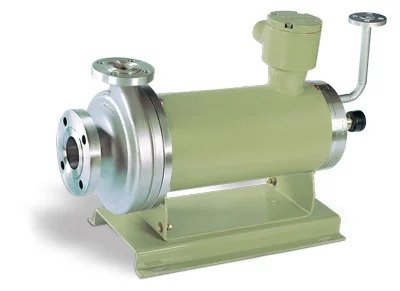
Handling chlorine is not like handling ordinary process fluids. Even minor leakage can create serious safety concerns, environmental exposure risks, and costly production interruptions. That is why pump selection in chlorine service becomes less about preference and more about containment reliability over long operating periods.
In many chemical plants, the comparison eventually comes down to two technologies: conventional mechanical seal pumps and Canned Motor Pumps. Both can move chlorine effectively under the right conditions. But in real plant environments, especially where continuous operation and leakage prevention matter, the difference between the two becomes very noticeable over time.
The discussion is not only technical. It affects maintenance strategy, operating cost, plant safety, and regulatory compliance.
Why chlorine service creates difficult pumping conditions
Chlorine is highly reactive and hazardous. Even under controlled process conditions, it demands careful handling.
A chlorine pumping system must deal with:
- Toxicity risks
- Vapour formation
- Corrosive process environments
- Pressure fluctuations
- Temperature-sensitive behaviour
- Strict leakage control requirements
In practical terms, chlorine service leaves little tolerance for equipment weakness.
A pump that performs well in general chemical duty may struggle in chlorine applications because leakage control standards are significantly higher. Maintenance practices also become more demanding.
This is one reason why many older chlorine systems required extensive seal support arrangements and continuous monitoring.
Understanding mechanical seal pumps in chlorine applications
Mechanical seal pumps remain widely used across the chemical industry. They are familiar to operators, commonly available, and often less expensive initially.
In a conventional setup, the motor and pump are connected through a shaft. Mechanical seals prevent the process fluid from leaking where the rotating shaft exits the casing.
For standard services, this arrangement works reasonably well. Chlorine service, though, pushes the limits of sealing reliability.
The main challenge with mechanical seals
Mechanical seals are wear components.
Over time, seal faces degrade due to:
- Friction
- Temperature variation
- Dry running conditions
- Pressure instability
- Process contamination
- Vibration
In chlorine applications, even small seal degradation can become problematic.
A tiny leak that might be manageable with water or non-hazardous chemicals becomes unacceptable when chlorine gas or liquid chlorine is involved.
That changes the entire maintenance philosophy around the pump.
Auxiliary systems add complexity
Mechanical seal pumps handling chlorine often require:
- Seal flushing systems
- Buffer fluid systems
- Cooling arrangements
- Seal monitoring instruments
- Additional piping networks
These systems improve sealing reliability, but they also increase operational complexity.
And honestly, complexity tends to create more maintenance points over the long term.
How Canned Motor Pumps differ
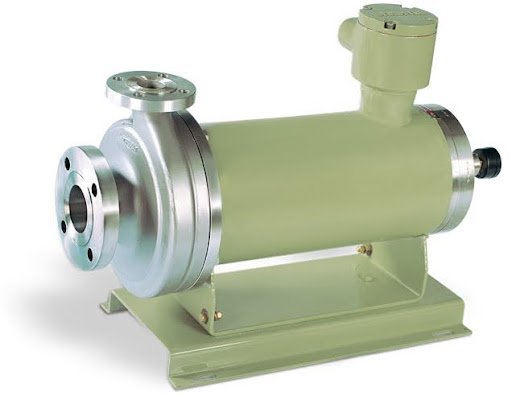
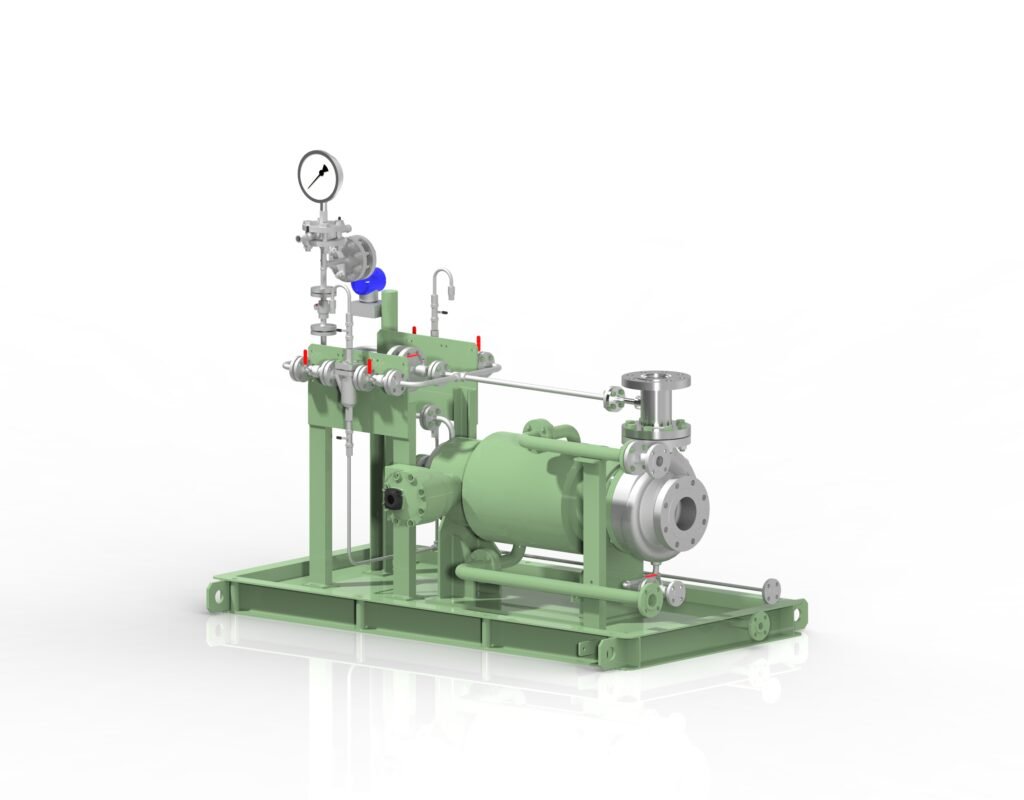
Canned Motor Pumps eliminate the mechanical seal completely.
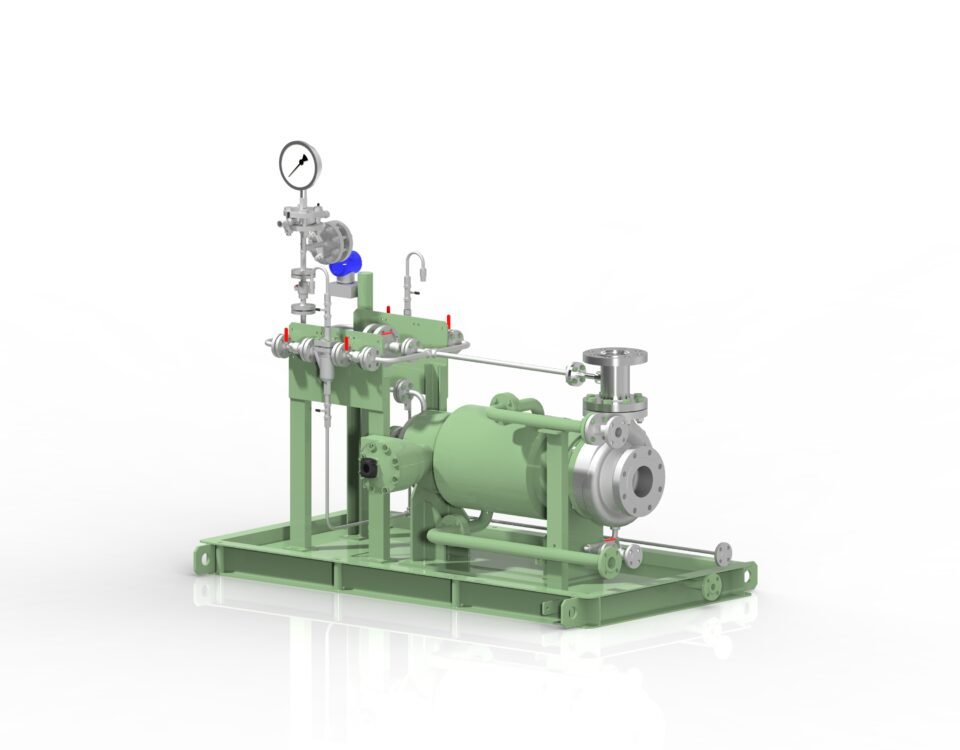
The motor and pump form a single hermetically sealed unit where the process fluid remains fully enclosed inside the system. The motor operates within a sealed stator enclosure called the “can.”
No external shaft seal exists.
That design changes several things immediately in chlorine service.
Containment reliability becomes significantly better
This is the biggest reason many chlorine plants move toward Canned Motor Pumps.
Without external mechanical seals, the risk of fugitive chlorine leakage reduces substantially. There are simply fewer paths for leakage to occur.
For plants operating under strict environmental and safety regulations, this becomes a major operational advantage.
The difference is especially noticeable in continuous-duty chemical processing plants where pumps operate for long periods without shutdown.
Comparing leakage risk
Mechanical seal pumps
Leakage risk exists throughout the operating life of the seal.
Even properly maintained seals eventually wear and require replacement. Seal support systems help manage this, but they do not eliminate the basic vulnerability created by the rotating shaft seal arrangement.
Canned Motor Pumps
The hermetically sealed construction removes the external seal entirely.
That does not mean failures never happen. No industrial equipment is immune to failure. But leakage-related incidents are generally far lower because the primary leakage path no longer exists.
For chlorine service, this distinction matters a great deal.
Maintenance comparison in real plant conditions
Maintenance teams usually have strong opinions on this subject because they deal with the actual operational consequences.
Mechanical seal pumps require regular seal attention
Typical maintenance activities include:
- Seal inspection
- Seal replacement
- Alignment checks
- Coupling maintenance
- Seal support system servicing
- Leakage monitoring
In aggressive chlorine service, seal life may shorten depending on operating conditions.
Unexpected seal failure can also force unplanned shutdowns.
Canned Motor Pumps reduce routine intervention
Since there are no mechanical seals or external couplings, maintenance requirements are usually lower.
The pump becomes mechanically simpler in some ways:
- No seal replacement cycles
- No alignment correction
- No coupling wear
- Fewer auxiliary systems
That said, canned motor systems still require proper monitoring and preventive maintenance. Bearings, motor condition, and operating parameters still matter.
But the nature of maintenance changes from seal management to overall system health monitoring.
Reliability during continuous operation
Chlorine plants often run around the clock. Downtime affects production quickly, particularly in integrated chemical operations.
Reliability therefore becomes one of the biggest selection criteria.
Mechanical seal pumps
Performance can remain stable for long periods when maintenance practices are strong. Many plants still operate successful seal pump systems.
However, reliability becomes closely tied to:
- Seal condition
- Alignment quality
- Support system performance
- Operator monitoring
If any supporting system begins deteriorating, pump reliability usually follows.
Canned Motor Pumps
The sealed integrated design removes several common failure points.
There are fewer external moving components and fewer support systems requiring constant attention. In long-duration continuous operation, this often translates into more stable service performance.
That is one reason canned motor technology gained wider acceptance in hazardous chemical applications.
Safety implications are difficult to ignore
Chlorine exposure incidents carry serious consequences.
Plant operators therefore evaluate pumping systems not only on efficiency or maintenance cost, but on containment security.
Mechanical seal systems
Modern seal technologies have improved considerably over the years. Dual mechanical seals and advanced support systems offer better containment than older arrangements.
Still, the system fundamentally depends on maintaining seal integrity.
Canned Motor Pumps
The sealed motor-pump assembly provides an additional level of containment confidence.
For facilities trying to minimise fugitive emissions and operator exposure risk, this often becomes the deciding factor.
Especially in areas where chlorine handling regulations continue tightening.
Energy efficiency and operating behaviour
Efficiency comparisons between the two technologies depend heavily on application design and operating conditions.
Mechanical seal pumps can achieve high hydraulic efficiency. But they may also experience efficiency losses associated with seal systems, alignment problems, or wear over time.
Canned Motor Pumps generally provide:
- Stable operation
- Lower vibration
- Compact installation
- Reduced alignment issues
In chlorine service, operational stability sometimes matters more than achieving the highest theoretical efficiency point.
A slightly lower but stable operating condition is often preferable to a system that requires constant adjustment.
Initial cost versus lifecycle cost
This is where many procurement discussions become interesting.
Mechanical seal pumps usually cost less initially
The upfront investment is often lower, particularly for standard configurations.
That makes them attractive for budget-sensitive projects.
Canned Motor Pumps generally cost more upfront
The specialised sealed construction increases manufacturing complexity and initial purchase cost.
But lifecycle economics tell a different story in many chlorine applications.
Reduced leakage incidents, lower maintenance frequency, fewer shutdowns, and improved safety performance can offset the higher initial investment over time.
In hazardous chemical processing, failure-related costs tend to accumulate quietly until they become difficult to ignore.
Which technology is better for chlorine service?
There is no universal answer because operating conditions vary across plants.
But some patterns are fairly consistent.
Mechanical seal pumps may still work well when:
- Leakage risk is lower
- Maintenance support is strong
- Process conditions are moderate
- Budget constraints dominate equipment decisions
Canned Motor Pumps become more attractive when:
- Leakage prevention is critical
- Chlorine containment standards are strict
- Continuous operation is required
- Environmental compliance is a major concern
- Maintenance reduction is a priority
In highly hazardous chlorine applications, many plants ultimately move toward seal-less systems because the operational advantages become difficult to ignore over long service periods.
Material selection remains critical for both technologies
Pump type alone does not guarantee reliability.
Material compatibility remains essential in chlorine service.
Depending on process conditions, systems may require:
- Hastelloy
- Titanium
- Special stainless steel grades
- Corrosion-resistant alloys
Improper material selection can undermine even the best pump design.
This is why experienced application engineering matters so much in chlorine pumping systems.
The practical reality inside chemical plants
Most experienced operators eventually stop viewing pump selection purely as an equipment purchase.
It becomes a risk management decision.
The true cost of chlorine leakage includes:
- Production disruption
- Safety response
- Regulatory exposure
- Maintenance labour
- Reputation impact
- Environmental reporting
When viewed from that perspective, the preference for Canned Motor Pumps in critical chlorine service starts making more sense.
Not because they are fashionable technology. Simply because they reduce some of the recurring operational problems chemical plants have dealt with for years.
Conclusion
Both mechanical seal pumps and Canned Motor Pumps can handle chlorine service under the right operating conditions. The difference usually appears over time through maintenance demands, leakage control, reliability, and operational stability.
Mechanical seal systems still have a place in many chemical applications. But for hazardous chlorine handling where containment reliability is a top concern, seal-less canned motor technology offers clear practical advantages.
We at HydrodynePump Teikoku support industries that require reliable leak-free pumping solutions for hazardous chemical applications. Our team works closely with chlorine processing facilities to provide engineered canned motor pump systems designed for long-term operational safety, containment integrity, and continuous process performance.
FAQs
Why are Canned Motor Pumps preferred for chlorine service?
They eliminate external mechanical seals, which significantly reduces the risk of chlorine leakage.
Do mechanical seal pumps always leak in chlorine applications?
Not always, but seal wear over time increases leakage risk, especially under difficult operating conditions.
Are Canned Motor Pumps completely maintenance-free?
No. They still require monitoring and preventive maintenance, though routine seal maintenance is eliminated.
Which pump type offers better safety in chlorine handling?
Seal-less canned motor systems generally provide higher containment reliability for hazardous chlorine service.
Can Canned Motor Pumps handle continuous-duty chemical operations?
Yes. They are widely used in continuous process industries where stable long-term operation is required.
Are mechanical seal pumps less expensive than Canned Motor Pumps?
Their initial purchase cost is usually lower, but lifecycle costs may increase due to maintenance and leakage-related issues.
What materials are commonly used for chlorine pump applications?
Specialised corrosion-resistant alloys such as Hastelloy, titanium, and high-grade stainless steels are commonly used.