
How Sealless Pumps Improve Safety in Chlor-alkali Process Plants
May 12, 2026Zero Leakage Philosophy: Why It Matters in Chlorine Transfer Systems
May 17, 2026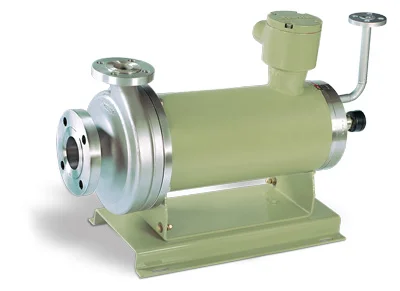
Liquid chlorine is one of the most difficult chemicals to handle in industrial pumping systems. It is toxic, reactive, sensitive to temperature variation, and capable of turning a small equipment issue into a serious plant safety incident very quickly. That is exactly why many chemical and chlor-alkali facilities rely on Canned Motor Pumps for liquid chlorine transfer and circulation duties.
Traditional pump arrangements often struggle in chlorine service because the process leaves very little margin for leakage, seal failure, or vapour formation. Even well-maintained mechanical seal systems require constant monitoring in these applications. Over time, many plants move toward seal-less pumping technology because it offers better containment reliability and fewer operational risks under continuous chlorine handling conditions.
Why liquid chlorine creates difficult pumping conditions
Liquid chlorine behaves differently from many industrial chemicals.
Its physical and chemical properties create several design complications simultaneously:
- High toxicity
- Vapour formation tendency
- Corrosive behaviour in certain conditions
- Sensitivity to contamination
- Strict leakage control requirements
- Pressure and temperature dependency
In practical plant operation, this means pumping systems must maintain reliable containment while operating continuously under tightly controlled conditions.
A small pressure fluctuation or seal problem may trigger vapour generation inside the system. Once vapour enters the pump, performance instability follows quickly. Cavitation risk increases. Seal life shortens. Leakage probability rises.
And chlorine leakage is never treated as a minor issue.
The biggest challenge: preventing chlorine leakage
Leak prevention sits at the centre of every liquid chlorine pumping design.
Even very small chlorine leaks may result in:
- Operator exposure risk
- Emergency shutdown procedures
- Corrosion of nearby equipment
- Environmental reporting
- Production interruption
This is where conventional mechanical seal systems often become vulnerable.
Mechanical seals operate around a rotating shaft. In aggressive chlorine applications, the seal faces experience wear from friction, pressure changes, thermal cycling, and process instability.
Over time, leakage risk gradually increases.
Plants attempt to manage this through:
- Dual seal systems
- Seal flushing arrangements
- External cooling loops
- Leakage monitoring systems
- Backup containment arrangements
These systems improve reliability, but they also add operational complexity and maintenance demand.
Vapour formation and low NPSH conditions
Liquid chlorine has relatively low boiling characteristics compared to many industrial liquids.
If suction conditions become unstable, chlorine can partially vaporise inside the pump system. This creates low Net Positive Suction Head conditions, commonly called low NPSH conditions.
Once vapour bubbles begin forming inside the pump:
- Flow instability develops
- Cavitation risk increases
- Internal components experience damage
- Vibration levels rise
- Seal reliability declines
Mechanical seal systems are particularly sensitive to this because vapour formation affects lubrication at the seal faces.
In real plant conditions, maintaining stable suction conditions continuously is not always easy. Process upsets happen. Temperature shifts happen. Pressure variations happen.
Pump design therefore needs to accommodate these realities instead of assuming ideal operating conditions all the time.
Corrosion and material compatibility challenges
Liquid chlorine itself may remain relatively dry under certain process conditions. But the presence of moisture changes the situation significantly.
Moist chlorine becomes highly corrosive.
This creates strict requirements for:
- Material selection
- Surface finish quality
- Internal metallurgy
- Corrosion resistance
Common material considerations include:
- Special stainless steel grades
- Hastelloy alloys
- Titanium components
- Nickel-based materials
Incorrect material selection often causes:
- Pitting corrosion
- Stress cracking
- Premature equipment failure
- Contamination problems
This is one reason chlorine pumping systems require specialised engineering rather than standard chemical pump selection.
Seal support systems become complicated
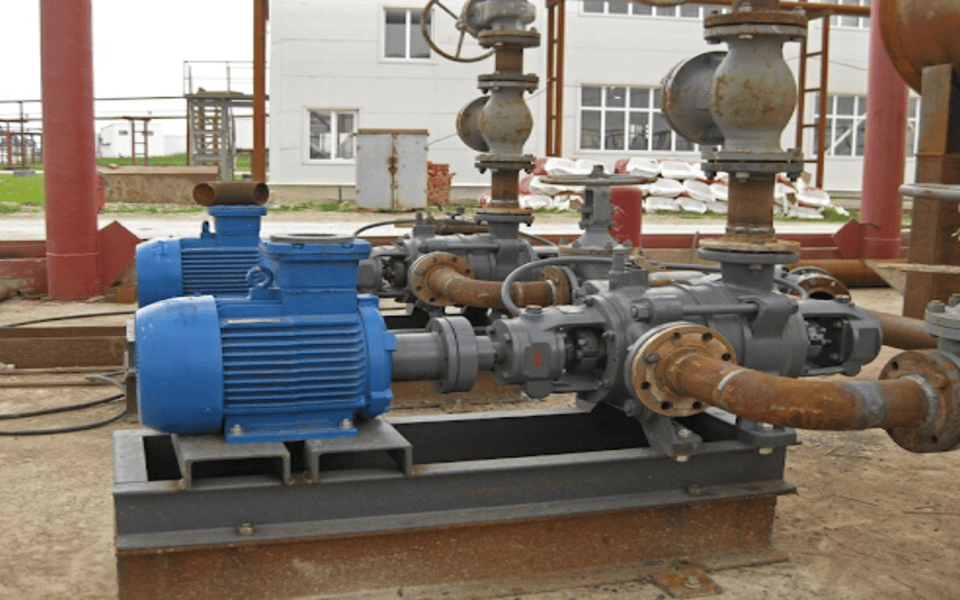
Conventional chlorine pump systems frequently require extensive seal support infrastructure.
Depending on the process design, this may involve:
- Barrier fluid systems
- Pressurised seal pots
- Cooling arrangements
- Monitoring instrumentation
- Vapour recovery systems
All of these components require maintenance and periodic inspection.
Over time, support systems can become almost as maintenance-intensive as the pump itself.
And honestly, this is where many facilities begin reconsidering traditional pump configurations.
Why Canned Motor Pumps fit chlorine applications better
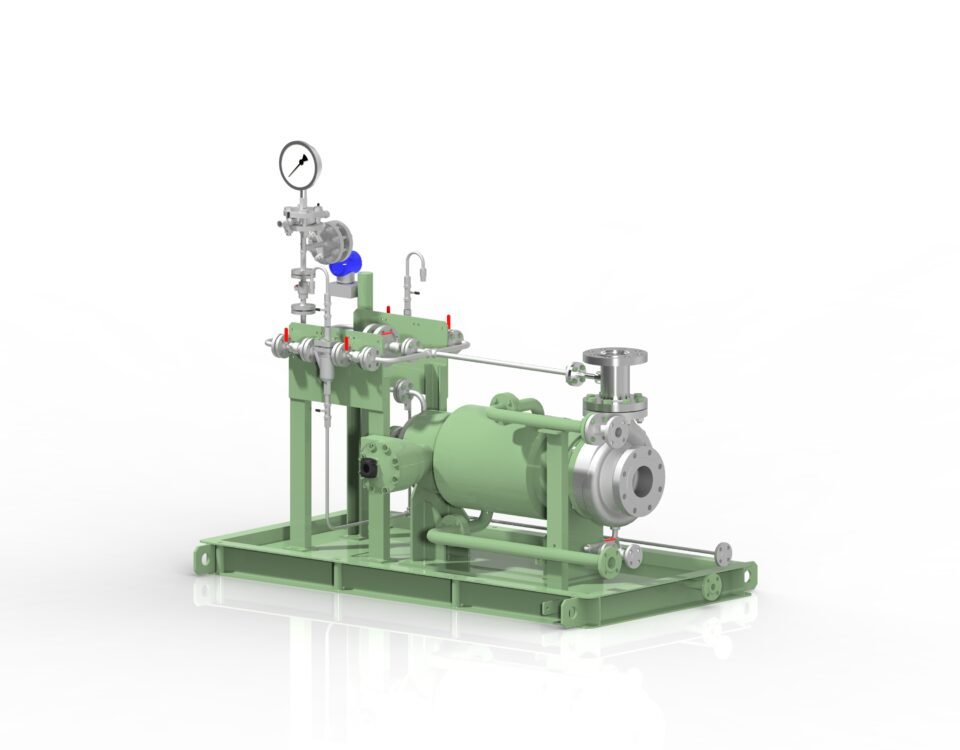
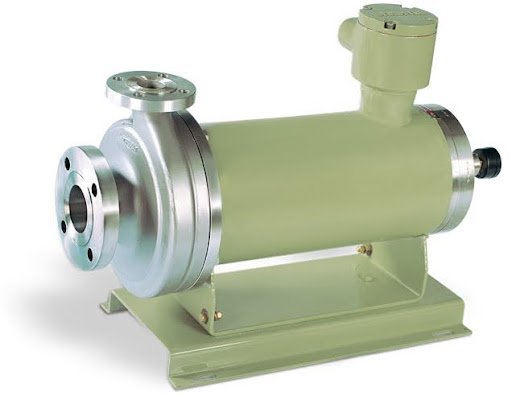
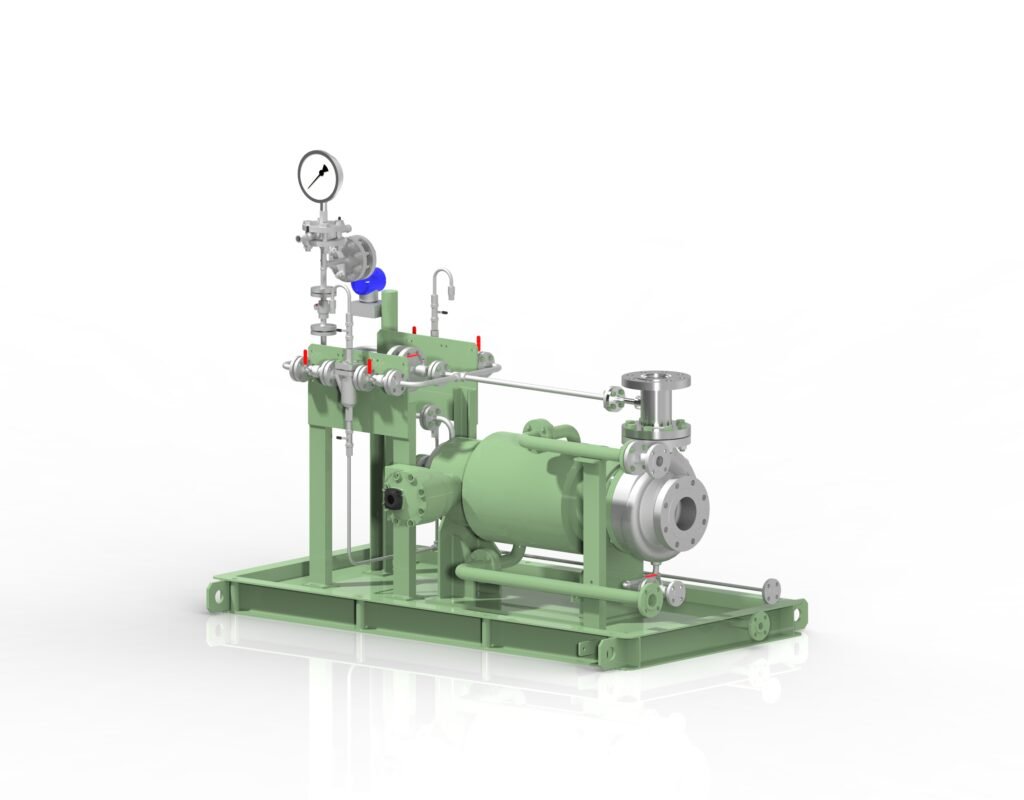
Canned Motor Pumps eliminate several of the design problems associated with conventional chlorine pumping systems.
The key difference lies in the construction.
Instead of using an external rotating shaft seal, the motor and pump are integrated into a single hermetically sealed assembly. The process liquid remains fully enclosed within the system.
That design immediately changes the leakage profile of the pump.
Hermetically sealed construction reduces leakage risk
This is the biggest operational advantage in chlorine service.
Without an external mechanical seal:
- Fugitive emissions reduce significantly
- Seal leakage paths disappear
- External contamination risk lowers
- Operator exposure risk decreases
For chlor-alkali plants and chemical facilities, this provides a major improvement in containment reliability.
The design does not rely on continuously maintaining delicate seal face conditions under difficult operating environments.
Instead, the system removes the external seal entirely.
Better performance under vapour-prone conditions
Many Canned Motor Pumps used for chlorine service are specifically designed to operate under low NPSH conditions.
Internal circulation arrangements and specialised hydraulic design help manage vapour formation more effectively than many conventional seal pump systems.
This contributes to:
- Stable operation
- Reduced cavitation risk
- Lower vibration
- Improved reliability
In continuous chlorine transfer systems, operational stability matters a great deal.
Plants typically value predictable long-term performance more than occasional peak efficiency numbers.
Reduced maintenance requirements
Mechanical seals are consumable components.
Even well-designed seal systems eventually require:
- Inspection
- Replacement
- Alignment correction
- Support system maintenance
Seal-less canned motor technology removes many of these routine maintenance activities.
That means:
- Fewer shutdowns
- Lower maintenance intervention
- Reduced spare inventory
- Less operator exposure during servicing
Maintenance teams often appreciate this shift because troubleshooting becomes simpler and more predictable.
Compact system design improves installation flexibility
Another practical advantage often overlooked is system compactness.
Since Canned Motor Pumps eliminate:
- External couplings
- Seal support systems
- Alignment structures
- Large auxiliary piping arrangements
The overall installation footprint becomes smaller.
This can simplify pump room layouts in chemical plants where space constraints already exist.
Compact systems also reduce the number of external piping connections that may potentially leak over time.
Continuous operation reliability
Liquid chlorine systems frequently operate continuously for extended periods.
Unexpected shutdowns can affect:
- Chlor-alkali production
- Downstream chemical processing
- Product transfer systems
- Utility operations
Reliability therefore becomes directly tied to plant productivity.
Conventional mechanical seal systems
Reliability depends heavily on:
- Seal condition
- Support system stability
- Cooling effectiveness
- Operating consistency
Any disturbance in these areas may eventually affect containment integrity.
Canned Motor Pumps
The integrated sealed design removes several common failure points.
This generally results in:
- Higher containment reliability
- Stable continuous operation
- Lower leakage-related downtime
- Reduced maintenance interruptions
That operational consistency is one reason canned motor technology remains widely accepted for hazardous chemical applications.
Safety improvements go beyond leakage control
Leak prevention receives most of the attention, understandably. But there are additional safety advantages as well.
Reduced fire and reaction hazards
Chlorine may react with surrounding substances under certain conditions. Improved containment reduces accidental exposure risks around operating equipment.
Cleaner operating environments
Leak-free operation reduces chemical residue buildup near pump installations and surrounding equipment.
Lower maintenance exposure
Fewer manual maintenance interventions mean fewer opportunities for accidental contact with hazardous chemicals.
Over long operating periods, these factors contribute significantly to overall plant safety performance.
Why lifecycle cost matters more than purchase price
Initial pump cost often dominates procurement discussions. But chlorine service changes how facilities evaluate equipment economics.
A lower-cost pump becomes expensive quickly if it creates:
- Frequent shutdowns
- Seal replacement cycles
- Leakage incidents
- Regulatory reporting
- Production loss
That is why many chemical plants evaluate pumping systems based on lifecycle performance rather than only initial purchase cost.
In hazardous chlorine service, reliability usually becomes cheaper than repeated failure.
Engineering selection remains critical
Not every canned motor pump configuration suits every chlorine application.
Proper selection depends on:
Process temperature
Temperature affects vapour formation and material behaviour.
Pressure conditions
Pressure stability influences hydraulic performance and containment design.
Chlorine purity
Moisture content significantly affects corrosion behaviour.
Flow requirements
Hydraulic sizing affects cavitation margin and operational stability.
Material compatibility
Metallurgy must match the actual process environment precisely.
Experienced application engineering plays a major role in long-term reliability here.
Conclusion
Pumping liquid chlorine safely requires more than simply selecting a corrosion-resistant pump. The process creates challenges involving containment reliability, vapour handling, seal integrity, material compatibility, and continuous operational stability.
Traditional mechanical seal systems can work under chlorine service, but they often demand extensive support infrastructure and close maintenance attention. Over time, many facilities move toward Canned Motor Pumps because their hermetically sealed design directly addresses several of the core operational risks associated with chlorine handling.
We at HydrodynePump Teikoku support industries operating under demanding hazardous chemical service conditions where leak-free containment and long-term reliability are essential. Our team helps chlor-alkali and chemical processing facilities implement engineered canned motor pumping solutions designed specifically for liquid chlorine handling and continuous critical operation.
FAQs
Why are Canned Motor Pumps preferred for liquid chlorine service?
Their hermetically sealed construction reduces chlorine leakage risk and improves containment reliability.
What makes liquid chlorine difficult to pump?
Liquid chlorine is toxic, vapour-prone, pressure-sensitive, and requires extremely reliable leakage control.
Can mechanical seal pumps handle liquid chlorine?
Yes, but they often require extensive seal support systems and higher maintenance attention.
How do Canned Motor Pumps reduce maintenance?
They eliminate external mechanical seals, couplings, and many auxiliary support systems.
Why is vapour formation a problem in chlorine pumps?
Vapour bubbles can cause cavitation, vibration, unstable flow, and seal damage.
What materials are commonly used in chlorine pump systems?
Special stainless steels, Hastelloy, titanium, and nickel-based alloys are commonly used depending on process conditions.
Are Canned Motor Pumps suitable for continuous operation?
Yes. They are widely used in continuous-duty hazardous chemical processing applications.