
Seal-less Power for Demanding Applications
June 10, 2026
Reducing Fugitive Emissions in Chlor-Alkali Plants: Role of Sealless Pumps
June 14, 2026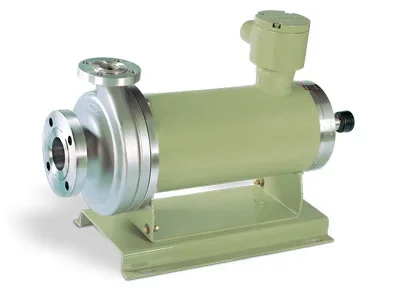
- Thermal cycling
- Vapour formation
- Dry running conditions
- Corrosive attack
- Shaft deflection
- Process instability
Eventually wear develops.
And once degradation begins, the problem usually accelerates.
The issue becomes worse in continuous-process plants where pumps operate for long durations under variable operating loads. Small process fluctuations gradually affect seal performance until leakage starts appearing around the shaft interface.
Even highly engineered seal systems remain vulnerable because the basic operating principle still depends on maintaining stable sealing conditions around moving components.
Why Canned Motor Pumps align closely with API 685 goals
Many Canned Motor Pumps are designed around API 685 requirements because the technology naturally supports leak-free containment.
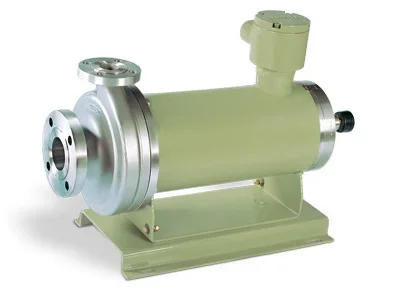
In a canned motor system:
- The motor and pump operate as one enclosed assembly
- The rotor remains inside the process boundary
- No external rotating shaft exists
- No mechanical seal is required
This removes one of the most failure-prone areas found in conventional chemical pumping systems.
And importantly, it reduces multiple operational risks simultaneously.
Not just leakage.
Safer processing starts with containment stability
One major advantage of API 685 Pumps is that they reduce dependency on human intervention around hazardous process equipment.
This matters more than people sometimes realise.
Many chemical exposure incidents occur during:
- Seal replacement
- Leakage inspection
- Emergency maintenance
- Seal flush troubleshooting
- Alignment correction
Reducing maintenance frequency therefore directly improves plant safety.
Facilities using seal-less systems often experience:
- Lower emergency maintenance rates
- Reduced exposure zones
- Fewer fugitive emissions
- Improved process area cleanliness
- More stable operating conditions
Over time, operational stability itself becomes a major safety advantage.
Why environmental performance improves with seal-less systems
Environmental gains from API 685 Pumps are often broader than simple leak prevention.
Traditional leakage creates secondary environmental effects such as:
- Atmospheric contamination
- Corrosion-related waste
- Contaminated washdown water
- Increased disposal requirements
- Damaged insulation and coatings
Even small recurring emissions gradually affect the surrounding plant environment.
Seal-less systems reduce many of these recurring contamination pathways because the process fluid remains fully enclosed during operation.
This becomes especially valuable in plants handling:
- Chlorine
- Caustic chemicals
- Solvents
- Toxic organics
- Volatile hydrocarbons
The environmental improvement is cumulative over years of operation.
The hidden sustainability benefit: reduced maintenance waste
Most sustainability discussions around pumps focus on energy consumption.
Maintenance waste rarely gets enough attention.
Conventional seal systems generate recurring waste streams including:
- Used seals
- Contaminated absorbents
- Flush fluids
- Damaged bearings
- Corroded hardware
- Cleaning chemicals
Over years of operation, this becomes operationally significant.
Seal-less systems reduce many of these recurring replacement cycles.
And in large process plants operating hundreds of pumps, small reductions scale dramatically across the facility.
Why API 685 matters more in modern ESG-driven operations
Environmental and safety expectations are much stricter today than they were 15 or 20 years ago.
Facilities now face increasing scrutiny around:
- Fugitive emissions
- Process containment
- Worker exposure
- Environmental reporting
- Sustainability targets
Under these conditions, chronic leakage around process equipment becomes harder to justify operationally.
This is one reason API 685 Pumps have become increasingly important in ESG-focused chemical operations.
They support:
- Lower emission risk
- Better containment integrity
- Reduced intervention frequency
- Improved operational governance
The technology aligns closely with modern sustainability and risk-management objectives.
Why reliability and sustainability are now connected
There was a time when reliability engineering and sustainability initiatives operated separately inside many plants.
That separation no longer makes sense.
An unreliable pump system creates:
- More maintenance waste
- Higher spare consumption
- Increased shutdown frequency
- Greater exposure risk
- More emergency intervention
- Larger environmental impact
Reliable containment improves sustainability automatically.
This is one reason facilities increasingly evaluate pump technology not only by hydraulic performance but by lifecycle operational behaviour.
API 685 systems reduce operational uncertainty
One underrated advantage of API 685-compliant systems is predictability.
Chemical plants dislike uncertainty more than almost anything else.
Unpredictable leakage behaviour creates:
- Variable maintenance planning
- Inspection burden
- Safety concerns
- Regulatory exposure
- Insurance complications
Seal-less systems simplify operational planning because containment behaviour remains more stable over long operating cycles.
This becomes especially important in hazardous continuous-process applications where shutdown opportunities are limited.
Why chemical plants are redesigning around containment-first engineering
A major industry shift is happening quietly across chemical processing sectors.
Facilities are moving from leak management toward containment-first design strategies.
That includes:
- Hermetically sealed systems
- Seal-less pumps
- Reduced maintenance exposure
- Leak minimisation architecture
- Closed-loop containment systems
The objective is straightforward.
Prevent release pathways instead of managing leakage after it occurs.
API 685 Pumps fit naturally into this approach because the standard itself prioritises containment integrity under hazardous operating conditions.
Why pump selection now affects corporate risk exposure
Pump technology decisions now affect more than engineering performance.
They influence:
- ESG reporting
- Environmental compliance
- Safety records
- Insurance evaluation
- Regulatory audits
- Community perception
A facility with recurring leakage incidents creates reputational risk alongside operational risk.
That is why more chemical companies are treating containment reliability as part of broader corporate risk management strategy.
Conclusion
Modern chemical processing plants require more than hydraulic efficiency from pumping systems. They need stable containment, lower fugitive emissions, safer maintenance conditions, reduced environmental exposure, and long-term operational reliability under hazardous service conditions.
This is exactly where API 685 Pumps and Canned Motor Pumps provide measurable value. By eliminating external mechanical seals and improving containment integrity, these systems support safer plant operation, lower environmental impact, reduced maintenance waste, and more sustainable long-term chemical processing performance.
We at HydrodynePump Teikoku support industries operating in critical hazardous chemical environments where containment reliability is essential to both operational safety and environmental performance. Our team helps chemical processing facilities implement engineered API 685-compliant canned motor pump systems designed for leak-free operation, safer maintenance conditions, and reliable continuous-duty performance in demanding process applications.
FAQs
What is the purpose of API 685 Pumps?
API 685 Pumps are designed for seal-less operation in hazardous chemical and hydrocarbon applications.
How do API 685 Pumps improve environmental performance?
They reduce fugitive emissions and minimise leakage-related contamination risks.
Why are Canned Motor Pumps commonly associated with API 685?
Their hermetically sealed construction naturally supports API 685 containment objectives.
Do seal-less pumps reduce maintenance requirements?
Yes. They eliminate many seal-related maintenance and leakage inspection activities.
Why are fugitive emissions a concern in chemical plants?
They affect environmental compliance, worker safety, and ESG performance metrics.
How do API 685 systems improve worker safety?
They reduce hazardous exposure risks associated with seal leakage and emergency maintenance.
Are API 685 Pumps suitable for continuous chemical processing?
Yes. They are widely used in demanding continuous-duty hazardous chemical applications.