
How API 685 Pumps Support Safer and Greener Chemical Processing
June 12, 2026
Canned Motor Pump Applications Across the Chlor-Alkali Plant: From Brine to Chlorine Handling
June 16, 2026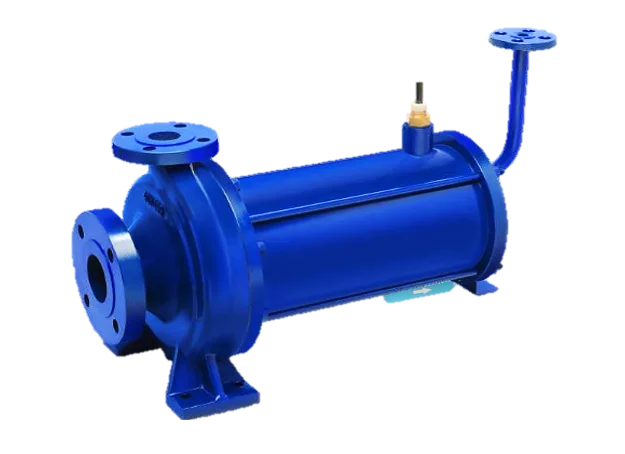
Fugitive emissions in chlor-alkali plants rarely begin with catastrophic equipment failure. Most start quietly. A worn seal face. Slight shaft vibration. Minor vapour escape near a transfer pump. At first the leak looks insignificant, almost routine. Weeks later, corrosion spreads around nearby instrumentation, chlorine odour complaints increase, maintenance frequency rises, and environmental reporting suddenly becomes more complicated than expected.
This is why chlor-alkali facilities are increasingly investing in sealless leak free pumps. Not simply to prevent visible leakage, but to reduce chronic fugitive emissions that gradually undermine safety, compliance, equipment reliability, and environmental performance across the plant.
The industry is moving away from leak control toward leak elimination. That distinction matters more than it sounds.
Fugitive emissions are no longer treated as “acceptable losses”
Years ago, many chemical plants operated with the assumption that small emissions around rotating equipment were unavoidable.
That operational mindset has changed sharply.
Today, fugitive emissions directly affect:
- Environmental audits
- ESG reporting
- Regulatory inspections
- Air quality monitoring
- Insurance evaluations
- Community risk perception
In chlor-alkali plants, this pressure is even higher because chlorine behaves aggressively once released into the atmosphere.
Even low-volume leakage can trigger broader operational concerns.
Why chlor-alkali plants are especially vulnerable to fugitive emissions
Chlor-alkali production environments combine several difficult operating conditions simultaneously:
- Corrosive media
- Continuous-duty operation
- Pressure fluctuation
- Temperature variation
- Vapour-sensitive chemicals
- Aggressive atmospheric conditions
These conditions place enormous stress on conventional sealing systems.
And unlike isolated process facilities, chlor-alkali plants usually contain multiple interconnected chlorine handling points:
- Transfer systems
- Liquefaction sections
- Storage areas
- Compression stages
- Loading stations
- Evaporation systems
A recurring leak in one area often creates secondary effects elsewhere in the facility.
That interconnected risk profile is one reason containment engineering has become central to modern chlor-alkali design philosophy.
The hidden cost of low-level chlorine emissions
Large chlorine release incidents receive attention immediately.
Small recurring emissions often do not.
But chronic low-level leakage creates long-term operational damage that many plants underestimate initially.
Over time, fugitive chlorine emissions may cause:
- Corrosion of electrical systems
- Premature instrumentation failure
- Structural degradation
- Coating deterioration
- Contaminated maintenance zones
- Persistent atmospheric exposure
And these problems rarely remain isolated around the original leak source.
Once chlorine vapour begins circulating repeatedly through process areas, degradation spreads gradually across the surrounding infrastructure.
Why traditional LDAR programs are not enough anymore
Leak Detection and Repair programs remain important in chemical processing industries.
But LDAR alone has limitations.
The problem is timing.
A leak must first occur before detection systems identify it.
That means:
- Vapour release has already started
- Environmental exposure already exists
- Corrosion processes may already begin
- Worker exposure risk already increases
In other words, LDAR helps manage leakage after containment failure develops.
Modern chlor-alkali plants increasingly want to reduce the probability of leakage itself.
That shift is driving stronger adoption of sealless leak free pumps in hazardous transfer applications.
Why mechanical seals become vulnerable in chlorine service
Mechanical seals depend on stable operating conditions to function properly.
Chlorine systems do not always provide that stability.
Several factors create difficulty:
Vapour formation near seal faces
Liquid chlorine can flash rapidly under pressure variation or temperature instability.
Once vapour develops around seal faces, lubrication conditions deteriorate quickly.
Heat rises.
Wear accelerates.
Containment reliability drops.
Corrosive moisture interaction
Even trace moisture contamination creates highly corrosive conditions in chlorine systems.
This may attack seal materials, secondary elastomers, and surrounding hardware over time.
Continuous operation stress
Many chlor-alkali facilities operate around the clock for extended production cycles.
That continuous duty increases cumulative seal wear significantly.
The issue is not usually sudden catastrophic failure.
It is progressive degradation that eventually develops into chronic emission behaviour.
Why fugitive emissions increase operational instability
Chronic emissions affect far more than environmental compliance.
Plants experiencing repeated leakage often see:
- More reactive maintenance activity
- Frequent shutdown planning adjustments
- Increased inspection burden
- Higher spare consumption
- More process interruptions
And eventually, operations teams begin compensating around unstable equipment behaviour instead of solving the root containment problem.
That creates operational inefficiency across the facility.
How sealless systems fundamentally change containment strategy
The biggest advantage of sealless leak free pumps is not improved seal performance.
It is removal of the external seal entirely.
In a hermetically sealed pump system:
- The motor and pump share one enclosed assembly
- No external rotating shaft exists
- No atmospheric seal interface exists
- Process fluid remains fully contained
This removes one of the most common fugitive emission pathways found in conventional pumping systems.
And importantly, it reduces leakage probability continuously during operation rather than relying heavily on monitoring and intervention later.
Why chlorine service benefits disproportionately from seal-less technology
Not every chemical process requires seal-less systems.
Chlorine service does.
Because chlorine leakage consequences escalate quickly.
Even relatively small emissions may lead to:
- Area evacuation
- Emergency response activation
- Production interruption
- Air monitoring escalation
- Regulatory reporting
The operational tolerance for leakage becomes extremely small.
Seal-less systems therefore provide much greater value in chlorine duty compared to lower-risk fluid applications.
Why fugitive emissions affect ESG performance more than companies expect
Environmental reporting increasingly tracks recurring emissions patterns rather than only catastrophic release incidents.
Facilities with persistent leakage issues may struggle with:
- Sustainability metrics
- Environmental scoring
- Community trust
- Internal safety benchmarks
And investors increasingly review operational reliability indicators during ESG evaluations.
This means chronic seal leakage is no longer viewed purely as a maintenance issue.
It becomes part of broader corporate environmental performance assessment.
Corrosion spread creates secondary emission risks
One of the less discussed realities inside chlor-alkali plants is how corrosion gradually creates additional leak pathways.
Repeated chlorine exposure damages:
- Instrument fittings
- Cable trays
- Pipe supports
- Fasteners
- Valve components
- Structural steel
Over time, secondary containment weaknesses begin appearing throughout the plant.
This creates a dangerous cycle:
Small leak leads to corrosion.
Corrosion weakens nearby systems.
Weak systems increase future leak probability.
Containment reliability slowly deteriorates facility-wide.
Reducing fugitive emissions early therefore protects broader infrastructure integrity as well.
Why maintenance exposure matters in emission control
Seal replacement itself introduces risk.
Every maintenance intervention around chlorine systems may involve:
- Isolation procedures
- Residual chemical exposure
- Venting operations
- Area decontamination
- Emergency readiness requirements
Reducing maintenance frequency therefore directly supports emission reduction objectives.
This operational benefit often gets overlooked when evaluating pumping systems purely by purchase cost.
Why the industry is moving toward containment-first engineering
There is a noticeable design shift happening across hazardous chemical industries.
Older systems focused on detecting and managing leakage.
Modern systems increasingly focus on eliminating leak paths altogether.
That includes:
- Hermetically sealed pumps
- Double containment architecture
- Reduced maintenance exposure
- Closed process transfer systems
- Advanced monitoring integration
The philosophy is changing from “respond faster” to “prevent release altogether.”
Conclusion
Fugitive emissions in chlor-alkali plants create far more than environmental compliance concerns. They contribute to corrosion spread, maintenance instability, operational inefficiency, worker exposure risk, and long-term infrastructure degradation across the facility.
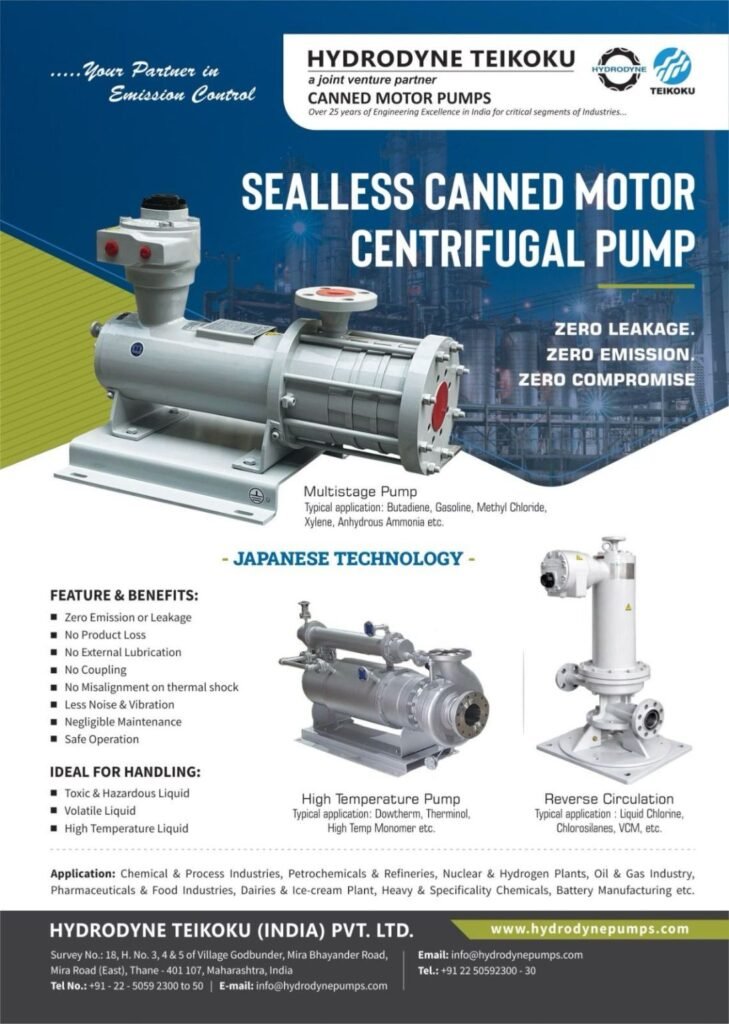
This is why many chlor-alkali operations are increasingly adopting sealless leak free pumps for hazardous chlorine handling systems. By eliminating external mechanical seals and reducing chronic emission pathways, seal-less technology helps facilities improve containment reliability, lower atmospheric release risk, reduce maintenance exposure, and support more stable long-term environmental performance.
We at HydrodynePump Teikoku support chlor-alkali industries operating under demanding containment and environmental requirements. Our team helps facilities implement engineered sealless pumping systems designed to reduce fugitive emissions, improve operational reliability, and maintain safe chlorine handling under continuous-duty process conditions.
FAQs
What are fugitive emissions in chlor-alkali plants?
They are unintended chemical vapour releases from equipment such as pumps, valves, and seals during operation.
Why is chlorine leakage considered highly dangerous?
Chlorine reacts aggressively with moisture and may spread rapidly at ground level, creating toxic exposure risk.
How do sealless leak free pumps reduce fugitive emissions?
They eliminate external mechanical seals, which are common leakage points in conventional pump systems.
Why are mechanical seals vulnerable in chlorine applications?
Pressure fluctuation, vapour formation, and corrosive conditions gradually degrade seal reliability.
Can small chlorine leaks cause long-term plant damage?
Yes. Chronic emissions may create corrosion, instrumentation failure, and infrastructure degradation over time.
Are LDAR programs enough to prevent chlorine emissions?
LDAR helps detect leaks, but it cannot eliminate leakage pathways before emissions begin.
Why are chlor-alkali plants moving toward hermetically sealed systems?
They improve containment integrity and reduce operational risk in hazardous chlorine service applications.