

Ammonia vs CO₂ Refrigeration: What Changes in Industrial Pump Selection?
November 2, 2026
API 685 Pump Procurement: What Should EPC Contractors Check Before Approving a Vendor?
November 2, 2026
India’s green hydrogen expansion depends on reliable equipment, not just renewable power and electrolyser capacity. Pumps help maintain water supply, cooling, chemical transfer, and other essential plant operations. Selecting the right koh application pump requires careful consideration of fluid properties, operating conditions, leakage risks, and maintenance needs. Understanding these factors can help manufacturers, EPC contractors, and plant owners improve operational reliability.
Why Could Pump Reliability Slow India’s Green Hydrogen Expansion?
Pump reliability can affect green hydrogen production when equipment failures interrupt fluid circulation, reduce plant availability, or create safety concerns. Because industrial processes are interconnected, a failure in a supporting system can affect the performance of the wider facility.
India’s National Green Hydrogen Mission targets at least 5 million metric tonnes of annual green hydrogen production capacity by 2030. Meeting this ambition requires dependable equipment, effective maintenance, and sound engineering across new facilities.
Electrolysers produce hydrogen by splitting water using electricity. Pumps support associated processes, including water treatment, cooling circuits, chemical dosing, and other liquid-transfer operations. Their reliability depends on the specific application and operating environment.
For EPC contractors and plant owners, pump selection should be addressed during project planning. Choosing equipment based only on initial purchase price can increase maintenance expenses and operational risks later.
Which Pump Applications Are Important in Green Hydrogen Plants?
Pumps support several essential operations in green hydrogen facilities, but each application has different hydraulic, chemical, and safety requirements. Selecting equipment according to its intended duty helps maintain process stability and avoid premature component failure.
Common applications include:
- Water treatment: Supplying treated water to systems serving the electrolyser.
- Cooling circuits: Circulating water or compatible cooling fluids to control operating temperatures.
- Chemical dosing: Delivering treatment chemicals at controlled flow rates.
- Electrolyte circulation: Moving suitable electrolyte solutions in systems that require them.
- Green ammonia production: Transferring ammonia and other process liquids where specified.
- Auxiliary chemical processing: Handling compatible acids, alkalis, solvents, and other industrial fluids.
Liquid hydrogen transfer is a specialised duty involving cryogenic temperatures. It requires equipment specifically designed for these conditions, rather than a conventional liquid-transfer pump.
Manufacturers must assess the actual fluid, pressure, temperature, and operating conditions before recommending a design. This is particularly important for projects combining hydrogen production with petrochemical, refining, pharmaceutical, or ammonia-related operations.
How Should EPC Contractors Select Reliable Pumps for Green Hydrogen Projects?
The right pump must match the fluid, required flow rate, discharge pressure, temperature, and acceptable leakage risk. EPC contractors should evaluate these requirements together rather than selecting equipment based only on motor power or purchase price.
Important factors include:
- Material compatibility: Wetted components must withstand the fluid’s chemical properties and operating temperature.
- Hydraulic performance: The pump should meet the required flow and pressure across expected operating conditions.
- Leakage prevention: Assess mechanical seals, containment systems, and sealless designs for hazardous liquids.
- Energy efficiency: Compare power consumption at the actual operating point.
- Maintenance requirements: Check inspection access, spare-parts availability, and service support.
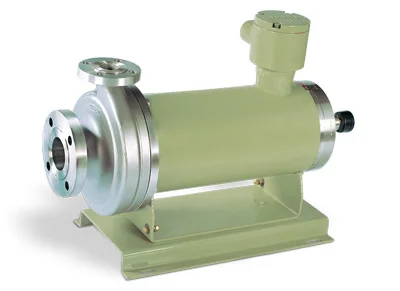
Magnetic-drive pumps transmit power through a magnetic coupling without a conventional dynamic shaft seal. Canned-motor pumps use a containment arrangement around the rotor. Both designs can reduce leakage pathways, but neither eliminates every possible failure mode.
For applicable petroleum, petrochemical, and gas services, API Standard 685 provides requirements for sealless centrifugal pumps. Engineers should confirm the relevant edition and project-specific requirements before specifying equipment.
A common mistake is assuming that every sealless pump suits every hazardous liquid. Fluid compatibility, cooling, lubrication, pressure limits, and protection against dry running must also be considered.
How Can Maintenance Reduce Pump Downtime and Lifecycle Costs?
Preventive maintenance helps identify developing faults before they cause unexpected shutdowns. Monitoring vibration, temperature, pressure, flow, and motor power can reveal changes that require investigation.
A practical maintenance programme should include:
- Establish baseline operating readings during commissioning.
- Monitor performance against manufacturer-recommended limits.
- Inspect seals, bearings, couplings, filters, and pipework where applicable.
- Investigate cavitation, overheating, unstable flow, and dry-running conditions.
- Maintain critical spares and document inspection findings.
Cavitation occurs when local pressure drops enough for vapour bubbles to form and subsequently collapse. This can damage pump components and reduce performance.
Lifecycle cost is equally important. A lower-priced pump may become more expensive if it consumes more electricity, needs frequent repairs, or causes production losses. Buyers should compare purchase price, energy use, maintenance, spare parts, and potential downtime.
Actual maintenance intervals and costs vary according to pump design, fluid characteristics, operating hours, site conditions, and manufacturer recommendations.
What Should Plant Owners Check Before Finalising Pump Procurement?
Plant owners should verify that the proposed pump meets the process specification, relevant safety requirements, and long-term service needs. A detailed technical review can help prevent mismatches between the equipment and the intended application.
Before procurement, confirm the following:
- Fluid composition and material compatibility.
- Required flow rate, operating pressure, and temperature range.
- Seal arrangement and leakage-control requirements.
- Applicable industry standards and inspection documentation.
- Energy consumption and expected maintenance requirements.
- Local service availability, warranty conditions, and critical spare parts.
A qualified pump manufacturer should review the operating data before recommending a model. Testing and documentation requirements should also be agreed upon during the engineering stage.
This approach helps chemical, petrochemical, oil and gas, pharmaceutical, and vegetable oil plants make informed equipment decisions while accounting for operational safety and lifecycle costs.
Key Takeaways
- Pump reliability supports operational continuity across green hydrogen production and associated processes.
- Pump design must match the actual fluid, pressure, temperature, and flow requirements.
- Sealless designs can reduce leakage pathways when correctly selected and maintained.
- Lifecycle costs, applicable standards, and service support deserve attention during procurement.
Frequently Asked Questions
1. Why are reliable pumps important in green hydrogen plants?
Reliable pumps support water treatment, cooling, chemical transfer, and other essential processes. Equipment failures can interrupt operations, increase maintenance costs, and create safety concerns.
2. Which pump applications are common in green hydrogen facilities?
Common applications include treated-water supply, cooling circuits, chemical dosing, electrolyte circulation where required, and liquid transfer in associated ammonia or chemical processes.
3. Are sealless pumps suitable for hazardous chemical applications?
Yes, suitable magnetic-drive and canned-motor pumps can handle certain hazardous liquids. Selection depends on fluid compatibility, pressure, temperature, cooling requirements, and the applicable engineering standards.
4. How do you select a pump for a green hydrogen project?
Evaluate fluid properties, flow rate, pressure, temperature, material compatibility, leakage risk, energy efficiency, and maintenance needs. Have a qualified pump manufacturer review the complete operating conditions.
5. What does API 685 cover?
API Standard 685 specifies requirements for applicable sealless centrifugal pumps used in petroleum, heavy-duty petrochemical, and gas industry services. Confirm the relevant edition and project scope before specifying equipment.
6. How can industrial plants reduce pump failures and maintenance costs?
Plants can reduce avoidable failures through condition monitoring, preventive maintenance, correct pump sizing, suitable materials, operator training, and timely replacement of worn components.
Conclusion
Early attention to pump reliability matters as India scales up green hydrogen, because supporting equipment directly shapes operational continuity, safety, and maintenance planning. Plant owners and EPC contractors should assess each pumping duty on its own merits, looking at fluid compatibility, leakage prevention, hydraulic performance, energy consumption, and service availability. A suitable koh application pump has to meet the actual process requirements, not just a generic product description. Before finalising procurement, consult a qualified manufacturer such as hydrodynepumps, share complete operating data, and confirm the testing, documentation, and maintenance support available for your application.