
Common Misconceptions About Canned Motor Pumps and Motors
May 4, 2026
Signs Your Multistage Pump Needs Servicing or Replacement
May 5, 2026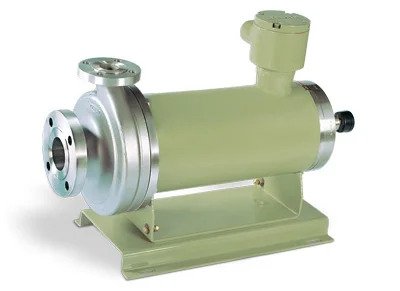
Chlor-alkali plants operate under some of the harshest process conditions found in the chemical industry. Corrosive fluids, toxic gases, high operating temperatures, and strict environmental regulations leave very little room for equipment failure. In these conditions, API 685 Pumps have become a preferred choice for critical fluid handling applications, particularly where leakage cannot be tolerated.
Unlike conventional sealed pumps, Canned Motor Pumps eliminate the need for mechanical seals entirely. That single design difference changes a lot inside a chlor-alkali facility. It improves plant safety, reduces maintenance interruptions, lowers fugitive emissions, and helps maintain continuous process stability in applications where chlorine, caustic soda, and other hazardous chemicals are involved.
For chlor-alkali operations, reliability is not just a maintenance target. It is directly tied to safety, environmental compliance, and production continuity.
Understanding chlor-alkali process conditions
The chlor-alkali industry relies on electrolysis to produce chlorine, hydrogen, and caustic soda. The process itself sounds straightforward on paper. The operating environment is anything but simple.
These plants regularly handle:
- Chlorine
- Sodium hydroxide
- Hydrochloric acid
- Brine solutions
- Hypochlorite
- Sulphuric acid
- Hot corrosive liquids
Many of these fluids are hazardous even in small quantities. Chlorine leakage, for instance, can quickly become a serious safety incident. Plants therefore place heavy emphasis on containment systems and leak prevention.
This is where API 685 Pumps fit naturally into the process.
The API 685 standard specifically addresses seal-less centrifugal pumps for petroleum, heavy chemical, and gas industry applications. In chlor-alkali facilities, the standard provides a framework for equipment reliability, safety, and operational integrity under difficult process conditions.
Why conventional sealed pumps struggle in chlor-alkali applications
Mechanical seal failures remain one of the most common causes of pump downtime in chemical processing plants.
In chlor-alkali operations, the consequences become more severe because the fluids involved are often:
- Toxic
- Corrosive
- Volatile
- Environmentally hazardous
Even a small seal leak may result in:
- Production shutdowns
- Operator exposure risks
- Corrosion damage nearby
- Regulatory non-compliance
- Frequent maintenance interventions
Over time, conventional pumps handling aggressive chemicals develop recurring seal-related issues. Plants often compensate with seal flushing systems, cooling arrangements, external piping, and standby units. The pumping system becomes more complex than the process actually needs.
That complexity creates another problem. More auxiliary systems mean more failure points.
How Canned Motor Pumps solve the leakage problem
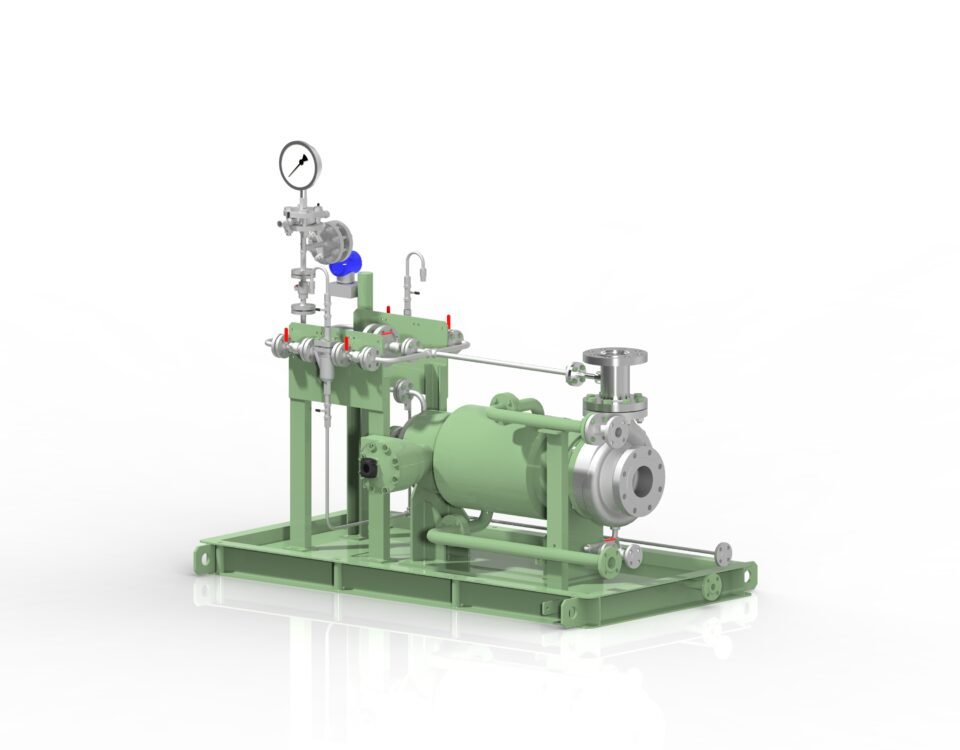
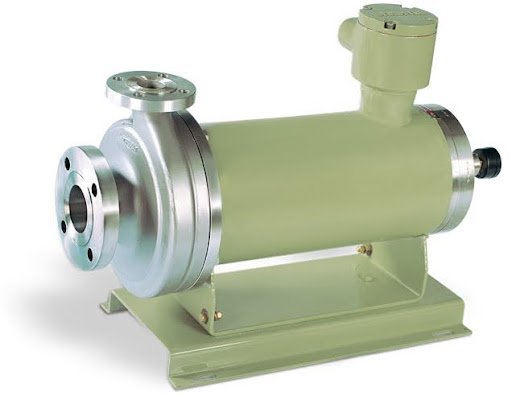
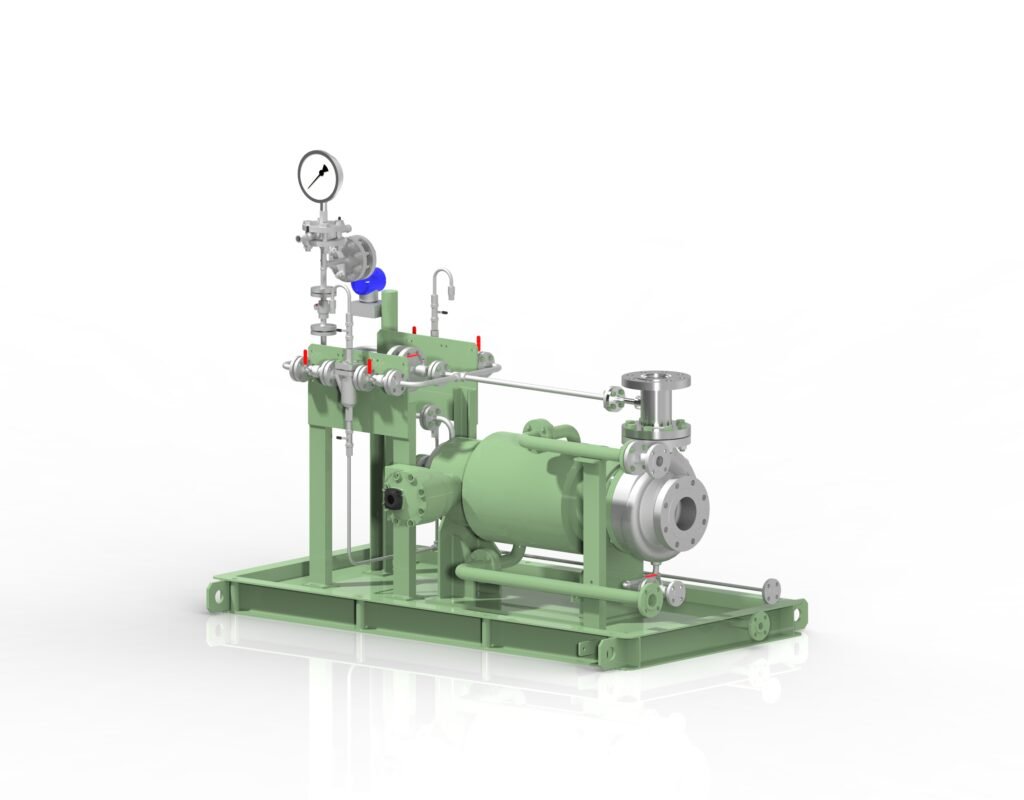
A Canned Motor Pump integrates the motor and hydraulic section into a single hermetically sealed unit. There is no external mechanical seal, no seal support system, and no coupling alignment requirement.
The process liquid remains fully contained within the pump casing.
In chlor-alkali service, this design provides several practical advantages.
Zero external leakage
This is the primary reason many chlor-alkali plants move toward canned motor technology.
Hazardous fluids remain enclosed within the pump assembly. That significantly reduces the risk of chlorine or caustic leakage into the surrounding environment.
For plants operating under stringent environmental and safety regulations, this matters every day, not only during audits.
Reduced maintenance requirements
Mechanical seals require periodic replacement. Seal support systems also demand regular monitoring.
Seal-less pumps remove much of that maintenance burden.
There are fewer auxiliary systems to inspect, fewer spare parts to stock, and fewer shutdowns caused by seal wear. Maintenance teams usually appreciate this shift because troubleshooting becomes more predictable.
Improved reliability in continuous operation
Chlor-alkali plants typically run continuous processes for long durations. Frequent shutdowns affect production efficiency and increase operating costs.
API 685 Pumps are designed for stable long-term operation under demanding service conditions. Their construction helps minimise vibration, alignment issues, and leakage-related failures.
The result is higher operational availability.
Critical chlor-alkali applications for API 685 Pumps
Not every process pump inside a chlor-alkali plant requires seal-less construction. But several applications strongly benefit from it.
Chlorine transfer systems
Chlorine handling remains one of the most sensitive areas in the plant.
Leak prevention becomes a top priority due to toxicity concerns. Seal-less canned motor pumps help maintain containment while reducing the risk associated with mechanical seal failures.
Caustic soda circulation
Caustic soda solutions can create severe corrosion challenges depending on concentration and temperature.
Material selection becomes important here. Canned motor pumps used for caustic handling are often manufactured using corrosion-resistant metallurgy suited to process conditions.
Hydrochloric acid handling
Hydrochloric acid applications place heavy demands on pump sealing systems.
Seal-less pump designs reduce leakage risks while supporting safer handling of aggressive acidic fluids.
Brine circulation systems
Brine systems may appear less hazardous than chlorine handling, but they still involve corrosion and process reliability concerns.
Continuous operation and reduced maintenance make canned motor pumps suitable for these circulation duties.
API 685 compliance matters more than many plants realise
Some facilities still focus only on pump performance curves and initial capital cost during procurement. That approach can create problems later.
API 685 compliance introduces stricter requirements for:
- Mechanical integrity
- Containment reliability
- Safety design
- Thermal stability
- Bearing systems
- Monitoring capability
- Construction quality
In hazardous chemical environments, these details become important over years of operation.
A pump that performs well for six months but develops recurring leakage or bearing failures later becomes expensive very quickly. Downtime costs inside chlor-alkali facilities can escalate fast, particularly when linked to environmental shutdowns or process interruptions.
API-compliant systems generally provide better lifecycle reliability under such conditions.
Energy efficiency and process stability
There is another operational benefit that often gets overlooked.
Stable pumping systems contribute to stable process conditions.
Seal-less pumps typically operate with:
- Lower vibration
- Better hydraulic stability
- Reduced alignment issues
- Consistent performance over longer periods
That operational consistency supports process efficiency throughout the plant.
In large chlor-alkali operations where pumps run continuously for years, even moderate efficiency improvements can affect energy consumption meaningfully.
Electricity already represents a major operating cost in chlor-alkali production due to the electrolysis process itself. Plants therefore pay close attention to any equipment that improves long-term operational efficiency.
Material selection is critical
Pump design alone is not enough for chlor-alkali applications.
Material compatibility matters just as much.
Depending on the process fluid, temperature, and concentration, pumps may require specialised materials such as:
- Hastelloy
- Duplex stainless steel
- Titanium
- High-grade stainless steel alloys
Improper material selection can result in:
- Corrosion damage
- Premature failure
- Product contamination
- Reduced equipment life
This is why application engineering plays such a large role in chlor-alkali pumping systems. Two processes inside the same plant may require completely different material configurations.
A generic approach usually does not work well here.
Why chlor-alkali plants are moving toward seal-less technology
The shift toward seal-less pumping is not simply about modernisation. It is largely driven by operational pressure.
Plants today face tighter expectations around:
- Environmental emissions
- Worker safety
- Plant uptime
- Maintenance costs
- Regulatory compliance
Older sealing technologies often struggle to meet these expectations consistently in highly corrosive chemical service.
Seal-less Canned Motor Pumps provide a practical solution because they address the root cause of many leakage-related failures instead of merely controlling them externally.
That distinction is important.
Rather than managing seal leakage through additional support systems, the design removes the seal altogether.
Selecting the right API 685 Pump for chlor-alkali service
Pump selection should always begin with process analysis, not catalogue comparison.
Several operating parameters influence pump configuration:
Fluid characteristics
Corrosiveness, vapour pressure, toxicity, and solids content all affect pump design.
Operating temperature
Thermal expansion and cooling requirements become important at elevated temperatures.
Pressure conditions
Pressure ratings influence casing design, motor configuration, and containment requirements.
Process continuity requirements
Critical continuous-duty systems usually require higher reliability margins and monitoring systems.
Material compatibility
Chemical compatibility determines long-term durability and maintenance frequency.
A properly engineered pump system typically performs for years with minimal intervention. Poor selection often creates repeated operational problems that maintenance teams end up managing continuously.
The long-term operational value
The initial purchase price of a seal-less API 685 system is usually higher than a conventional sealed pump. That sometimes creates hesitation during procurement.
But chlor-alkali plants rarely evaluate equipment only on purchase cost. They look at lifecycle impact.
Over time, reduced leakage incidents, lower maintenance requirements, improved uptime, and fewer process interruptions often offset the higher upfront investment.
In hazardous chemical processing, reliability tends to become cheaper than failure.
That is the reality most experienced plant operators eventually arrive at.
Conclusion
Chlor-alkali plants operate in environments where pumping equipment cannot afford to fail quietly. A leaking seal is not just a maintenance issue when chlorine, caustic soda, or hydrochloric acid are involved. It can affect safety, compliance, production continuity, and operating cost all at once.
That is why API 685 Pumps and Canned Motor Pumps continue gaining importance across modern chemical processing facilities. Their seal-less construction, containment reliability, and suitability for corrosive hazardous fluids make them particularly effective for chlor-alkali operations running continuous critical processes.
We at HydrodynePump Teikoku work closely with industries handling aggressive and hazardous fluids where leak-free operation is essential. Our team supports chlor-alkali plants with engineered canned motor pumping solutions designed for long-term reliability, process safety, and demanding chemical service conditions.
FAQs
What is the main advantage of API 685 Pumps in chlor-alkali plants?
The biggest advantage is leak-free operation in hazardous chemical applications where conventional mechanical seals may fail.
Why are Canned Motor Pumps preferred for chlorine handling?
They use a hermetically sealed construction that helps prevent chlorine leakage and improves operational safety.
Are API 685 Pumps suitable for corrosive chemicals?
Yes. They are widely used for corrosive and hazardous fluids when paired with appropriate material selection.
Do seal-less pumps reduce maintenance requirements?
Yes. Since there are no mechanical seals or seal support systems, maintenance frequency is generally lower.
Can Canned Motor Pumps handle continuous-duty operations?
They are specifically designed for stable long-duration operation in critical industrial processes.
What materials are commonly used in chlor-alkali pump applications?
Materials such as Hastelloy, duplex stainless steel, titanium, and specialised alloys are commonly used depending on process conditions.