
Canned Motor Pump Applications Across the Chlor-Alkali Plant: From Brine to Chlorine Handling
June 16, 2026Role of Canned Motor Pumps in EDC/VCM/PVC Plants (Downstream Chlorine Use)
June 19, 2026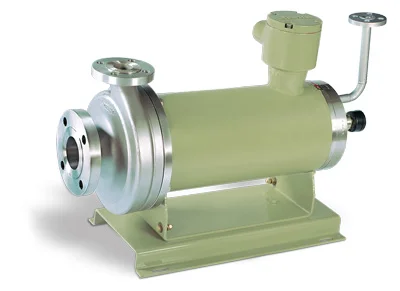
Chlorine liquefaction systems operate inside a narrow stability window. Pressure changes slightly, temperature drifts unexpectedly, vapour forms where it should not, and suddenly the entire transfer system becomes difficult to control. This is why chlorine handling has always been less about moving fluid and more about maintaining stable containment under highly sensitive operating conditions.
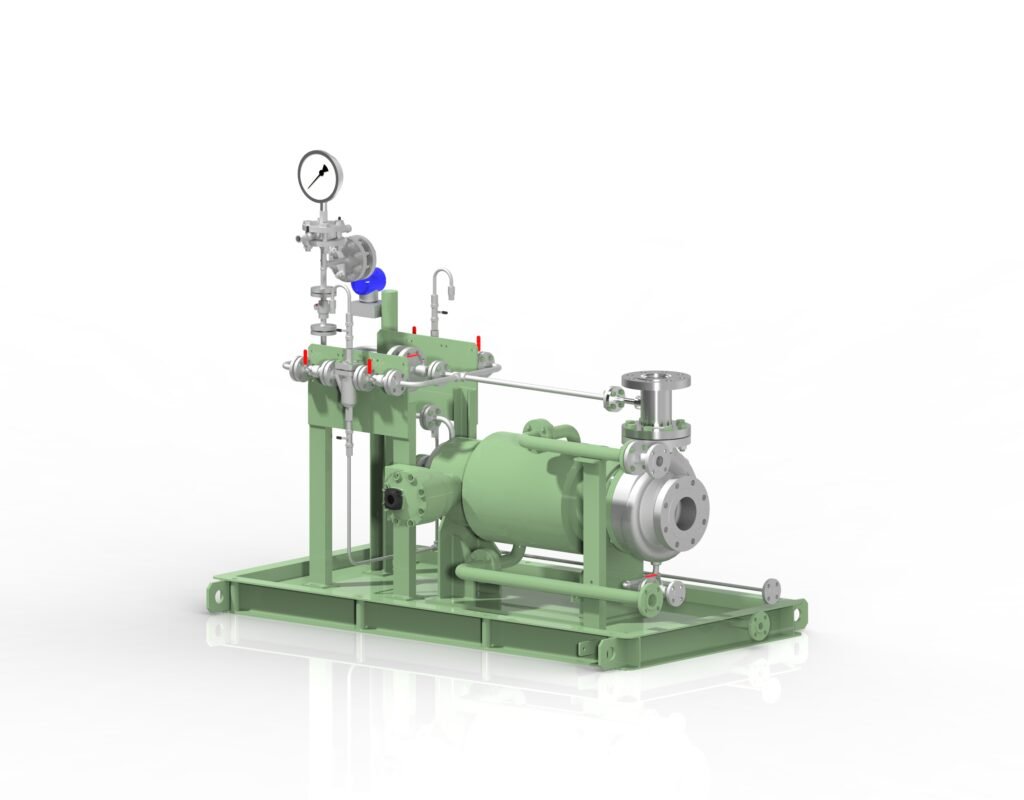
In these environments, the design of the Canned Motor Pump becomes critically important. Not because it is simply seal-less, but because chlorine liquefaction and transfer systems expose weaknesses in conventional pump architecture very quickly. Vapour formation, flashing, thermal instability, corrosion, and seal degradation all converge inside the same operating zone.
And once chlorine escapes containment, the consequences escalate fast.
Chlorine liquefaction is far less stable than many operators expect
On paper, chlorine liquefaction appears straightforward.
Compress the gas.
Cool the system.
Maintain pressure.
Transfer the liquid.
Actual plant conditions are far more unstable.
Liquid chlorine exists very close to vapour transition conditions during many operating stages. Small pressure drops or localised temperature increases may trigger partial flashing unexpectedly.
This creates serious pumping challenges because the fluid entering the pump may not remain fully liquid throughout the transfer cycle.
Even minor vapour formation changes hydraulic behaviour dramatically.
Why chlorine flashing creates severe pump reliability problems
Flashing occurs when liquid chlorine partially vaporises due to pressure reduction or heat input.
This becomes dangerous inside conventional pump systems because flashing affects:
- Suction stability
- Internal lubrication
- Seal face cooling
- Hydraulic balance
- Bearing loading
And chlorine does not behave gently once vapour pockets develop.
Inside mechanical seal systems, flashing often creates unstable seal film conditions. Once lubrication breaks down between seal faces:
- Friction increases rapidly
- Heat generation rises
- Seal wear accelerates
- Leakage probability increases
The difficult part is that flashing may occur intermittently.
A pump may appear stable during inspection but experience transient vapour formation repeatedly during actual operation.
Why conventional seals struggle specifically in chlorine liquefaction duty
Mechanical seals depend on predictable fluid behaviour near the seal interface.
Chlorine liquefaction systems rarely provide fully predictable conditions.
Several process realities create instability:
Pressure variation during transfer
Loading systems, storage vessels, and downstream process demand constantly affect line pressure.
This means suction conditions may fluctuate continuously.
Temperature sensitivity
Liquid chlorine responds aggressively to thermal change.
Even small heat gain near the seal chamber may increase vapour generation risk.
Continuous operational cycling
Liquefaction and unloading systems often experience repeated startup and shutdown sequences rather than perfectly stable operation.
Seal systems generally experience their highest stress during these transient operating periods.
Over time, cumulative instability degrades containment reliability.
Why chlorine leakage risk increases during startup conditions
Many chlorine transfer leaks begin during startup rather than steady-state operation.
This happens because startup introduces:
- Rapid pressure equalisation
- Thermal expansion changes
- Temporary vapour movement
- Flow instability
During these moments, conventional seals may briefly operate under poor lubrication conditions.
Repeated transient stress gradually damages sealing surfaces until leakage begins appearing around the shaft interface.
A Canned Motor Pump avoids this vulnerability because there is no external dynamic seal exposed to atmosphere during these unstable transition phases.
Why canned motor design changes containment behaviour fundamentally
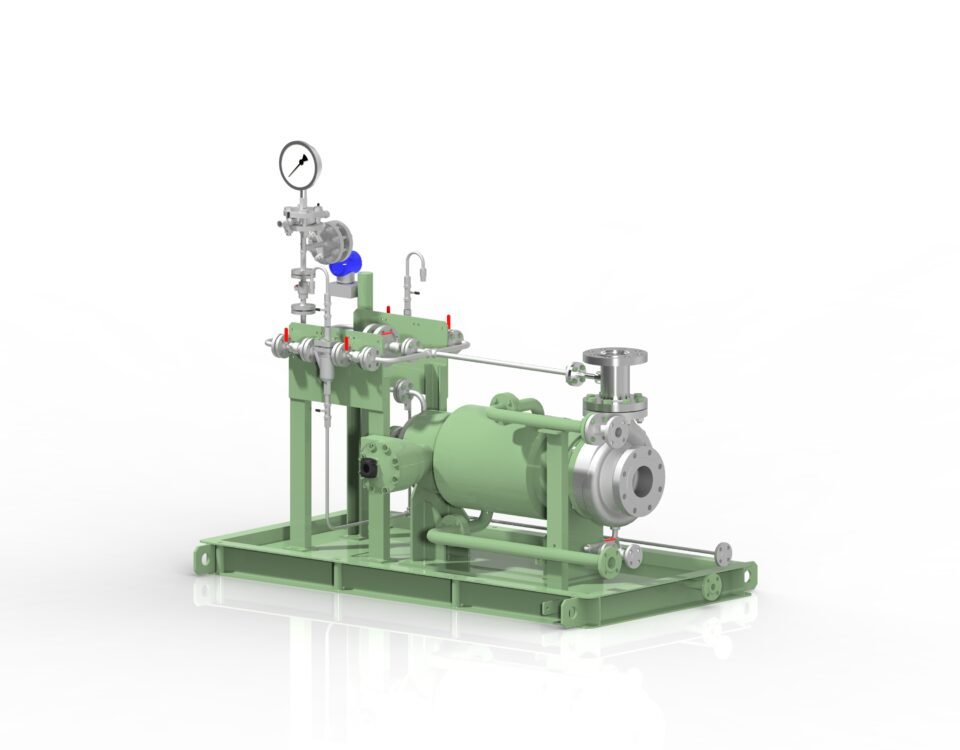
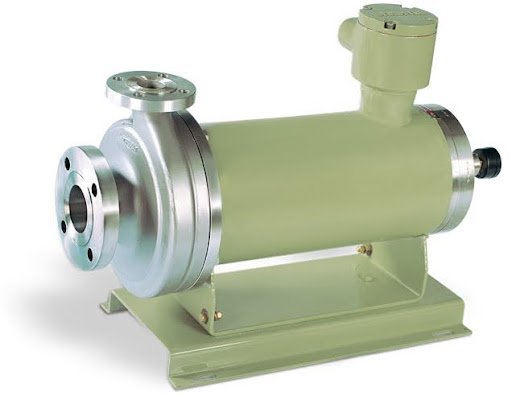
The major difference in a Canned Motor Pump is architectural, not cosmetic.
The pump and motor form one hermetically sealed assembly.
This means:
- No external rotating shaft exists
- No atmospheric seal interface exists
- Process fluid remains fully enclosed
- The motor operates inside the sealed system boundary
That design changes chlorine containment reliability significantly because one of the primary fugitive emission pathways disappears completely.
And in chlorine service, eliminating leak paths matters more than improving leak management.
Why motor cooling design matters in chlorine applications
One overlooked factor in canned motor systems is motor cooling configuration.
In many Canned Motor Pump designs, the process fluid itself circulates internally to cool and lubricate the motor assembly.
This creates several operational advantages in chlorine service:
- Stable internal temperature distribution
- Reduced external contamination risk
- Elimination of separate cooling interfaces
- Improved thermal balance
But proper internal circulation design becomes extremely important.
Poor circulation management may create:
- Heat concentration zones
- Vapour trapping
- Internal recirculation instability
This is why chlorine-duty canned motor systems require specialised hydraulic and thermal engineering rather than generic seal-less pump conversion.
NPSH instability becomes critical in chlorine transfer systems
Net Positive Suction Head problems become especially dangerous in chlorine applications.
Because chlorine exists close to vapour transition conditions, inadequate suction conditions may trigger flashing rapidly.
This creates:
- Cavitation
- Hydraulic instability
- Vibration increase
- Internal recirculation damage
Conventional pumps often become difficult to stabilise once cavitation begins repeatedly.
A properly designed Canned Motor Pump improves low-NPSH performance because the enclosed system architecture supports more stable suction behaviour under volatile operating conditions.
Still, system design matters enormously here.
Even the best pump cannot compensate for poor suction piping layout or unstable upstream vessel pressure.
Why chlorine purity affects pump reliability
This area gets underestimated often.
Chlorine purity directly influences corrosion behaviour inside transfer systems.
Moisture contamination is especially dangerous.
Wet chlorine may attack:
- Internal metallic surfaces
- Bearing materials
- Rotor cans
- Secondary containment components
That means canned motor pump material selection becomes highly application-specific.
Operators cannot simply specify “chlorine service” generally.
They must evaluate:
- Moisture content
- Temperature profile
- Pressure conditions
- Impurity concentration
- Process cycling frequency
Reliable chlorine transfer depends heavily on matching pump metallurgy to actual process chemistry.
Why vibration control matters more in seal-less chlorine systems
Many engineers assume removing mechanical seals automatically solves reliability problems.
Not entirely.
Hydraulic instability still affects:
- Bearing life
- Rotor alignment
- Internal circulation behaviour
- Long-term containment reliability
Chlorine systems experiencing repeated cavitation or unstable suction conditions may still develop internal wear problems over time.
This is why advanced canned motor systems increasingly incorporate:
- Vibration monitoring
- Temperature protection
- Dry-run detection
- Internal circulation supervision
Containment reliability depends on full system stability, not only seal elimination.
Why chlorine unloading stations increasingly specify canned motor systems
Railcar and tanker unloading systems create some of the most unstable operating conditions inside chlor-alkali facilities.
These systems experience:
- Frequent startup cycles
- Pressure equalisation fluctuation
- Variable ambient conditions
- Operator-dependent procedures
Conventional seals experience high wear under these transient conditions.
A Canned Motor Pump handles repeated operational cycling more consistently because containment integrity does not rely on exposed dynamic sealing surfaces.
This reduces leakage probability significantly during transfer operations.
Why emergency shutdown conditions expose weak pump designs
Emergency trip conditions create severe stress inside chlorine systems.
Flow stops suddenly.
Pressure redistributes rapidly.
Temperature balance shifts.
Poorly designed systems may experience:
- Reverse flow instability
- Vapour lock conditions
- Thermal shock
- Internal recirculation problems
High-quality canned motor pump design accounts for these transient upset conditions during engineering, not only steady-state operation.
That distinction becomes extremely important in hazardous chlorine service.
Why lifecycle containment matters more than initial efficiency
Chemical plants increasingly evaluate pump systems based on long-term containment reliability rather than only hydraulic efficiency curves.
This shift happened because chronic leakage creates cumulative operational damage:
- Corrosion spread
- Fugitive emissions
- Environmental reporting exposure
- Maintenance burden
- Worker safety risk
A pump that performs efficiently but leaks unpredictably eventually becomes operationally expensive.
Containment stability now carries equal importance to hydraulic performance in chlorine applications.
Conclusion
Chlorine liquefaction and transfer systems operate under highly sensitive process conditions where vapour formation, pressure instability, corrosion risk, and thermal fluctuation continuously challenge conventional pump designs. In these environments, containment reliability depends heavily on pump architecture itself, not only operational maintenance practices.
This is why the design of the Canned Motor Pump plays such a critical role in modern chlorine handling systems. By eliminating external mechanical seals and maintaining hermetically sealed containment under difficult operating conditions, canned motor technology helps chlor-alkali facilities improve transfer stability, reduce fugitive emissions, minimise leakage risk, and maintain safer long-term chlorine processing performance.
We at HydrodynePump Teikoku support chlor-alkali industries requiring engineered pumping systems for critical chlorine liquefaction and hazardous transfer applications. Our team helps facilities implement reliable canned motor pump solutions designed for stable containment, continuous-duty operation, and safer chlorine handling under demanding process conditions.
FAQs
Why is chlorine liquefaction difficult for conventional pumps?
Liquid chlorine operates close to vapour transition conditions, creating flashing and seal instability risks.
How does a Canned Motor Pump improve chlorine containment?
It eliminates the external mechanical seal and keeps process fluid fully enclosed.
What causes flashing in chlorine transfer systems?
Pressure reduction or heat gain may partially vaporise liquid chlorine during transfer.
Why are startup conditions risky in chlorine pumping?
Rapid pressure and temperature changes may destabilise conventional seal lubrication conditions.
Can wet chlorine damage pump systems?
Yes. Moisture contamination creates highly corrosive conditions inside chlorine handling equipment.
Why is NPSH important in chlorine applications?
Poor suction conditions may trigger flashing, cavitation, and hydraulic instability quickly.
Are canned motor systems suitable for chlorine unloading stations?
Yes. They handle repeated startup and transient operating conditions more reliably than conventional sealed pumps.