
Health Hazards of Chlorine and Caustic Soda: Why Equipment Reliability Matters
May 29, 2026
Environmental Impact of Chlorine Leakage and How Sealless Pumps Mitigate It
June 5, 2026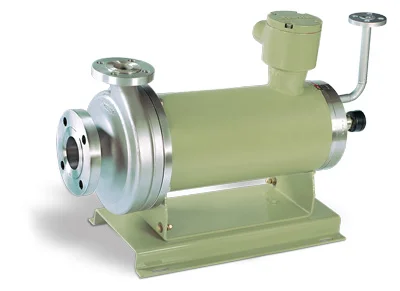
In chlor-alkali plants, a pump seal failure is rarely just a maintenance issue. It can trigger toxic gas release, forced shutdowns, corrosion spread, emergency evacuation procedures, and sometimes chain-reaction operational failures across connected process systems. This is exactly why many facilities handling chlorine now move toward Canned Motor Pumps and seal-less containment systems instead of relying entirely on conventional mechanical seal arrangements.
The real risk is not only the leak itself. The real problem is how fast a small seal failure escalates once chlorine, caustic media, vapour pressure changes, and continuous process conditions combine inside an operating plant.
Most discussions around pump seal failures stay too general. The actual sequence inside a chlor-alkali facility is far more serious and far more expensive than many people expect.
A seal usually does not fail suddenly
One of the biggest misconceptions is that mechanical seals fail instantly without warning.
In reality, most chlorine pump seal failures develop gradually.
The process often starts with:
- Slight vibration increase
- Minor seal face wear
- Temperature fluctuation
- Vapour instability
- Reduced lubrication film
- Shaft movement
At this stage, operators may only notice occasional odour traces or small changes in seal performance data.
Production usually continues.
That is where the real risk begins.
The first stage: micro leakage nobody takes seriously enough
When a seal begins degrading, leakage is often microscopic initially.
Not visible liquid leakage. Vapour leakage.
In chlorine service, even this stage matters.
Very small chlorine vapour release may already cause:
- Local corrosion around equipment
- Sensor alarms
- Irritation near operating zones
- Seal chamber contamination
- Atmospheric moisture reaction
And chlorine does something particularly damaging here.
Once it mixes with moisture in surrounding air, corrosive compounds begin forming around nearby surfaces.
So while maintenance teams may focus on the seal itself, surrounding equipment starts degrading quietly in the background.
Why chlorine systems become unstable after seal degradation starts
A chlorine pump seal does not operate independently from the process.
Once leakage begins, system stability often changes.
For example:
- Vapour enters areas where liquid stability is required
- Seal lubrication quality drops
- Internal temperatures increase
- Pressure conditions fluctuate further
- Vibration worsens
This creates a feedback loop.
A weak seal creates instability.
Instability accelerates seal damage.
Seal damage increases leakage further.
In continuous-duty chlor-alkali plants, this escalation can happen surprisingly fast under high operating loads.
The second stage: vapour release and containment loss
As seal wear progresses, the leakage rate increases.
At this point, operators may observe:
- Visible chlorine vapour near the seal area
- Frequent gas detector activation
- Corrosion around pump baseplates
- Increased seal flush instability
- Moisture contamination near equipment
This is where operational decisions become difficult.
Shutting down immediately affects production.
Continuing operation increases exposure risk.
Many plants try temporary stabilisation measures first:
- Adjusting seal flush systems
- Reducing operating load
- Increasing monitoring frequency
- Lowering process pressure
Sometimes these measures work temporarily.
Sometimes they only delay the inevitable shutdown by a few hours or days.
What actually happens during a chlorine release event
Once significant seal leakage develops, chlorine release behaviour becomes dangerous very quickly.
Because chlorine gas is heavier than air, it does not disperse upward rapidly like lighter gases.
Instead, it tends to:
- Accumulate near floor level
- Spread into trenches
- Move through cable channels
- Enter confined maintenance zones
- Drift toward nearby equipment areas
This creates major operational complications inside industrial facilities.
Personnel evacuation becomes harder because exposure zones spread horizontally across operating areas rather than dispersing vertically.
In enclosed process buildings, conditions worsen even faster.
Why maintenance teams face the highest exposure risk
One uncomfortable reality in chlor-alkali operations is this:
Maintenance personnel often face the highest risk during seal failure incidents.
Not because they caused the problem.
Because they must work closest to it.
Once leakage begins, technicians may need to:
- Inspect active chlorine vapour zones
- Isolate damaged equipment
- Handle contaminated components
- Perform emergency shutdown procedures
- Work inside restricted ventilation conditions
Even with protective systems, exposure risk increases dramatically during emergency intervention.
This is one reason many facilities now prioritise reducing maintenance interaction around chlorine transfer systems entirely.
Corrosion damage spreads beyond the pump itself
Seal failure rarely damages only the pump.
Chlorine vapour gradually attacks nearby infrastructure including:
- Structural steel
- Instrumentation
- Electrical panels
- Cable trays
- Pipe supports
- Fasteners and brackets
And honestly, some of this damage remains hidden for months.
Electrical corrosion becomes especially dangerous because small terminal degradation may later create unrelated system failures elsewhere in the plant.
Many facilities underestimate the secondary damage cost after chlorine leakage incidents.
The cleanup usually extends far beyond replacing one failed seal.
Why caustic systems complicate the risk further
In chlor-alkali plants, chlorine systems often operate near caustic soda processing areas.
This creates additional operational complications during containment failures.
Caustic exposure may already exist nearby through:
- Transfer lines
- Storage systems
- Process piping
- Cleaning operations
During emergency response situations, operators may simultaneously face:
- Toxic gas risk
- Chemical burn risk
- Slippery contaminated surfaces
- Reduced visibility
- Restricted equipment access
This combination increases accident probability significantly during active leak scenarios.
The production impact is usually underestimated
When people discuss seal failure, they often think only about maintenance cost.
The actual production impact is much larger.
A chlorine pump seal failure may force:
- Process shutdowns
- Emergency isolation procedures
- Ventilation system activation
- Batch interruption
- Downstream instability
- Utility load changes
In continuous chlor-alkali plants, restarting operations safely after emergency shutdown is not always simple.
Some facilities lose many hours stabilising process conditions after one containment incident.
Why mechanical seals struggle specifically in chlorine duty
Mechanical seals are highly engineered components. The issue is not poor technology.
The issue is chlorine service itself.
Chlorine creates difficult operating conditions simultaneously:
- Vapour formation tendency
- Corrosive behaviour under moisture
- Pressure fluctuation
- Thermal variation
- Continuous operating cycles
Mechanical seals depend on maintaining stable liquid film conditions between seal faces.
Chlorine systems do not always provide stable conditions continuously.
That mismatch creates long-term reliability challenges.
How Canned Motor Pumps change the risk profile
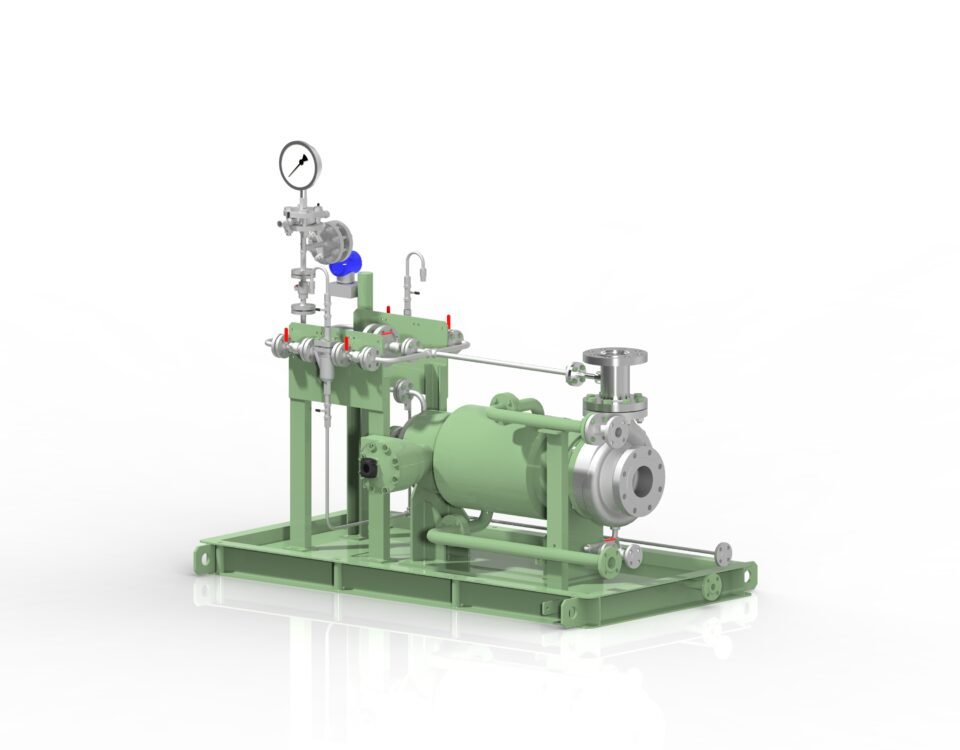
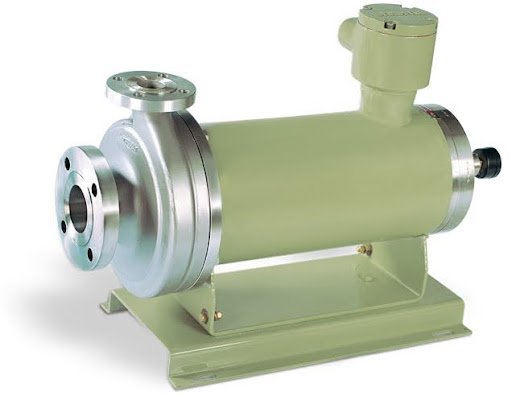
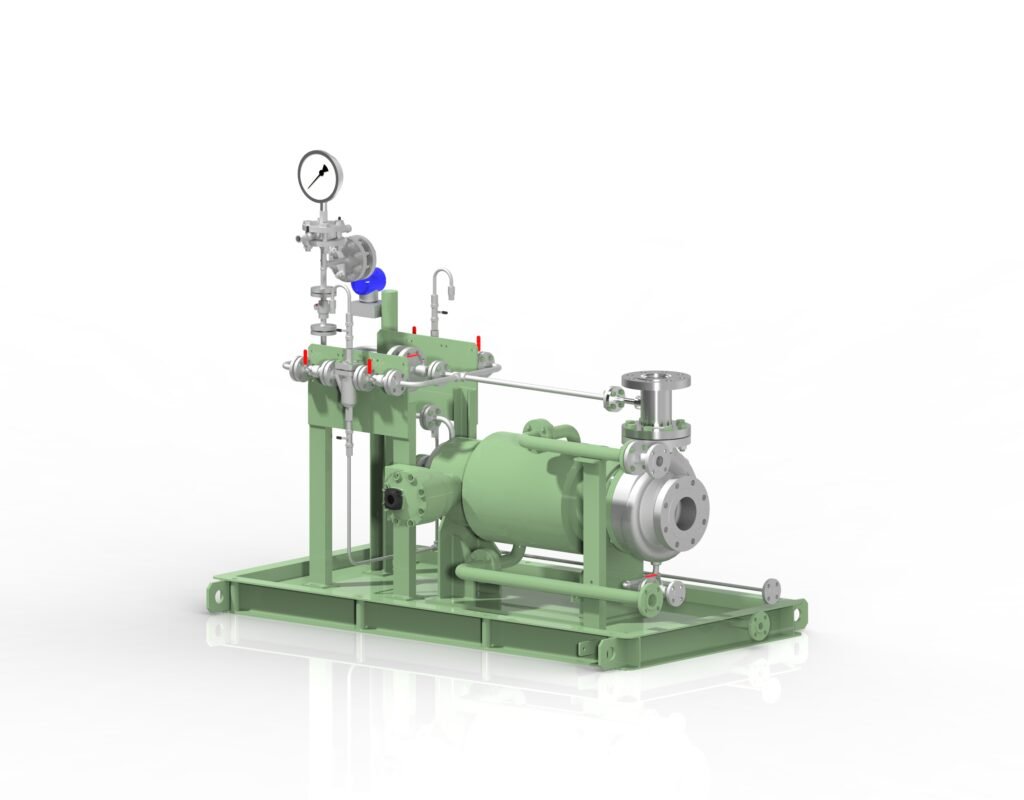
This is where Canned Motor Pumps become important in chlor-alkali applications.
Instead of managing leakage around an external rotating shaft, canned motor systems eliminate the shaft seal completely.
The motor and pump operate inside a hermetically sealed enclosure.
There is:
- No exposed mechanical seal
- No external shaft penetration
- No coupling alignment requirement
- No atmospheric leakage path around the shaft
That changes the failure profile significantly.
The system no longer depends on maintaining delicate seal face stability under difficult chlorine operating conditions.
Why seal-less systems reduce emergency intervention
One overlooked advantage of seal-less systems is operational predictability.
Facilities using Canned Motor Pumps generally reduce:
- Seal replacement frequency
- Emergency maintenance intervention
- Active leakage inspection
- Flush system troubleshooting
This matters because fewer emergency interventions mean fewer situations where personnel must approach hazardous chlorine equipment during unstable operating conditions.
Over time, that directly improves plant safety.
The hidden cost nobody talks about enough
After chlorine seal failure incidents, the visible repair cost is often only one part of the financial impact.
The hidden costs usually include:
- Production loss
- Corrosion remediation
- Compliance reporting
- Inspection programs
- Temporary safety controls
- Emergency labour
- Equipment decontamination
And perhaps the biggest issue is operational confidence.
Once recurring seal failures begin affecting a chlorine transfer system, maintenance teams often operate in a constant reactive state instead of planned reliability management.
That eventually affects the entire plant.
Why chlor-alkali facilities are redesigning around containment
The industry has gradually shifted from managing leaks to preventing leak paths entirely.
That shift explains why more facilities now prioritise:
- Hermetically sealed systems
- Seal-less process equipment
- Fully enclosed transfer systems
- Containment-first pump design
The objective is simple.
Reduce the probability of toxic release before operators ever need emergency response procedures.
Conclusion
A pump seal failure inside a chlor-alkali plant is never just a leaking component. It creates operational instability, toxic exposure risk, corrosion spread, maintenance hazards, environmental concerns, and significant production disruption often within a very short timeframe.
That is why many facilities increasingly adopt Canned Motor Pumps for hazardous chlorine transfer applications. By eliminating external mechanical seals entirely, seal-less systems reduce one of the most vulnerable containment points in chlorine handling operations and help improve long-term safety, reliability, and process stability.
We at HydrodynePump Teikoku support chlor-alkali and chemical processing industries where containment reliability is critical to both operational safety and plant continuity. Our team helps facilities implement engineered canned motor pumping systems designed for leak-free chlorine handling, reduced maintenance exposure, and reliable continuous-duty performance under demanding hazardous process conditions.
FAQs
What causes pump seal failure in chlor-alkali plants?
Seal wear, vapour formation, vibration, pressure fluctuation, and thermal instability are common causes.
Why is chlorine leakage dangerous during seal failure?
Chlorine gas is highly toxic and spreads near ground level, increasing exposure risk rapidly.
How does seal failure affect plant operations?
It may trigger shutdowns, evacuation procedures, corrosion damage, and process instability.
Why are maintenance teams at higher risk during chlorine leaks?
They must work closest to leaking equipment during inspection, isolation, and repair activities.
How do Canned Motor Pumps reduce chlorine leak risk?
They eliminate external mechanical seals and provide hermetically sealed operation.
Can small chlorine leaks cause equipment damage?
Yes. Even minor vapour leakage may corrode nearby electrical systems and structural components over time.
Why are seal-less systems preferred in chlorine handling?
They improve containment reliability and reduce maintenance-related exposure risks in hazardous service conditions.