
The Hidden Dangers of Chlorine Gas Leaks in Industrial Plants
May 22, 2026
Health Hazards of Chlorine and Caustic Soda: Why Equipment Reliability Matters
May 29, 2026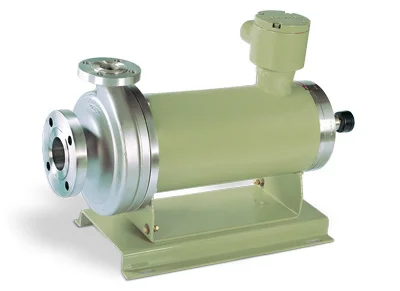
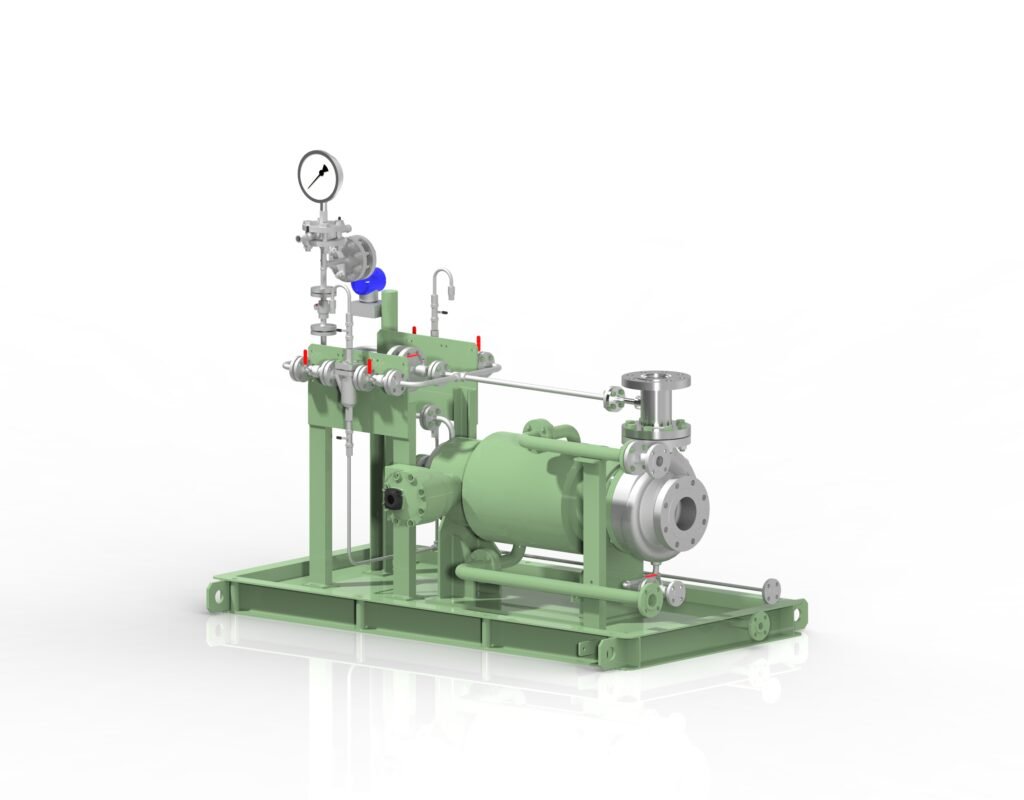
In chlorine handling systems, toxic exposure rarely happens because of one catastrophic equipment failure. More often, exposure begins with a small leak that slowly worsens over time. A worn mechanical seal, vapour escaping around a shaft, corrosion near transfer lines, or unstable operating conditions inside the pump system. This is exactly why many chlor-alkali and chemical processing facilities now rely on Canned Motor Pumps for hazardous chlorine transfer applications.
The biggest advantage is straightforward. Canned Motor Pumps eliminate external mechanical seals, which are one of the most common leakage points in conventional chlorine pumping systems. That single design change significantly reduces the risk of toxic chlorine exposure inside industrial plants.
Why chlorine exposure is such a serious industrial hazard
Chlorine is highly toxic even at low concentrations.
When released into the atmosphere, chlorine gas reacts quickly with moisture in the air and human respiratory tissue. Exposure may cause:
- Breathing difficulty
- Eye irritation
- Chest tightness
- Skin burns
- Respiratory damage
At higher concentrations, the effects become severe very quickly.
Industrial plants handling chlorine therefore operate under strict containment requirements because even relatively small leaks may create dangerous working conditions.
And chlorine behaves differently from many industrial gases.
Since it is heavier than air, leaked gas often accumulates near ground level, trenches, equipment pits, and operating areas where personnel work nearby. That makes rapid containment extremely important.
Most chlorine leaks start at predictable points
In many conventional pump systems, leakage develops around components already known to be vulnerable.
The most common areas include:
- Mechanical seals
- Shaft penetrations
- Gaskets
- Flange joints
- Seal support piping
Mechanical seals remain particularly problematic because they must contain hazardous process fluid around a rotating shaft under pressure.
That is not an easy job in chlorine service.
Over time, seals experience:
- Friction wear
- Pressure fluctuation
- Vapour formation
- Thermal cycling
- Corrosion exposure
- Vibration stress
Eventually degradation begins, even in well-maintained systems.
Why conventional seal systems create long-term exposure risk
Mechanical seals rarely fail instantly without warning.
Most chlorine leaks begin gradually.
Operators may first notice:
- Mild chlorine odour
- Vapour traces near equipment
- Increased corrosion nearby
- Seal temperature rise
- Gas detector alarms
In some facilities, these warning signs continue for weeks before shutdown occurs.
That creates repeated low-level exposure risk for operators and maintenance personnel working around the affected equipment.
The issue becomes even more complicated because chlorine plants usually operate continuously. Pumps often run for extended periods under varying process conditions.
Stable sealing conditions do not always remain stable.
How toxic exposure affects plant personnel
Personnel exposure risk is one of the biggest reasons industries invest heavily in chlorine containment systems.
Short-term chlorine exposure may cause immediate discomfort. Longer exposure or higher concentrations become much more dangerous.
Workers exposed to chlorine gas may experience:
- Persistent coughing
- Lung irritation
- Burning sensation in the throat
- Breathing restriction
- Delayed respiratory complications
One difficult aspect of chlorine exposure is that symptoms sometimes worsen after the initial incident.
A worker may appear stable initially but later develop serious respiratory distress due to chemical irritation inside the lungs.
This is why chlorine handling facilities place enormous emphasis on prevention rather than emergency response alone.
Why maintenance zones become high-risk areas
Maintenance activities around chlorine pumps often create the highest exposure potential.
Seal replacement, alignment correction, flushing system maintenance, and leak inspection all require close interaction with hazardous equipment.
During these activities, personnel may face:
- Residual chlorine vapour
- Pressurised fluid release
- Contaminated components
- Corrosion damage
- Confined work conditions
Even routine seal maintenance increases exposure opportunities because technicians must work directly around containment interfaces.
Reducing maintenance intervention therefore directly improves safety.
How Canned Motor Pumps eliminate major leakage paths
This is where Canned Motor Pumps change the containment approach completely.
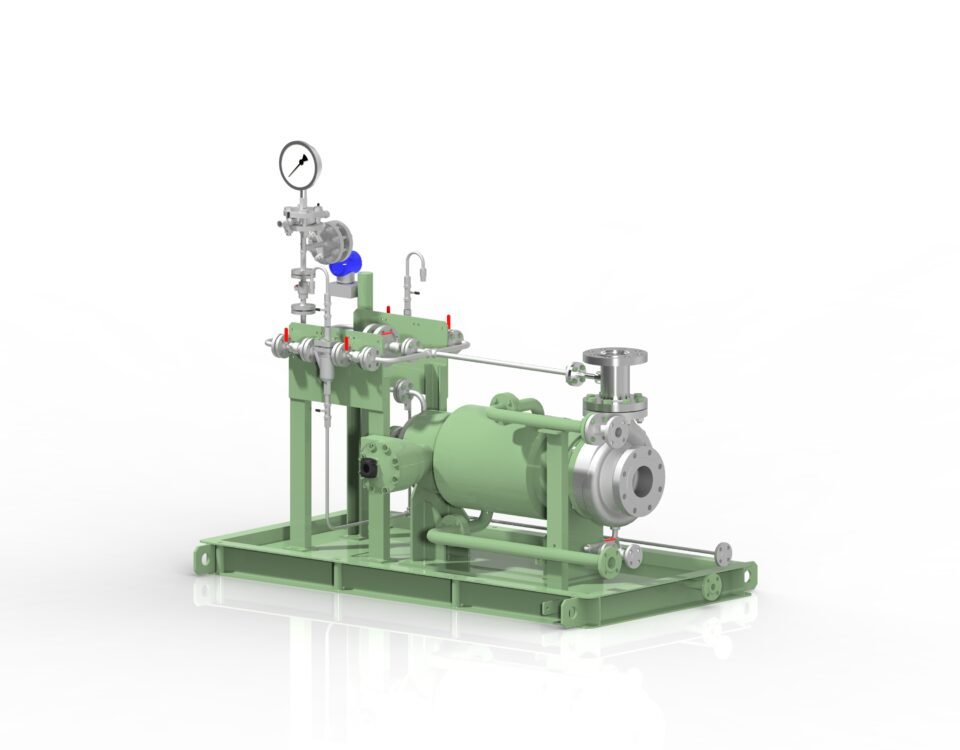
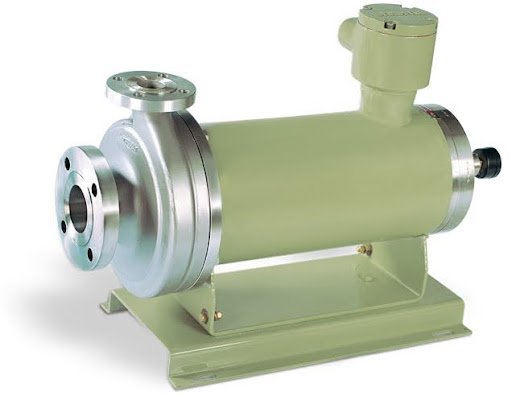
Unlike conventional pumps, canned motor systems use an integrated motor and pump assembly enclosed within a hermetically sealed casing.
There is:
- No external rotating shaft
- No exposed mechanical seal
- No shaft seal leakage point
- No coupling alignment system
The process fluid remains fully enclosed inside the system.
For chlorine handling applications, this removes one of the largest toxic exposure risks associated with conventional pump arrangements.
Why hermetically sealed construction matters
The hermetically sealed design of Canned Motor Pumps prevents atmospheric leakage during normal operation.
This provides several safety advantages:
- Reduced fugitive emissions
- Lower operator exposure risk
- Improved containment reliability
- Cleaner operating environments
- Fewer emergency maintenance situations
In hazardous chlorine service, these improvements become operationally significant over long operating periods.
The objective is not only improving pump performance.
The real objective is preventing toxic chlorine from reaching surrounding plant environments in the first place.
Fugitive emissions are often underestimated
Many industrial facilities focus primarily on large-scale leak scenarios.
But small fugitive emissions create ongoing exposure problems that are harder to manage.
Low-level chlorine leakage may gradually affect:
- Operator safety
- Nearby equipment
- Electrical systems
- Instrument reliability
- Plant corrosion rates
Over time, even minor recurring leakage becomes expensive operationally.
This is why many chemical processing facilities now prioritise fully enclosed pumping systems wherever hazardous chlorine transfer occurs.
Vapour formation creates additional sealing problems
Chlorine systems frequently operate near vapour pressure limits.
Small temperature or pressure changes may generate vapour inside the pump system.
When vapour reaches conventional mechanical seals, several problems may occur:
- Loss of lubrication film
- Increased seal face temperature
- Dry running conditions
- Accelerated seal wear
- Leakage escalation
Mechanical seals generally perform best under stable liquid conditions. Chlorine systems do not always provide that stability continuously.
Canned Motor Pumps avoid much of this vulnerability because there is no external seal interface exposed to atmosphere.
Reduced maintenance also improves safety
Maintenance reduction is often discussed from a cost perspective.
In chlorine handling systems, maintenance reduction is also a direct safety improvement.
Seal-less systems reduce the need for:
- Frequent seal replacement
- Seal flushing adjustments
- Alignment correction
- Leakage inspection
- Emergency intervention
That means personnel spend less time working around hazardous chlorine equipment.
Over long operating periods, this significantly lowers cumulative exposure risk.
Why chlor-alkali plants increasingly prefer seal-less systems
Chlor-alkali facilities operate continuously under demanding conditions.
The process environment often includes:
- Corrosive media
- Pressure variation
- Temperature fluctuation
- Vapour formation
- Hazardous gas handling
Under these conditions, long-term containment reliability becomes more important than simple initial equipment cost.
Seal-less technologies have gained wider adoption because they directly address several chronic reliability and exposure issues associated with conventional sealing systems.
Environmental regulations continue tightening
Industrial chlorine emissions are heavily regulated worldwide.
Facilities handling chlorine are expected to minimise:
- Fugitive emissions
- Operator exposure
- Atmospheric release risk
- Environmental contamination
This has pushed many facilities toward containment-focused engineering strategies.
Instead of managing leakage after it occurs, the industry increasingly focuses on eliminating leakage paths during equipment selection itself.
That shift has accelerated the use of Canned Motor Pumps in hazardous chemical service applications.
Why reliability and safety now overlap completely
Years ago, reliability and safety were often treated separately.
Today they are closely connected in chlorine service.
An unreliable seal eventually becomes a safety concern.
A leaking pump eventually becomes an environmental concern.
Repeated maintenance eventually increases personnel exposure risk.
The industry now recognises that safer chlorine handling starts with stable leak-free equipment operation.
That is one reason seal-less systems continue gaining importance across chemical processing industries.
Conclusion
Toxic chlorine exposure in industrial plants often develops from small containment failures that worsen gradually over time. Mechanical seals, vapour instability, corrosion, and recurring maintenance intervention all contribute to leakage risk in conventional chlorine pumping systems.
That is why many facilities increasingly rely on Canned Motor Pumps for hazardous chlorine transfer applications. By eliminating external mechanical seals and improving containment integrity, these systems help reduce fugitive emissions, lower operator exposure risk, and improve long-term process safety under demanding operating conditions.
We at HydrodynePump Teikoku support industries handling hazardous chlorine service where containment reliability and personnel safety are critical. Our team helps chemical and chlor-alkali facilities implement engineered canned motor pump systems designed for leak-free operation, reduced toxic exposure risk, and stable continuous performance in demanding process environments.
FAQs
Why are Canned Motor Pumps used in chlorine handling?
They provide hermetically sealed operation that reduces chlorine leakage risk significantly.
How do mechanical seals contribute to chlorine exposure?
Mechanical seals wear over time and may eventually allow chlorine vapour or liquid leakage.
What makes chlorine gas dangerous in industrial plants?
Chlorine is highly toxic and may cause severe respiratory damage even at low exposure levels.
Do Canned Motor Pumps reduce maintenance exposure risk?
Yes. They eliminate many seal-related maintenance activities around hazardous equipment.
Why are fugitive chlorine emissions a concern?
Even small emissions may affect worker safety, equipment reliability, and environmental compliance.
Can vapour formation damage conventional pump seals?
Yes. Vapour can disrupt seal lubrication and accelerate seal wear or leakage.
Are seal-less pumps suitable for continuous chlorine operation?
Yes. Their enclosed construction supports stable long-term operation in hazardous chlorine service conditions.