
Failure Modes in Chlorine Pumps and How API 685 Design Prevents Them
May 19, 2026How Canned Motor Pumps Help Prevent Toxic Exposure in Chlorine Handling
May 25, 2026
A chlorine gas leak rarely begins as a dramatic industrial accident. In many plants, it starts small. A worn mechanical seal. Minor gasket failure. Vapour escaping from a transfer pump that had been vibrating for weeks. That is exactly why industries handling chlorine increasingly invest in sealless leak free pumps and fully enclosed transfer systems. The danger is not only the size of a leak. It is how quickly chlorine gas spreads, reacts, and affects people, equipment, and operations before the issue is fully controlled.
In chemical processing facilities, chlor-alkali plants, water treatment systems, and industrial manufacturing units, chlorine containment has become one of the most critical parts of process safety engineering.
Why chlorine gas leaks are uniquely dangerous
Chlorine is highly toxic even at relatively low concentrations.
Unlike many industrial gases, chlorine also creates immediate physical effects when exposure occurs. It reacts with moisture in the respiratory system and surrounding atmosphere, forming corrosive acidic compounds.
That creates several simultaneous risks:
- Respiratory injury
- Eye irritation
- Corrosion damage
- Environmental contamination
- Process disruption
- Emergency evacuation situations
In enclosed plant environments, the problem escalates quickly because chlorine gas is heavier than air.
Instead of dispersing upward immediately, it tends to remain concentrated near operating areas, trenches, equipment foundations, and low-lying sections of the facility.
This makes early containment extremely important.
Small leaks are often the most underestimated
Major equipment failures receive attention because they are obvious.
Small leaks are more dangerous in some ways because they can continue unnoticed for longer periods.
A minor chlorine leak may initially produce:
- Mild odour detection
- Localised corrosion
- Slight operator discomfort
- Sensor alarms
- Vapour formation near equipment
In many cases, production continues while maintenance teams attempt temporary correction measures.
But chlorine exposure accumulates.
Corrosion spreads slowly around nearby piping, support structures, electrical systems, and instrumentation. Seal surfaces deteriorate further. Vibration increases. Then what began as a manageable issue becomes a much larger operational problem.
Mechanical seals remain a major leakage point
Many chlorine handling systems still operate with conventional mechanically sealed pumps.
These systems use rotating shaft seals to contain process fluid inside the pump casing.
Under chlorine service conditions, seals face constant stress from:
- Pressure fluctuations
- Thermal cycling
- Vapour formation
- Corrosion exposure
- Friction wear
- Process instability
Eventually, seal degradation occurs.
Even advanced seal arrangements with flushing systems and barrier fluids still depend on maintaining delicate sealing conditions continuously.
And honestly, chlorine systems do not always operate under ideal conditions.
Process upsets happen.
Temperature shifts happen.
Flow interruptions happen.
Over time, the mechanical seal usually becomes the most vulnerable part of the system.
How chlorine leaks affect plant personnel
The human risk associated with chlorine exposure is severe.
Short-term exposure may cause:
- Coughing
- Chest tightness
- Eye irritation
- Breathing difficulty
- Skin irritation
Higher concentrations can become life-threatening very quickly.
One of the more difficult aspects of chlorine exposure is that symptoms sometimes worsen after initial contact. Personnel may appear stable initially but later develop respiratory complications due to lung tissue irritation.
This is why chlorine leak response procedures in industrial facilities are extremely strict.
Even limited exposure incidents often require:
- Area evacuation
- Emergency isolation
- Respiratory protection systems
- Gas monitoring
- Medical evaluation
Prevention becomes far more practical than emergency response after release occurs.
Equipment corrosion caused by chlorine leaks
The damage does not stop with personnel exposure.
Chlorine gas reacts aggressively with moisture, creating corrosive conditions around operating equipment.
Leakage may gradually damage:
- Pipe supports
- Electrical panels
- Instrumentation
- Structural steel
- Cable trays
- Valve assemblies
Sometimes facilities focus only on the leaking component itself while overlooking the surrounding corrosion damage building over time.
This creates hidden reliability problems across the plant.
Electrical failures near chlorine leak zones are especially concerning because corrosion can quietly affect terminals, sensors, and control systems long before visible damage appears.
Environmental and regulatory consequences
Industrial chlorine releases are heavily regulated in most regions.
Even relatively small fugitive emissions may trigger:
- Incident reporting
- Regulatory investigation
- Environmental monitoring
- Production review procedures
- Additional compliance audits
Facilities operating chlorine systems therefore face increasing pressure to reduce leakage risk at the equipment level itself.
This is one reason containment-focused engineering approaches have become more common across chemical processing industries.
The industry is gradually moving away from controlling leakage after it occurs and focusing more on preventing leakage paths entirely.
Why traditional maintenance approaches are no longer enough
Historically, many facilities accepted periodic seal leakage as part of normal operation.
Maintenance teams monitored equipment, adjusted seals, replaced components during shutdowns, and managed containment through procedural controls.
That approach becomes increasingly difficult under modern safety expectations.
Chlorine handling systems now demand:
- Lower fugitive emissions
- Reduced operator exposure
- Improved containment reliability
- Longer operating cycles
- Fewer emergency interventions
Conventional seal systems can still function effectively, but they often require extensive support infrastructure to maintain safe operation consistently.
That includes:
- Seal flushing systems
- Buffer fluid arrangements
- Cooling loops
- Continuous monitoring instrumentation
All of these systems require maintenance themselves.
How sealless leak free pumps reduce chlorine leak risk
This is where sealless leak free pumps become important.
Instead of relying on external mechanical seals, seal-less systems eliminate the external leakage path entirely.
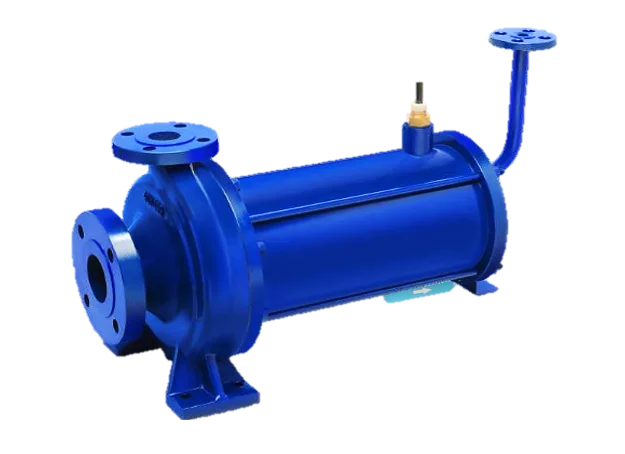
In canned motor pump systems, the motor and pump are integrated into a hermetically sealed assembly.
There is:
- No external rotating shaft
- No exposed mechanical seal
- No coupling alignment requirement
- No atmospheric leakage point around the shaft
The process fluid remains fully enclosed inside the pump system.
For chlorine service, this creates a major improvement in containment reliability.
Reduced fugitive emissions improve overall plant safety
Fugitive emissions are often difficult to eliminate completely in conventional chlorine systems because multiple sealing interfaces exist throughout the process.
Seal-less pumping systems reduce one of the most common leakage points significantly.
This contributes to:
- Safer operating areas
- Lower operator exposure risk
- Reduced emergency response incidents
- Cleaner maintenance environments
- Improved environmental performance
In long-term plant operation, these improvements become operationally significant.
Why continuous operation increases leak risk
Most chlorine systems operate continuously.
The longer a mechanical seal runs under pressure, temperature variation, and vibration, the greater the likelihood of gradual wear.
Continuous operation also means:
- More thermal cycling
- Extended shaft movement
- Greater vibration exposure
- Higher cumulative wear
A seal that appears stable during commissioning may behave very differently after years of operation.
This is one reason lifecycle reliability matters far more than short-term performance testing in chlorine service.
Vapour formation creates additional leakage problems
Liquid chlorine systems frequently operate near vapour pressure conditions.
Small pressure changes can produce vapour formation inside pumps and pipelines.
When vapour affects mechanical seals:
- Lubrication becomes unstable
- Seal face temperatures increase
- Leakage probability rises
- Seal wear accelerates
Seal-less systems avoid much of this vulnerability because they remove the external seal interface completely.
That improves containment stability during fluctuating process conditions.
The hidden operational cost of recurring chlorine leaks
Facilities sometimes underestimate the indirect cost of leakage incidents.
The impact extends beyond component replacement.
Recurring chlorine leakage may create:
- Frequent maintenance shutdowns
- Production instability
- Increased safety procedures
- Higher inspection requirements
- Corrosion repair costs
- Additional compliance documentation
Over time, these operational costs often exceed the original equipment savings associated with lower-cost pump systems.
This is why many facilities eventually prioritise containment reliability over simple procurement cost.
Why modern chlorine systems focus on containment first
The industry has gradually shifted toward a containment-first engineering philosophy.
Instead of asking:
“How do we manage leakage safely?”
Facilities increasingly ask:
“How do we eliminate the leakage path itself?”
That change has driven wider adoption of:
- Hermetically sealed systems
- Canned motor pumps
- Seal-less technologies
- Fully enclosed transfer arrangements
The goal is straightforward.
Reduce the probability of chlorine release before emergency response procedures are ever needed.
Conclusion
Chlorine gas leaks create risks that extend far beyond the immediate release point. Personnel exposure, corrosion damage, environmental impact, production interruption, and long-term reliability problems often develop together, particularly when small leaks remain active over extended operating periods.
That is why containment reliability has become one of the most important priorities in modern chlorine handling systems. Conventional seal arrangements can still operate effectively under certain conditions, but many facilities now prefer sealless leak free pumps because they remove one of the most common leakage paths directly at the equipment design level.
We at HydrodynePump Teikoku support industries handling hazardous chlorine applications where leak prevention and operational safety are critical. Our team helps chemical and chlor-alkali facilities implement engineered seal-less pumping systems designed for reliable containment, reduced fugitive emissions, and long-term continuous operation under demanding process conditions.
FAQs
Why is chlorine gas considered highly dangerous?
Chlorine is toxic even at low concentrations and can severely affect the respiratory system.
What causes chlorine gas leaks in industrial plants?
Common causes include mechanical seal failure, corrosion, gasket damage, vibration, and pressure instability.
How do sealless leak free pumps reduce chlorine leakage?
They eliminate external mechanical seals, removing a major leakage point from the pumping system.
Why are small chlorine leaks dangerous?
Small leaks may continue unnoticed while gradually increasing exposure risk and surrounding corrosion damage.
Can chlorine leaks damage plant equipment?
Yes. Chlorine reacts with moisture and may corrode nearby electrical systems, structures, and instrumentation.
Why do chlorine systems require special pump designs?
Chlorine service involves toxicity, vapour formation, corrosion sensitivity, and strict containment requirements.
Are canned motor pumps suitable for chlorine handling?
Yes. Their hermetically sealed construction makes them highly suitable for hazardous chlorine transfer applications.