
Zero Leakage Philosophy: Why It Matters in Chlorine Transfer Systems
May 17, 2026The Hidden Dangers of Chlorine Gas Leaks in Industrial Plants
May 22, 2026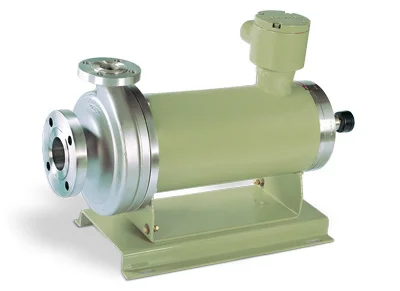
Chlorine service leaves very little room for equipment weakness. A small seal leak, sudden cavitation event, or bearing failure can escalate quickly into a plant shutdown, safety incident, or environmental exposure issue. That is exactly why API 685 standards became increasingly important for hazardous chemical pumping systems, particularly in chlorine transfer applications where containment reliability matters more than almost anything else.
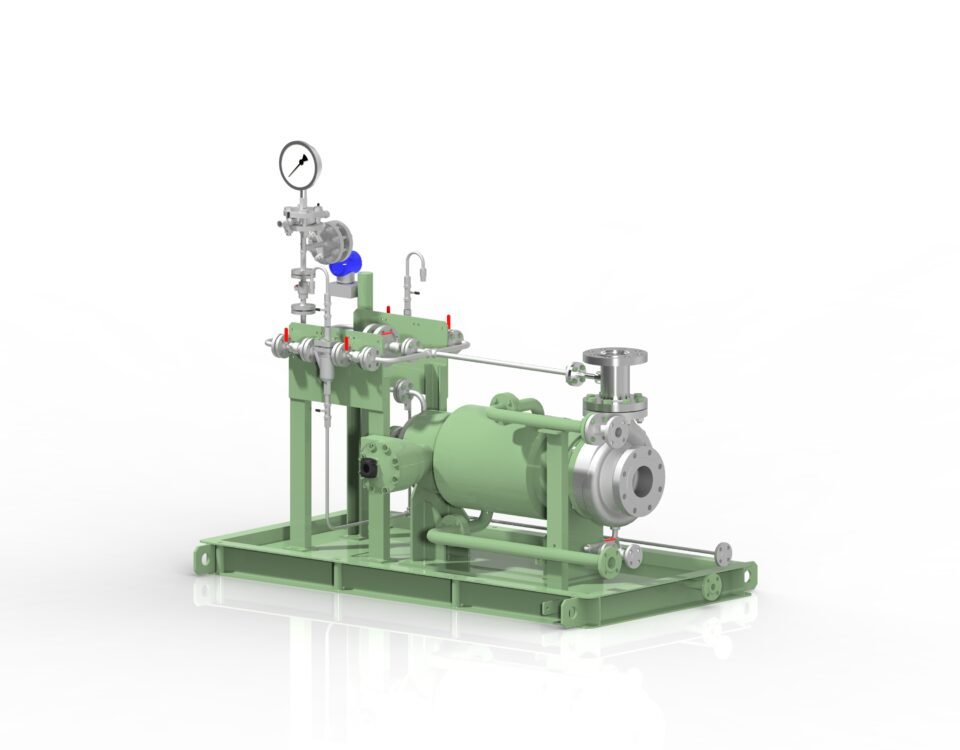
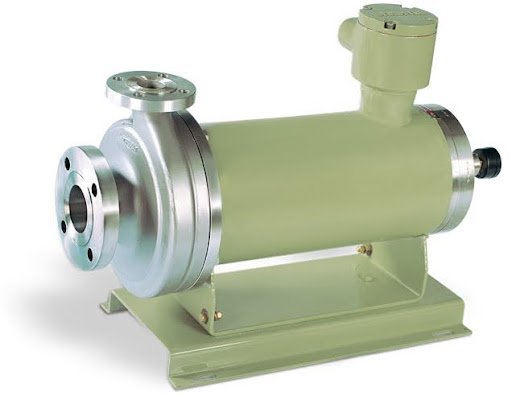
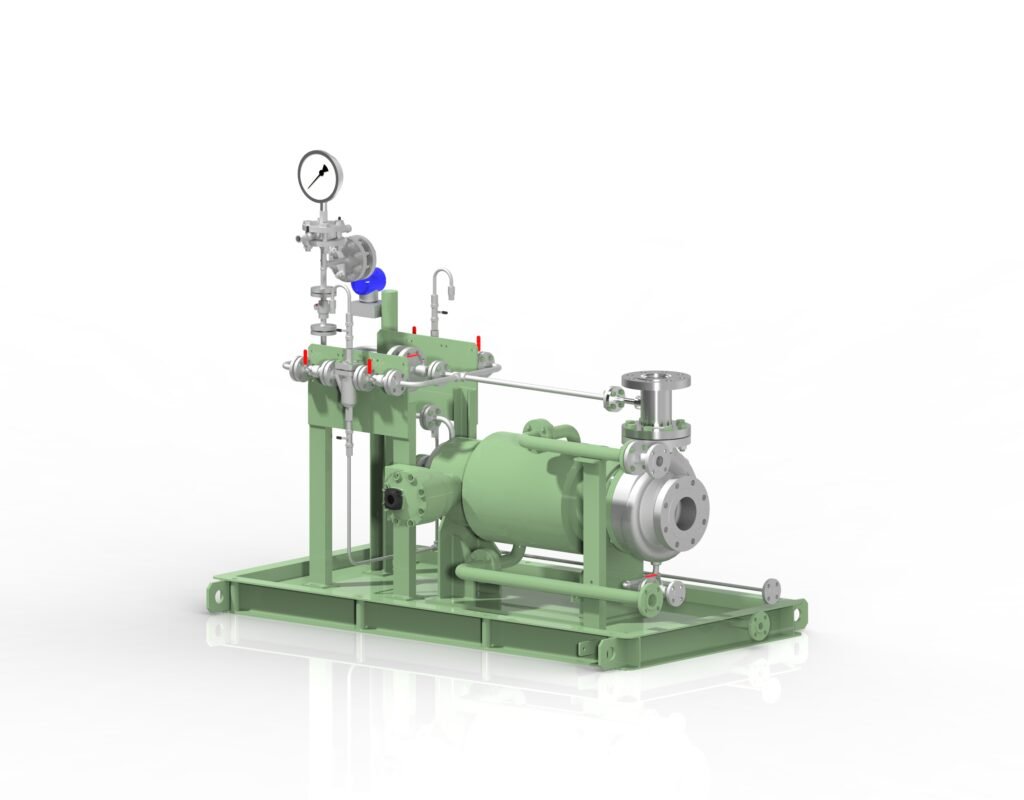
Many conventional pump systems struggle under continuous chlorine duty because the process creates difficult operating conditions simultaneously. Vapour formation, corrosion sensitivity, seal degradation, and thermal instability all affect long-term pump reliability. Properly engineered Canned Motor Pumps designed according to API 685 address many of these recurring failure modes by removing external seals and improving containment integrity under hazardous process conditions.
Why chlorine pump failures are more serious than standard pump failures
In many industrial services, a pump failure creates production downtime and maintenance costs.
In chlorine applications, the consequences are wider.
A failed chlorine pump may lead to:
- Toxic gas release
- Operator exposure risk
- Environmental reporting
- Corrosion damage nearby
- Emergency shutdown procedures
- Regulatory compliance issues
This changes the engineering approach completely.
The focus shifts from simple fluid transfer to long-term containment reliability under difficult process conditions.
That is where API 685 becomes highly relevant.
Understanding what API 685 actually covers
API 685 is an international standard developed specifically for seal-less centrifugal pumps used in hazardous chemical services.
The standard applies mainly to:
- Canned motor pumps
- Magnetic drive pumps
Its purpose is straightforward.
Reduce leakage risk and improve operational reliability in services where hazardous fluids cannot be allowed to escape into the atmosphere.
For chlorine applications, that design philosophy aligns naturally with process safety requirements.
Mechanical seal failure remains the most common issue
Traditional chlorine pumps often rely on mechanical seals to contain process fluids around a rotating shaft.
This works reasonably well in many services. Chlorine, though, creates several challenges that accelerate seal degradation.
Causes of seal failure in chlorine pumps
Common failure triggers include:
- Thermal fluctuations
- Pressure instability
- Dry running conditions
- Vapour formation
- Corrosion
- Misalignment
- Vibration
Over time, seal faces wear down and leakage risk increases.
Even dual mechanical seal systems require continuous support through:
- Seal flushing arrangements
- Barrier fluid systems
- Cooling circuits
- Monitoring instrumentation
These systems improve reliability, but they also increase maintenance complexity.
And in continuous chlorine service, complex systems eventually create more maintenance exposure points.
How API 685 design eliminates seal leakage risk
One of the biggest advantages of API 685 compliant Canned Motor Pumps is the elimination of external mechanical seals entirely.
The motor and pump form a single hermetically sealed unit.
There is:
- No rotating shaft exposed externally
- No seal faces exposed to atmosphere
- No coupling alignment requirement
- No external seal support system
This removes the primary leakage path found in conventional chlorine pumps.
In hazardous chlorine transfer systems, that difference is significant.
Cavitation damage in chlorine pumps
Cavitation remains another major failure mode in chlorine service.
Liquid chlorine operates near vapour pressure limits under many process conditions. Small pressure drops or temperature changes may cause partial vapour formation inside the pump.
When vapour bubbles collapse internally, they create:
- Surface erosion
- Vibration
- Noise
- Bearing stress
- Hydraulic instability
Over time, cavitation damages impellers and internal components.
Why chlorine systems are vulnerable to cavitation
Several operating conditions contribute to cavitation risk:
- Low NPSH availability
- Elevated fluid temperature
- Unstable suction conditions
- Vapour entrainment
- Flow imbalance
Mechanical seal systems often become unstable during cavitation because vapour affects seal lubrication and thermal control.
How API 685 designs improve low NPSH performance
Many API 685 compliant canned motor systems are engineered specifically for hazardous low NPSH applications.
Design improvements typically include:
- Optimised hydraulic passages
- Stable internal circulation
- Reduced recirculation losses
- Controlled thermal behaviour
This improves operational stability under vapour-prone chlorine service conditions.
The goal is not simply preventing cavitation once. It is maintaining stable long-term operation under real plant conditions where process fluctuations happen regularly.
Bearing failure caused by process instability
Bearings inside chlorine pumps operate under difficult conditions because fluid properties can change with temperature and vapour content.
In conventional systems, vibration and misalignment often accelerate bearing wear.
Typical causes include:
- Shaft deflection
- Seal drag
- Cavitation-induced vibration
- Thermal distortion
- Coupling misalignment
Bearing failure eventually affects:
- Pump stability
- Hydraulic performance
- Motor loading
- Containment integrity
Once bearing wear progresses far enough, secondary damage usually follows quickly.
How canned motor construction improves bearing reliability
Canned Motor Pumps built to API 685 standards use integrated motor-pump construction.
This eliminates several external mechanical problems such as:
- Coupling imbalance
- Alignment drift
- External shaft loading
The compact integrated arrangement generally produces:
- Lower vibration
- Better shaft stability
- Reduced mechanical stress
- Improved operating smoothness
Under continuous chlorine service, these advantages help extend equipment life significantly.
Corrosion-related failure modes
Chlorine service creates unique corrosion challenges, especially when moisture contamination is present.
Moist chlorine can rapidly attack unsuitable materials.
Common corrosion failure modes include:
- Pitting corrosion
- Stress corrosion cracking
- Crevice corrosion
- Surface erosion
Material selection therefore becomes critical.
Incorrect metallurgy may damage:
- Impellers
- Containment shells
- Bearing components
- Internal circulation passages
This often causes failures that appear sudden but actually develop gradually over time.
API 685 emphasises material integrity
The API 685 standard places strong emphasis on material quality, containment integrity, and pressure boundary reliability.
Depending on process conditions, chlorine pump systems may require:
- Hastelloy
- Duplex stainless steel
- Titanium
- Nickel-based alloys
- Special corrosion-resistant materials
Application-specific engineering becomes extremely important here because chlorine purity and moisture content affect corrosion behaviour significantly.
There is no universal material combination suitable for every chlorine application.
Thermal management problems in chlorine pumps
Temperature control affects chlorine pump reliability more than many operators initially expect.
Temperature instability may cause:
- Vapour formation
- Seal face overheating
- Bearing lubrication issues
- Internal stress expansion
- Reduced hydraulic stability
Mechanical seal systems become especially vulnerable when thermal fluctuations disturb lubrication films around the seal faces.
How API 685 designs manage thermal stability better
Seal-less canned motor systems maintain more stable internal operating conditions because the process fluid circulates through controlled internal flow paths.
This helps improve:
- Heat dissipation
- Bearing cooling
- Hydraulic stability
- Motor temperature management
The integrated design reduces external thermal disturbances compared to conventional seal pump systems.
In chlorine service, operational stability often matters more than pushing maximum efficiency numbers.
Fugitive emissions and environmental exposure
Environmental regulations around chlorine handling continue becoming stricter.
Even minor fugitive emissions may create:
- Compliance violations
- Safety investigations
- Production interruptions
- Additional monitoring requirements
Mechanical seals remain one of the most common sources of fugitive emissions in hazardous chemical pumping systems.
This is one reason many facilities transition toward API 685 compliant seal-less systems over time.
Why lifecycle reliability matters more than purchase cost
Conventional pump systems often appear less expensive during initial procurement.
But chlorine applications rarely stay simple over long operating periods.
The true cost of recurring failures may include:
- Seal replacement labour
- Unplanned shutdowns
- Process interruptions
- Safety management
- Corrosion cleanup
- Environmental reporting
These indirect costs accumulate gradually.
Facilities handling hazardous chlorine service increasingly evaluate equipment based on lifecycle reliability rather than only initial capital cost.
Why API 685 became important for hazardous chemical service
The shift toward API 685 standards happened because industries recognised a recurring pattern.
Many chlorine pump failures traced back to:
- Seal degradation
- Leakage incidents
- Vibration instability
- Poor containment reliability
Seal-less pump technology addressed several of these weaknesses simultaneously.
By removing external mechanical seals and improving integrated system stability, Canned Motor Pumps reduced many of the chronic operational problems chemical plants had struggled with for years.
Conclusion
Chlorine pump failures are rarely caused by a single isolated problem. Most failures develop from interacting issues involving seal wear, cavitation, corrosion, thermal instability, vibration, and containment degradation over long operating periods.
That is why API 685 design standards remain highly relevant in hazardous chlorine service today. Properly engineered Canned Motor Pumps built around seal-less containment principles address many of the most common chlorine pump failure modes directly at the design level rather than relying on external control systems to manage them later.
We at HydrodynePump Teikoku support industries operating under demanding hazardous chemical service conditions where leak-free reliability and long-term operational stability are essential. Our team helps chemical and chlor-alkali facilities implement engineered API 685 compliant canned motor pump solutions designed specifically for critical chlorine transfer applications.
FAQs
What is API 685 used for?
API 685 is a standard for seal-less centrifugal pumps used in hazardous chemical services.
Why are mechanical seals problematic in chlorine service?
Mechanical seals wear over time and may eventually allow hazardous chlorine leakage.
How do Canned Motor Pumps reduce leakage risk?
They eliminate external mechanical seals through hermetically sealed motor-pump construction.
What causes cavitation in chlorine pumps?
Low suction pressure, vapour formation, and unstable operating conditions commonly trigger cavitation.
Why is chlorine service difficult for pump systems?
Chlorine is toxic, vapour-prone, corrosive under certain conditions, and highly sensitive to leakage.
Do API 685 pumps require less maintenance?
They generally reduce seal-related maintenance and improve containment reliability compared to conventional systems.
What materials are commonly used in chlorine pumps?
Hastelloy, titanium, duplex stainless steel, and other corrosion-resistant alloys are commonly used depending on process conditions.