
Reducing Fugitive Emissions in Chlor-Alkali Plants: Role of Sealless Pumps
June 14, 2026
Canned Motor Pump Design: The Critical Factor in Safe Chlorine Liquefaction and Transfer
June 18, 2026
A chlor-alkali plant does not operate around a single pumping challenge. It operates around dozens of fluid handling problems that change completely from one process section to another. Brine circulation behaves differently from caustic transfer. Wet chlorine behaves differently from dry chlorine. Hydrogen handling introduces another level of operational sensitivity altogether.
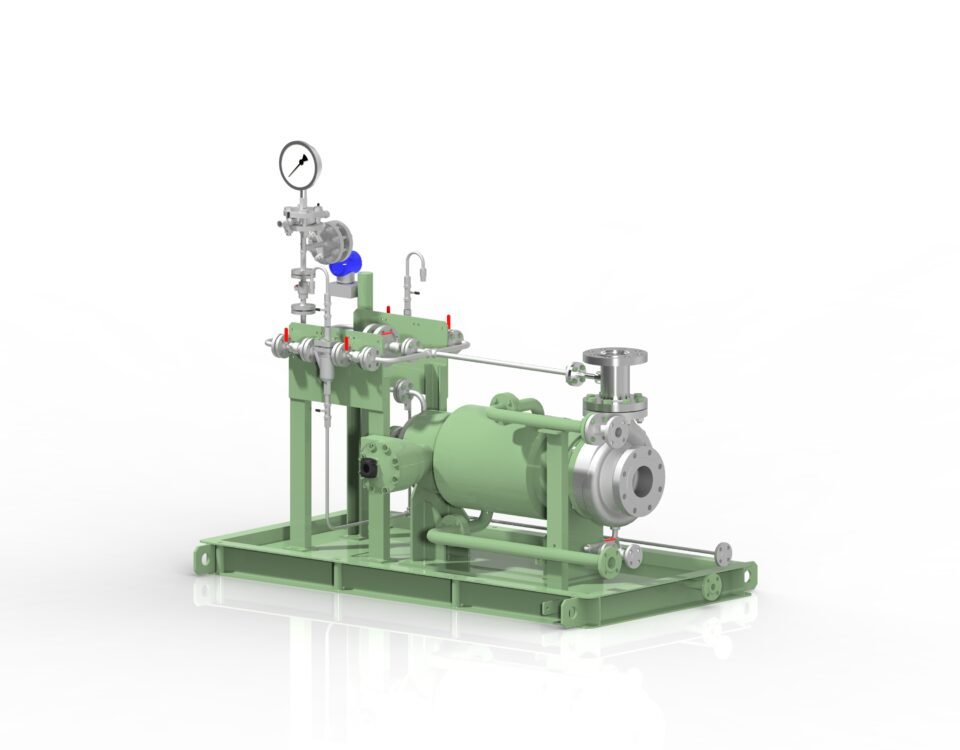
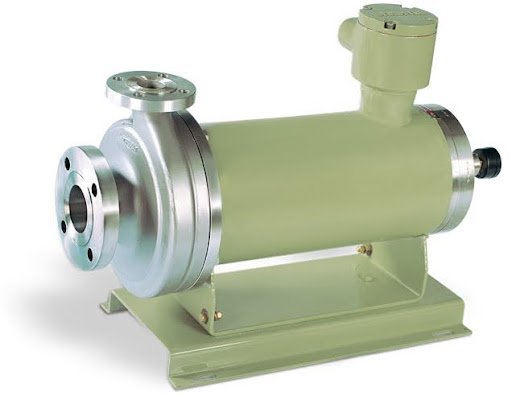
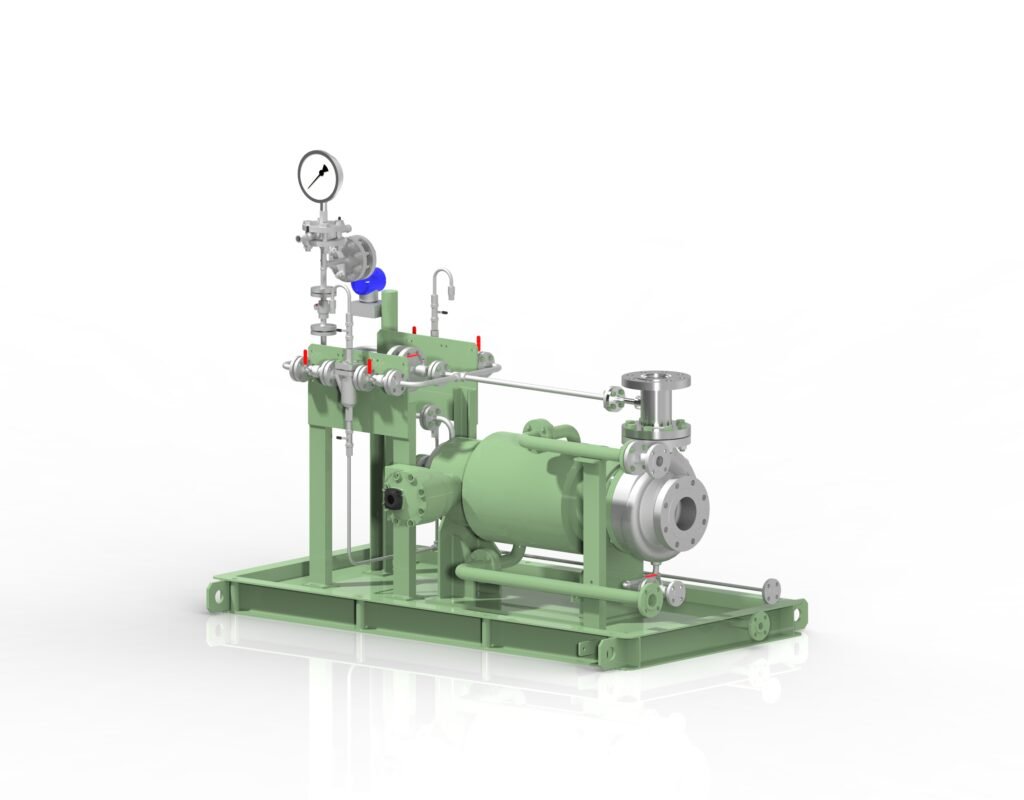
This is exactly why the role of the Canned Motor Pump has expanded steadily across modern chlor-alkali facilities. It is no longer used only for hazardous chlorine transfer. Plants increasingly apply canned motor technology across multiple process stages because containment reliability, corrosion resistance, and maintenance stability now matter plant-wide, not only in final chlorine handling sections.
And honestly, once operators begin analysing lifecycle leakage risk across the full process chain, the shift starts making practical sense very quickly.
Why chlor-alkali plants create unusually difficult pumping conditions
The chlor-alkali process combines several operating challenges inside one facility:
- Highly corrosive media
- Abrasive brine contamination
- Toxic gas handling
- Temperature-sensitive fluids
- Continuous-duty operation
- Vapour-sensitive transfer systems
Most pump technologies perform well under one or two difficult conditions.
Chlor-alkali plants combine all of them simultaneously.
That creates constant stress on sealing systems, metallurgy, bearings, and containment architecture throughout the plant.
This is one reason pumping system selection becomes a strategic reliability decision rather than simple equipment procurement.
The role of pumps starts before electrolysis begins
Many people associate chlorine handling only with the electrolyser section.
In reality, pumping reliability becomes important much earlier during raw brine preparation.
Brine transfer and circulation systems
Raw brine contains impurities that must be removed before entering membrane cells.
These systems often handle:
- High chloride concentration
- Suspended solids
- Variable density conditions
- Scaling potential
Conventional pumps operating in untreated brine service frequently experience:
- Seal abrasion
- Shaft sleeve wear
- Corrosion-related degradation
- Premature bearing contamination
A Canned Motor Pump reduces some of these issues because the sealed construction prevents external contamination entry while maintaining enclosed fluid circulation around internal components.
This becomes particularly useful in continuous circulation duty where small reliability losses accumulate rapidly over time.
Why dechlorination sections create hidden reliability problems
Before brine re-enters the electrolyser cycle, residual chlorine often requires removal.
This stage creates difficult operating conditions because even trace chlorine presence may attack conventional sealing materials gradually.
The challenge here is inconsistency.
Process chemistry may fluctuate enough to create intermittent corrosive exposure rather than constant predictable conditions.
That type of environment quietly damages mechanical seals over time because degradation may not appear immediately during inspection cycles.
Seal-less systems tolerate these transitional chemical conditions more effectively because they eliminate the exposed atmospheric sealing interface entirely.
Electrolyser circulation systems require operational stability
Modern membrane cell technology depends heavily on process stability.
Pressure fluctuation or unstable circulation affects:
- Membrane life
- Electrolyser efficiency
- Product purity
- Energy consumption
Pump instability therefore affects far more than fluid movement alone.
One overlooked issue inside chlor-alkali plants is how small pump reliability problems gradually influence process control precision across electrolysis systems.
For example:
- Minor flow inconsistency affects membrane differential pressure
- Recirculation instability changes concentration control
- Temperature variation affects electrochemical efficiency
Stable pumping systems improve process consistency indirectly.
This is one reason many facilities prioritise highly predictable pump behaviour even when visible leakage is not yet occurring.
Caustic soda handling introduces different challenges entirely
Caustic soda service behaves very differently from chlorine handling.
The problem shifts from toxicity toward corrosive concentration management.
High-concentration caustic systems may create:
- Crystallisation risk
- Heat generation
- Material compatibility problems
- Seal face deposition
Traditional seals operating in concentrated caustic environments often develop solid deposits near sealing interfaces.
Over time this affects:
- Seal face flatness
- Lubrication stability
- Heat dissipation
- Leakage probability
A Canned Motor Pump avoids many of these external deposition problems because process fluid remains fully enclosed inside the hermetic system.
Why wet chlorine sections are especially difficult
Wet chlorine is far more corrosive than dry chlorine.
This distinction matters enormously in pump selection.
Once moisture combines with chlorine, highly aggressive corrosive compounds form rapidly.
Even small moisture intrusion may damage:
- Seal hardware
- Secondary elastomers
- External fasteners
- Instrument connections
Wet chlorine transfer systems therefore require extremely stable containment architecture.
And frankly, conventional sealing systems often struggle here long term because even small degradation creates rapidly accelerating corrosion behaviour.
This is one reason canned motor technology became strongly associated with chlorine duty historically.
Chlorine liquefaction creates unstable operating conditions
The liquefaction stage introduces another major challenge.
Liquid chlorine systems operate close to vapour formation thresholds depending on pressure and temperature conditions.
This creates operational instability around conventional seals because flashing may occur near seal faces during transient operating conditions.
Once vapour forms:
- Lubrication deteriorates
- Friction rises
- Heat generation increases
- Seal wear accelerates
This is one of the most common causes of recurring leakage problems in chlorine transfer systems.
A hermetically sealed Canned Motor Pump removes this external seal dependency entirely.
That changes reliability behaviour dramatically in liquefaction applications.
Why chlorine unloading stations increasingly use canned motor systems
Truck unloading and railcar transfer areas are among the highest-risk locations inside chlor-alkali facilities.
The reason is operational variability.
Unlike continuous process loops, unloading systems experience:
- Frequent startup cycles
- Intermittent operation
- Variable pressure conditions
- Operator-dependent procedures
Mechanical seals generally experience greater stress during repeated transient operation compared to stable continuous duty.
Canned motor systems handle these transitions more consistently because containment integrity does not depend on maintaining stable seal face conditions externally.
Hydrogen-related sections create secondary safety concerns
Hydrogen generation occurs naturally during chlor-alkali production.
Although hydrogen itself may not always pass directly through canned motor systems, surrounding process architecture increasingly prioritises:
- Spark reduction
- Vapour containment
- Minimal atmospheric leakage
- Reduced ignition exposure
Seal-less pump technology supports these broader safety objectives because external leakage pathways are minimised significantly.
Why maintenance philosophy is changing across chlor-alkali plants
Historically, many plants accepted recurring seal replacement as normal operating practice.
That approach becomes increasingly difficult today because modern facilities face pressure around:
- Environmental emissions
- Worker exposure
- ESG metrics
- Shutdown reduction
- Reliability optimisation
Maintenance teams increasingly prefer systems that reduce intervention frequency altogether rather than improving repair speed only.
This operational shift strongly favours hermetically sealed pumping systems in hazardous applications.
Why corrosion spreads faster in chlorine environments than expected
One small chlorine leak rarely stays isolated.
Chronic vapour exposure gradually attacks surrounding infrastructure:
- Cable trays
- Junction boxes
- Pipe supports
- Structural steel
- Coating systems
This creates secondary reliability problems far away from the original pump itself.
Reducing leakage therefore protects overall plant integrity, not only immediate process safety.
Many facilities underestimate this indirect economic impact initially.
Why modern chlor-alkali expansions increasingly standardise seal-less systems
Newer facilities increasingly standardise Canned Motor Pump technology across multiple process sections because plants now evaluate pumping systems using lifecycle risk analysis rather than initial equipment cost alone.
When evaluating long-term performance, facilities increasingly account for:
- Fugitive emissions
- Maintenance exposure
- Corrosion spread
- Emergency shutdown probability
- Environmental reporting risk
- Reliability stability
Under this broader operational model, seal-less systems often become economically attractive despite higher initial capital cost.
Conclusion
The modern chlor-alkali plant depends on reliable fluid containment across far more than chlorine transfer alone. From raw brine circulation and dechlorination systems to caustic handling, chlorine liquefaction, and hazardous unloading operations, each process section creates different reliability and containment challenges.
This is why the role of the Canned Motor Pump continues expanding throughout chlor-alkali operations. By eliminating external mechanical seals and improving long-term containment integrity, canned motor systems help facilities reduce fugitive emissions, improve operational stability, minimise corrosion-related failures, and maintain safer process handling across multiple critical applications inside the plant.
We at HydrodynePump Teikoku support chlor-alkali industries requiring engineered pumping systems for demanding corrosive and hazardous chemical environments. Our team helps facilities implement reliable canned motor pump solutions designed for continuous-duty operation, improved containment performance, and safer long-term process reliability from brine handling to chlorine transfer applications.
FAQs
Where are Canned Motor Pumps used in chlor-alkali plants?
They are used in brine circulation, caustic transfer, chlorine handling, and liquefaction systems.
Why are wet chlorine applications difficult for conventional pumps?
Wet chlorine creates highly corrosive conditions that rapidly damage conventional sealing systems.
Can canned motor systems handle caustic soda service?
Yes. They are commonly used in corrosive caustic applications requiring stable containment.
Why are chlorine unloading stations high-risk areas?
Frequent startup cycles and pressure variation increase leakage risk during transfer operations.
How do Canned Motor Pumps improve process reliability?
They eliminate external mechanical seals and reduce leakage-related operational instability.
Why does chlorine leakage damage surrounding equipment?
Chlorine vapour accelerates corrosion in electrical systems, coatings, and structural components.
Are seal-less pumps becoming standard in modern chlor-alkali plants?
Many newer facilities increasingly adopt seal-less systems for improved containment and lifecycle reliability.